Rayquaza-EX · XY Black Star Promos
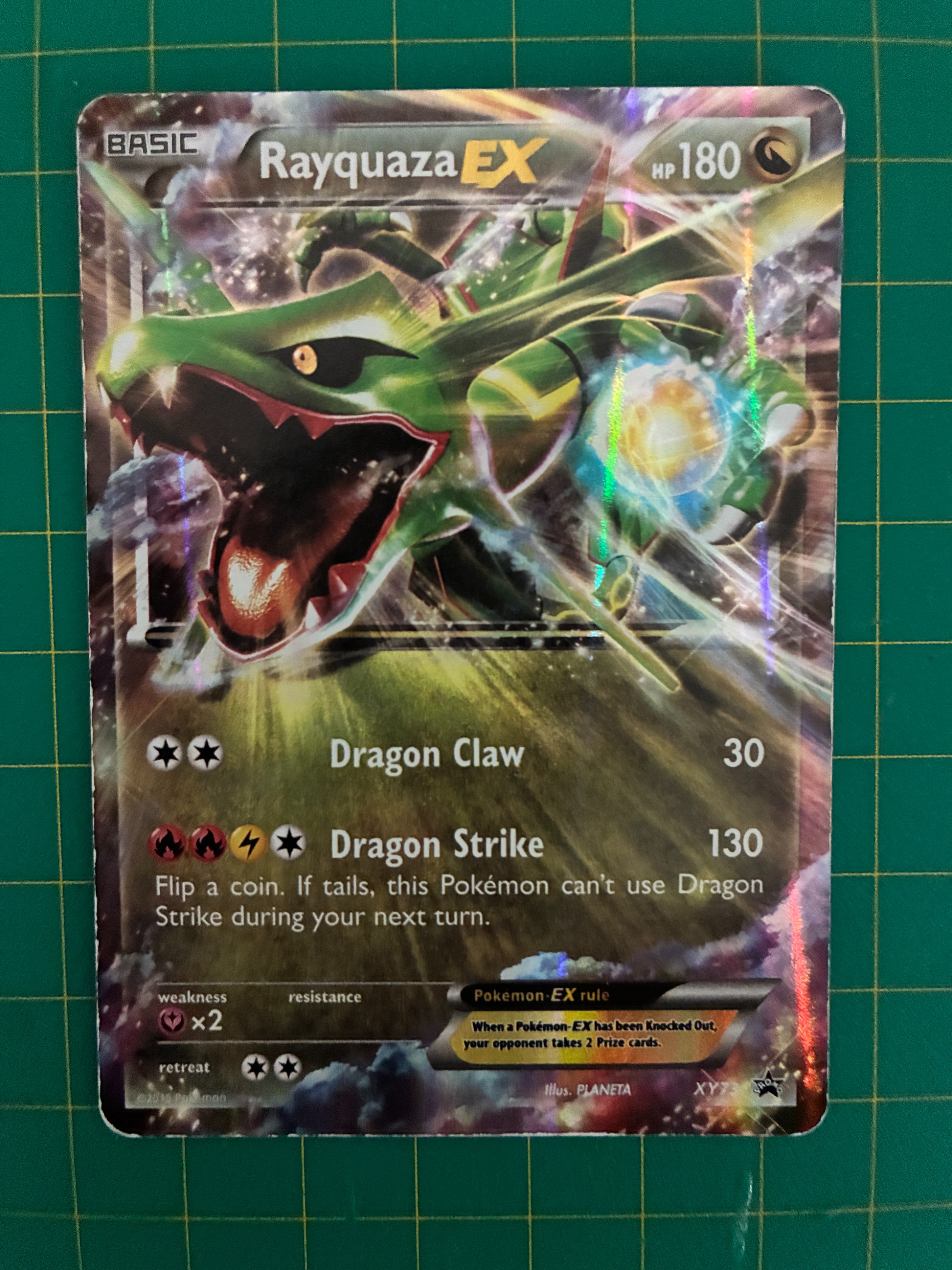
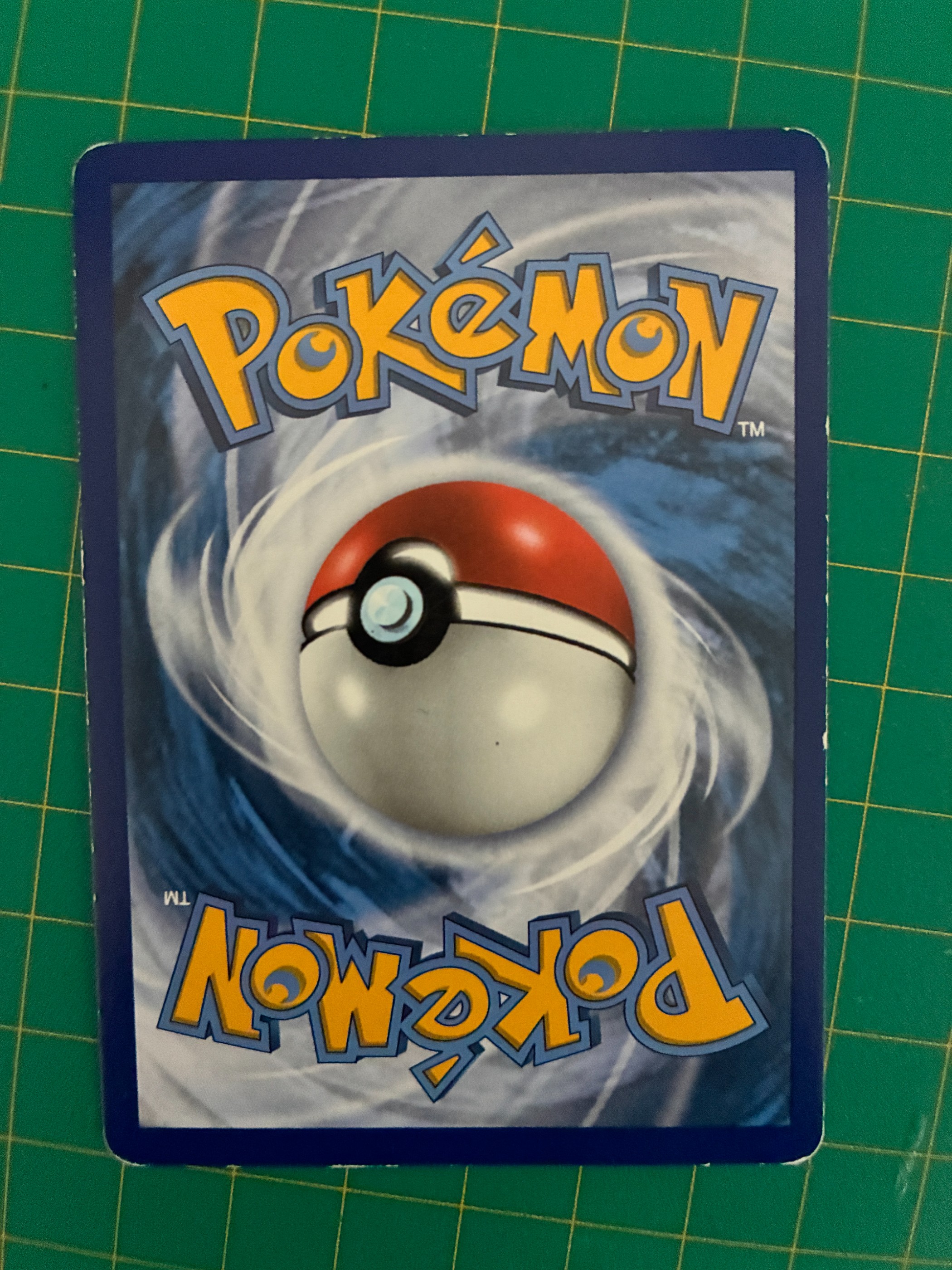
Back · 7.0 — centering 9.5 · corners 6.0 · edges 4.5 · surface 8.5
Centering is graded on both faces, and the final grade weights the front more heavily.
Edges is the weakest sub-score, so it's the most likely thing to cost this card a grade. Whitening and nicks along the card's edge, most visible on dark borders.
An estimate from one photo — not a grade, and not affiliated with PSA. Lighting, angle and photo quality all move these numbers, and a grader sees the card in person.
Square, 1600×1600, with the grade and our mark along the bottom — sized so eBay's square crop doesn't cut your card.
The short version
Rayquaza-EX is playing for a mid grade.
The card is held back by one thing: edges at 2.5, against centering at 7.0. Fix nothing and it grades where edges allows — but it also means a sharper, straighter-on photo is worth taking, because a single weak reading is the one most likely to be the camera rather than the card.
On the money: $14 after fees against $51 raw. The fees eat the upside at these odds, so selling it raw is the stronger play unless you're keeping it.
Worth repeating: this is one photo read by a model, not a grade. Lighting and angle move these numbers, and a grader has the card in hand.
Grade one of yours free →What each score measures
Well off-centre. On its own this will hold the card down regardless of how good the rest looks.
How evenly the border frames the art, front and back. PSA publishes a tolerance per grade — it is the one sub-score you can measure yourself before you send.
Clear corner wear. Corners cost more grades than any other factor, and this is the card's ceiling.
Sharpness under magnification. Softening from shuffling or a binder shows here first, and corners cost more grades than anything else.
Noticeable edge whitening or chipping. Expect this to pull the grade down a full step or more.
Whitening and nicks along the card's edge, most visible on dark borders.
Clear surface damage — scratches, print lines or dimpling. This is the hardest fault to talk a grader out of.
Print lines, scratches, dimples and gloss. Holo cards scratch easily and it rarely photographs well.
Is it worth grading?
Based on what copies of Rayquaza-EX actually sell for at each grade — and the photo shows visible handling, which caps the realistic outcomes.
After fees, the expected return is below what it sells for raw.
What grade it would likely get · prices are CGC
Prices are the median of real CGC sales for this card, with the number of sales behind each. The odds come from PSA population data for this era and are applied to every grader, so treat them as the chance of the CARD earning that grade — not as one company's strictness. Odds describe submitted copies of this era, not this specific photo.
Which grader pays best
| Grader | Fee | Expected, after fees |
|---|---|---|
| CGC · best | $38 | $14 |
| PSA | $81 | -$27 |
| BGS | $101 | -$44 |
You need roughly a 0.7% chance of a 10 for grading to break even on this card. The population says 0%.
Based on 78 graded sales and 1,306,674 pop-report entries. Grade odds describe submitted copies — the population a "should I grade this?" question belongs to. Fees are the current published rates and exclude postage and insurance both ways.
See Rayquaza-EX in every grade, with the sales behind each →
How many already exist
PSA has graded 916 copies of Rayquaza-EX.
PSA has graded 815 copies of Rayquaza-EX.
TAG has graded 24 copies of Rayquaza-EX.
A large or fast-growing gem population dilutes the premium a 10 carries, so this matters alongside the current price — not just how much a 10 is worth today.
What each grade actually sold for
Cert-verified: each of these was matched to its PSA certificate, not just a listing title — follow any cert number to check it against PSA's own record.
Buy one instead
Live listings. Sometimes a graded copy sells for less than grading your own would cost — we may earn a commission.