Most Valuable 1st Edition Pokémon Cards
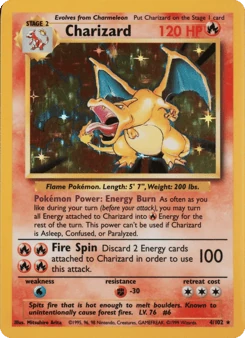
The most valuable 1st Edition Pokémon cards, ranked by current market value. Topping the list is the 1st Edition Charizard (Base) at $9,556. We track live 1st Edition prices for 957 cards — every one carries the tell-tale '1st Edition' stamp from a set's very first print run.
Prices last updated 4 November 2026 · How we price →
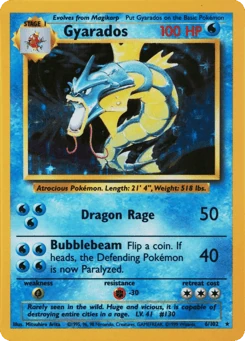
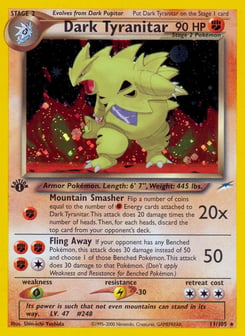
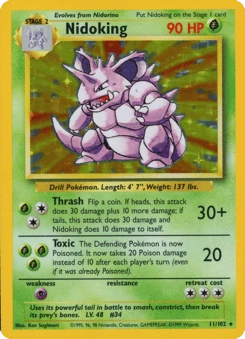
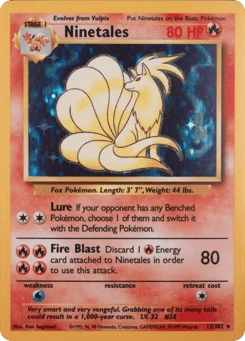
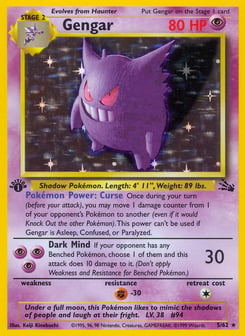
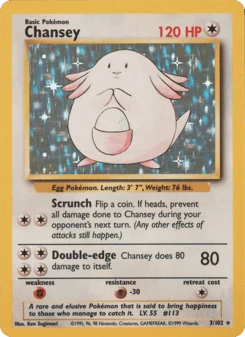
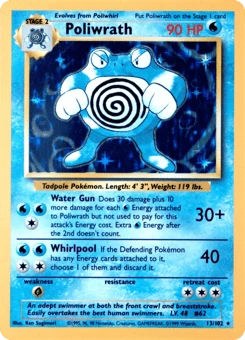
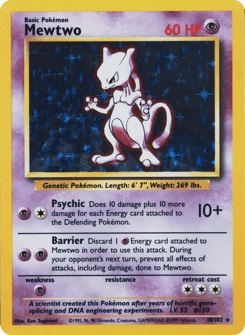

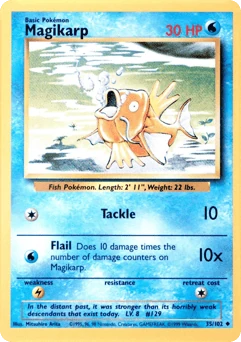
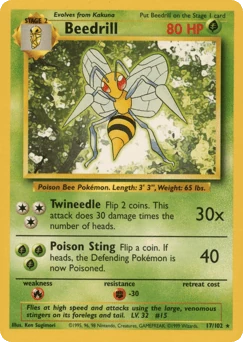
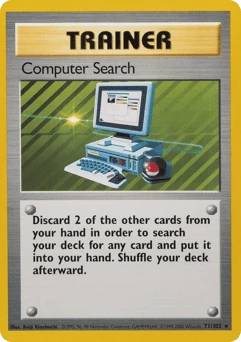
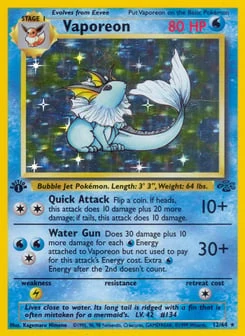
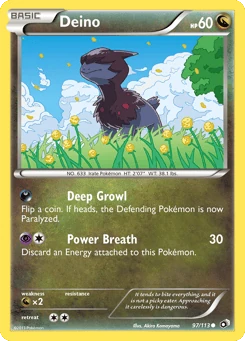
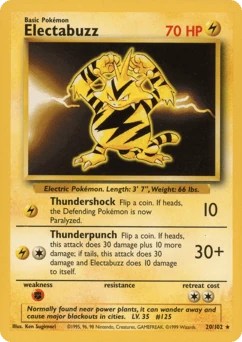
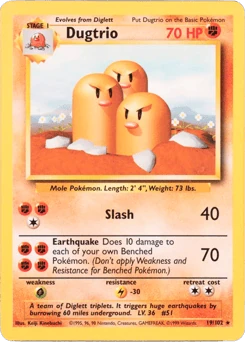
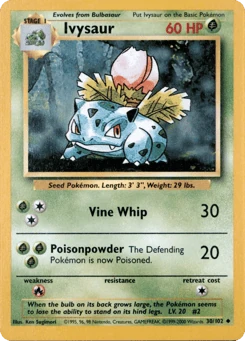
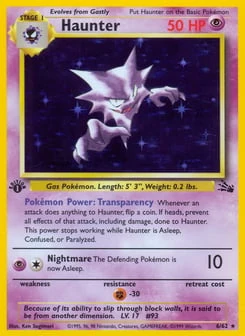
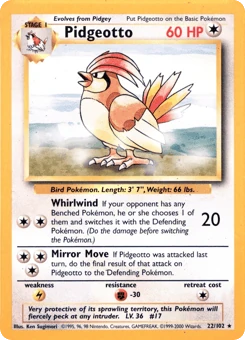
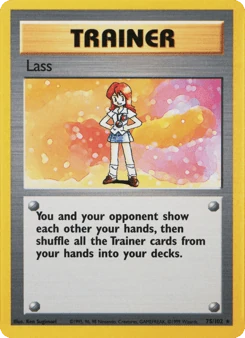
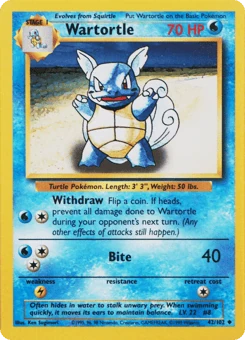
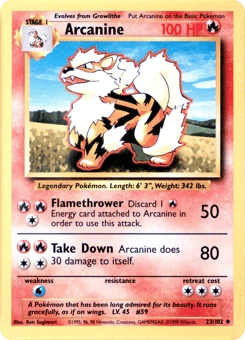
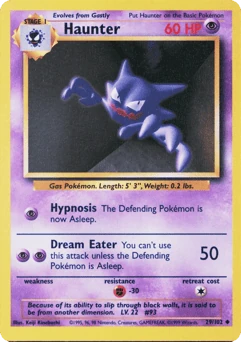

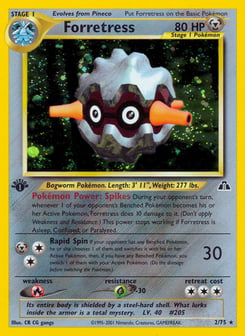
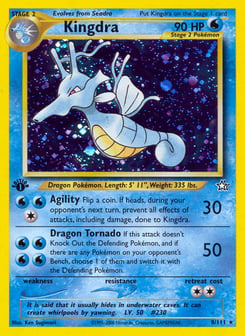
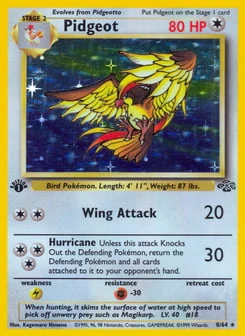
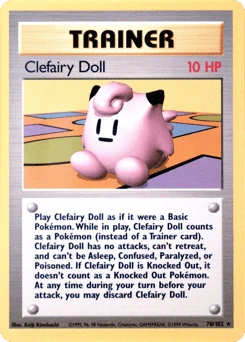
What makes a card "1st Edition"?
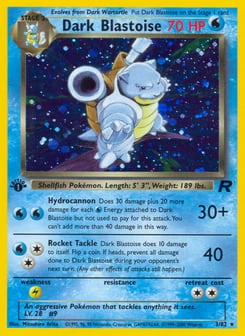
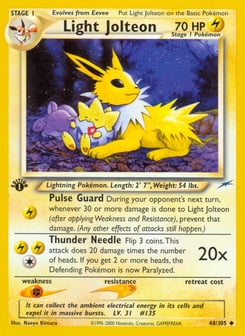
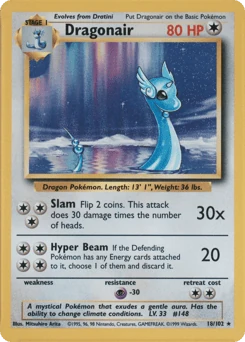
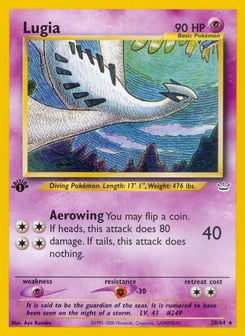
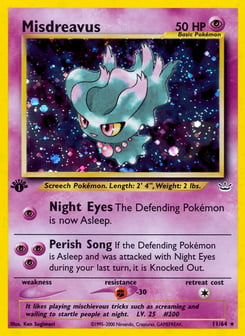
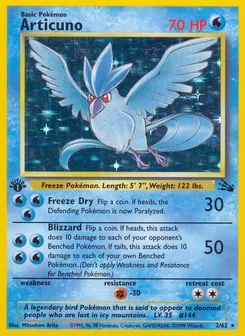
When a Wizards-of-the-Coast-era set launched, the first print run carried a small circular "1st Edition" stamp on the lower-left of the artwork. Once that run sold out, the set was reprinted without the stamp — the Unlimited print. Because the first run was a fraction of total production, 1st Edition copies are scarce, and for chase cards the premium over Unlimited can be several times the price.
The stamp is the main difference. A 1st Edition card and its Unlimited reprint share the same artwork, the same text, the same set number and the same rarity symbol; the print run they came from is what sets them apart. That is why the stamp carries so much weight, and why it is the first thing a buyer checks and the first thing a counterfeiter tries to add. Nobody outside the printer knows how many 1st Edition copies of a given card were made, so any print-run figure you see quoted is an estimate, and the honest measure of scarcity is the PSA population rather than a number somebody remembers.
How to spot a 1st Edition
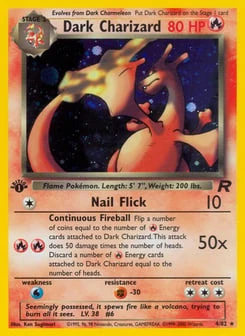
Check the left side of the artwork, just below the picture box, for a black circle reading "1" and "EDITION". No stamp means Unlimited. The exact spot shifts with the card layout — Trainer and Energy cards do not share the Pokémon frame — so scan the whole left side of the card rather than one fixed point. Counterfeits often add a fake stamp to an Unlimited card, so compare the stamp's size and lettering with a copy you know is genuine, and check the centring and condition too.
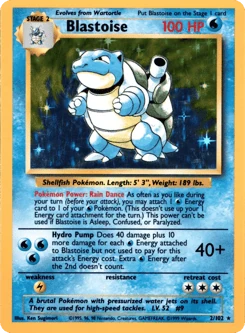
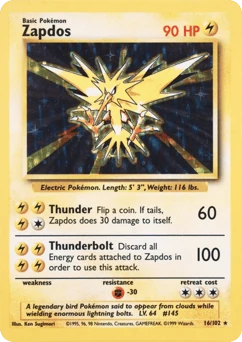
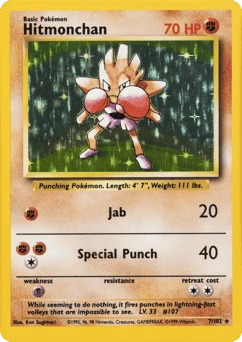
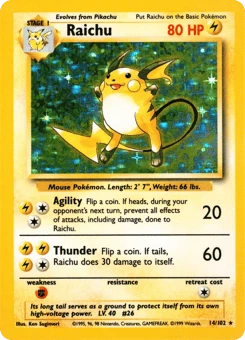
On Base Set only, a 1st Edition card is also shadowless: the artwork box has no grey drop-shadow down its right edge, the HP is printed in a thinner face and the colours are flatter. A stamped Base Set card that shows a shadow is not genuine. The test stops there, though. Jungle, Fossil, Team Rocket and every later set never had a shadowless run, so their 1st Edition cards have the normal shadow and are correct that way. Base Set Pikachu #58 adds one more tell of its own: red cheeks turn up only on early prints, found on both 1st Edition and shadowless copies, while yellow cheeks appear on later 1st Edition copies and on every Unlimited one.
Which sets have 1st Edition cards
The stamp ran through the WOTC era, set by set: Base Set, Jungle, Fossil, Team Rocket, Gym Heroes, Gym Challenge, Neo Genesis, Neo Discovery, Neo Revelation, Neo Destiny, plus their Japanese equivalents. The English stamp stops with Neo Destiny. Our ranked list above does carry 23 cards from later sets, a Black & White-era Victory Cup promo among them, but those rows come from how the price source labels a variant (Victory Cup's variants are 1st, 2nd and 3rd Place trophies), not from a 1st Edition print run. If a card isn't from one of the sets above, treat an unfamiliar "1st Edition" claim with extra caution.
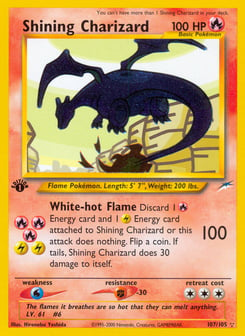
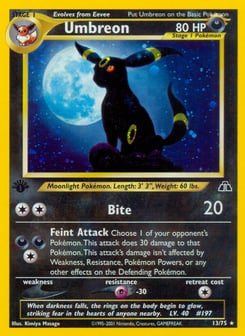
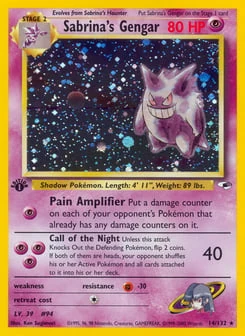
In our own data the main run covers 10 sets with ten or more 1st Edition cards priced, plus a scattering of single cards from later sets. Gym Challenge has the most 1st Edition cards priced (132), and Base carries the most value, $20,206 across 99 cards. Base Set holds the top spot because it was the first English set and its holos are the ones every collector who opened packs in 1999 remembers, but the Neo sets deserve a look too: 15 of the top 25 cards in the ranking are Neo-era, led by the Shining Pokémon of Neo Revelation and Neo Destiny.
What our 1st Edition prices show
The list above ranks 957 cards by their 1st Edition raw price. The spread is wide: the median card is $13.00, 588 cards (61%) are under $20, and 12 are $1,000 or more. The 1st Edition Charizard from Base leads at $9,556 raw, $31,020 in PSA 9 and $335,104 in PSA 10. Prices are PriceCharting's 1st Edition market figures, read for the stamped printing only — we never fall back to the Unlimited price when a 1st Edition one is missing, because a wrong printing is a wrong answer rather than an approximation.
Set against the same card's standard headline price, the median 1st Edition copy is worth 2.7× as much, and 73% of the cards with both prices are at least double. By rarity the median multiple is 3.8× on commons, 2.7× on uncommons, 2.1× on non-holo rares and 2.0× on holo rares, so in proportion the stamp counts for most on commons. In dollars, the median gap between the two printings is $58 on a holo rare against $2.59 on a common, where both printings are cheap and most of the price is the cost of listing and posting a card at all.
Why graded 1st Edition prices pull away from raw
The WOTC-era 1st Edition sets came out between 1999 and 2002, so every card in them has had more than two decades to pick up damage, and most were handled as toys before anyone thought to sleeve them. Edge wear, surface scratches, off-centre cuts and print lines from the original press run all rule out a 10, so gem-mint copies are a small fraction of the graded population — the gem rate for vintage cards shows how small — and the market pays for that scarcity twice over: once for the stamp, then again for the grade. Where PriceCharting publishes a 1st Edition PSA 10 price, the median card's PSA 10 is 33.7× its 1st Edition raw price, against 5.1× for a PSA 9. The step from 9 to 10 is the expensive one.
That gap is why the graded line under each row matters more than the headline. A raw price describes a copy in roughly near-mint condition; a PSA 9 price describes a copy that a grader has confirmed is close to perfect; a PSA 10 price describes a copy that hardly exists. Buying raw and hoping for a 10 is a lottery on a vintage card, so compare a card's raw figure with its PSA 9 figure, treat the PSA 10 number as a ceiling rather than a target, and run the grading ROI before you send anything in.
Fakes and misdescribed cards
Three problems turn up repeatedly. The first is a counterfeit stamp added to a real Unlimited card, which is the cheapest fraud to attempt and the easiest to catch: the added ink sits on top of the card's surface and the lettering rarely matches a genuine stamp's weight and spacing, and on Base Set the card will still show its drop-shadow. The second is a wholly counterfeit card, where the giveaway is usually the card stock, the holo pattern or the colour of the back rather than the stamp itself. The third is honest misdescription — a seller who reads "1st Edition" from a listing template rather than the card — which is why every listing photograph should show the stamp clearly and in focus before you pay a stamp premium.
For anything worth more than the grading fee, the practical answer is a slab: PSA, BGS and CGC authenticate the printing as part of grading. Our fake card check walks through the physical tells for a raw card.
How to use this ranking
Rows are sorted by the 1st Edition raw price, highest first, and each links to the card's own 1st Edition page with its price history and graded ladder. Where PriceCharting has PSA 9 and PSA 10 figures for the stamped printing, they appear under the card name; the PSA premium index shows how those multiples compare across the whole catalogue. If a card you expect is missing, we have no reliable 1st Edition price for it yet; it does not mean the printing does not exist.
Most Valuable 1st Edition Pokémon Cards — FAQ
Cite this ranking
Free to use with attribution to CardTrack.
Most Valuable 1st Edition Pokémon Cards — CardTrack, https://cardtrack.com/pokemon/1st-edition