Is it worth grading?
Grading costs money and not every card comes back a 10. Pick a card, set the PSA fee and your realistic grade odds, and see the expected profit per submission — weighted across every outcome, using real PSA market values. Grading costs reflect current tiers as of 2026-08-26.
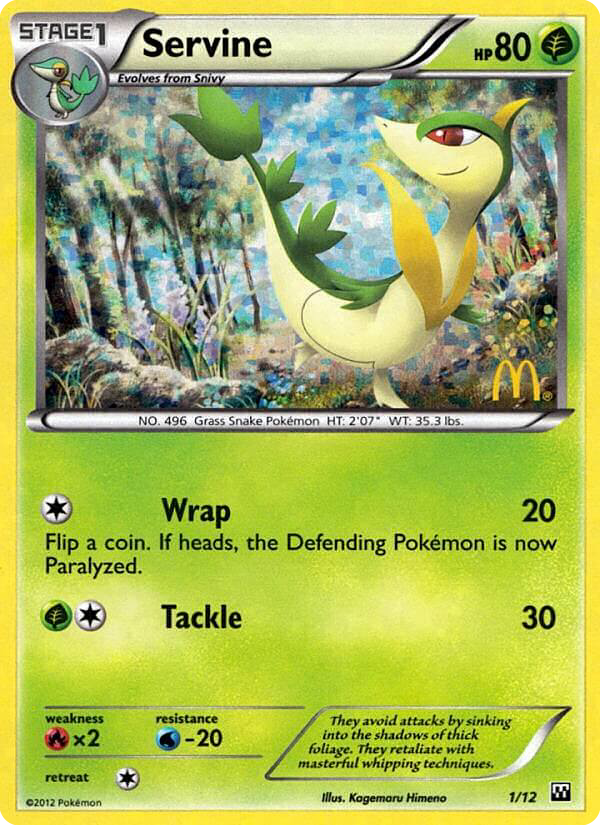
On these odds it's not worth grading — the raw card plus the $20 fee costs more than the average graded outcome returns.
Cards in this result: Servine #1
Graded values use real PSA 9/10 figures where we have them, otherwise a typical taper off the PSA 10 price. Outcome odds default to a clean modern card — adjust them for the card's real condition. Estimates, not guarantees.
How this is calculated
Expected profit = Σ (odds of grade × value at that grade) − raw price − grading fee
Assumptions
- Odds pre-fill from the card's PSA population (share of graded copies at each grade) when it has one; otherwise a typical clean-copy default you should adjust. Populations are self-selected — collectors grade clean copies — so they overstate a random copy's odds.
- Grade values use the card's real PSA 9 and PSA 10 prices where CardTrack has them, otherwise a taper below the PSA 10 price.
- The fee pre-fills from PSA's current tier for the card's declared value (fees as of 2026-08-26) plus round-trip shipping; membership is not included.
- Raw price is CardTrack's blended market value, not a sale of your copy.
The PSA 10 premium over time
Across cards worth grading (raw ≥ $20), a PSA 10 now sells for about 11.8× the raw price — up from 9.3× in 2021. Median from real PriceCharting sales. Real auction sales agree: 8.5× median across 1,677 Fanatics Collect PSA 10 results.
Current grading turnaround times
How long each service tier takes right now — worth checking before you submit, since wait times swing with submission volume.
| Service | Tier | Max value | Fee | Turnaround |
|---|---|---|---|---|
| CGC | Bulk | $500 | $17 | 120 business days |
| CGC | Economy | $1,000 | $20 | 65 business days |
| CGC | Standard | $3,000 | $55 | 10 business days |
| CGC | Express | $10,000 | $100 | 5 business days |
| CGC | WalkThrough | $100,000 | $300 | 2 business days |
| CGC | UnlimitedValue | — | 300 + 1% FMV | 2 business days |
| CGC | JumboCard | — | $20 | 120 business days |
| CGC | Coin | — | $20 | 120 business days |
| BGS | Base | — | — | 75+ business days |
| BGS | Standard | — | — | 45 business days |
| BGS | Express | — | — | 15 business days |
| BGS | Priority | — | — | 5 business days |
CGC & BGS official tiers shown. PSA isn't published in a format we can pull automatically yet. Turnaround times are estimates and move with submission volume.
Grading ROI — FAQ
How much does it cost to grade a Pokémon card?
PSA's cheapest active tier is Value Plus at about $50/card (the ~$25 Value tier is paused as of 2026-08-26), plus roughly $20 round-trip insured shipping — so ~$70 all-in for a sub-$500 card. CGC starts around $18 and BGS around $20. Higher-value cards require pricier tiers with higher declared-value caps.
Is grading a Pokémon card worth it?
Grading pays off when the graded premium comfortably beats the all-in cost AND the card has a realistic shot at the target grade. The honest figure is the risk-adjusted return — the PSA 10 value weighted by the card's gem rate (how often copies actually hit PSA 10), not the best case. A high best-case profit with a 2% gem rate is a worse bet than a smaller premium at a 40% gem rate.
What's the difference between PSA, BGS and CGC grading?
PSA is the most liquid for Pokémon and usually commands the highest resale premium, but needs a membership and its cheapest tier is paused. CGC and BGS need no membership and are cheaper at entry; BGS includes sub-grades free. For Pokémon resale value, PSA 10 typically leads.
Checking grading upside before you buy? The free CardTrack extension shows grade estimates and value on the eBay listing itself. Add to Chrome →