Bulbasaur · フシギダネ
Japanese Platinum (PT3) · #001/100 · Common · Naoyo Kimura
Affiliate links — CardTrack may earn a commission from eBay and other marketplaces, at no extra cost to you.
Bulbasaur (フシギダネ) is a Common Japanese Pokémon card from Platinum (PT3) (#001/100), illustrated by Naoyo Kimura. Its current raw near-mint market value is $19.00. This is the Japanese-language printing — distinct from the English Bulbasaur. Prices are aggregated from eBay sold listings and TCGplayer, updated daily and shown in your local currency.
Raw price by condition
eBay-sold & TCGplayer market for the raw card, by condition.
What this price is based on
Medium confidence4 sales in 90 days — enough for a guide, not a guarantee.
Recent Raw sales
- Sep 24, 2026eBay — Bulbasaur 001/100 Common Beat of the Frontier Pokemon Japanese Near MintNM$14.89
- Sep 11, 2026eBay — BULBASAUR 001/100 - MP - DPT3 BEAT OF THE FRONTIER JAPANESE POKEMON CARDMP$4.32
- Jul 26, 2026eBay — BULBASAUR 001/100 - MP - PT3 BEAT OF THE FRONTIER JAPANESE POKEMON CARDMP$4.28
- Jul 9, 2026eBay — BULBASAUR 001/100 - LP - DPT3 BEAT OF THE FRONTIER JAPANESE POKEMON CARDLP$7.20
- Apr 20, 2026eBay — Bulbasaur 001/100 Common Beat of the Frontier Pokemon Japanese ~ MPMP$9.99
From 5 completed sales recorded between Apr 20, 2026 and Sep 24, 2026. Sold prices only — asking prices are never counted.
Where to buy
Affiliate links — CardTrack may earn a commission from eBay and other marketplaces, at no extra cost to you.
More Japanese cards from Platinum (PT3)
![Japanese Rayquaza (レックウザC[チャンピオン])](https://images.scrydex.com/pokemon/pt3_ja-79/large)
![Japanese Absol (アブソルG[ギンガ])](https://images.scrydex.com/pokemon/pt3_ja-65/large)
![Japanese Blaziken (バシャーモFB[フロンティアブレーン])](https://images.scrydex.com/pokemon/pt3_ja-20/large)
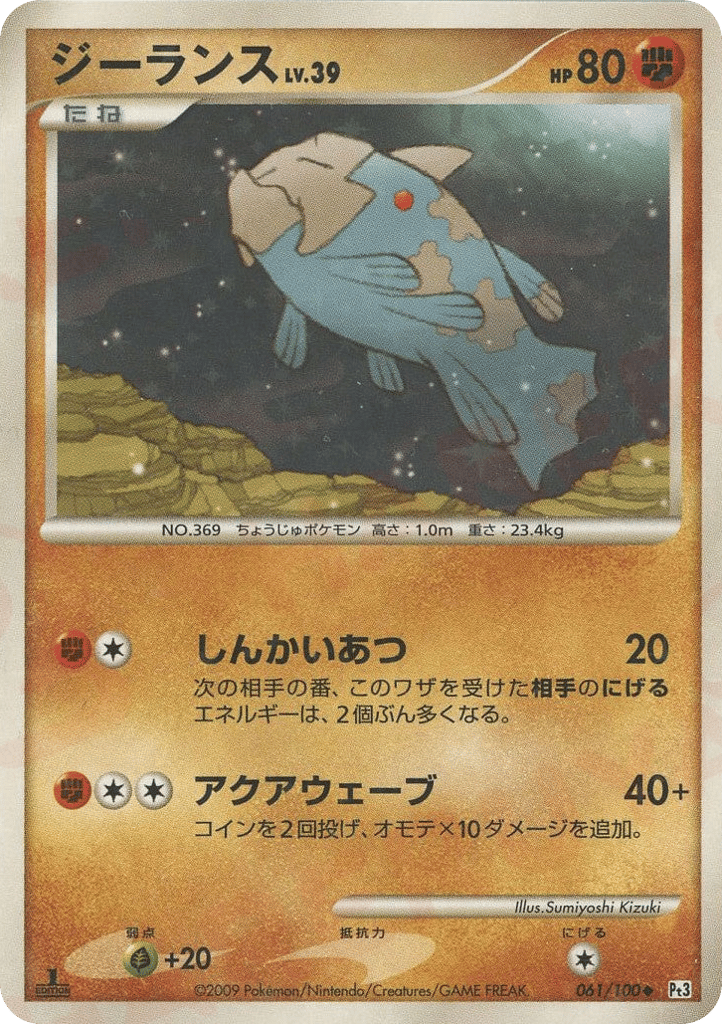
![Japanese Rayquaza (レックウザC[チャンピオン])](https://images.scrydex.com/pokemon/pt3_ja-78/large)
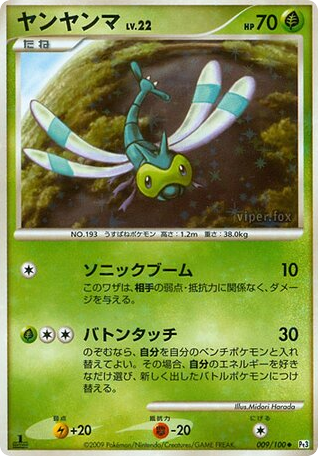
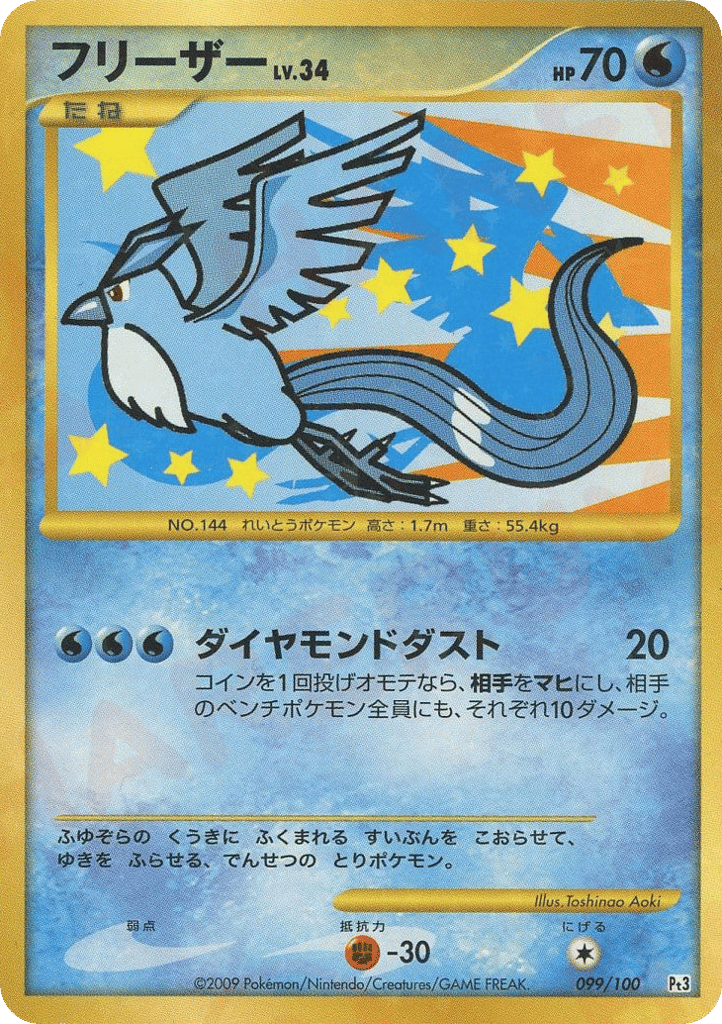
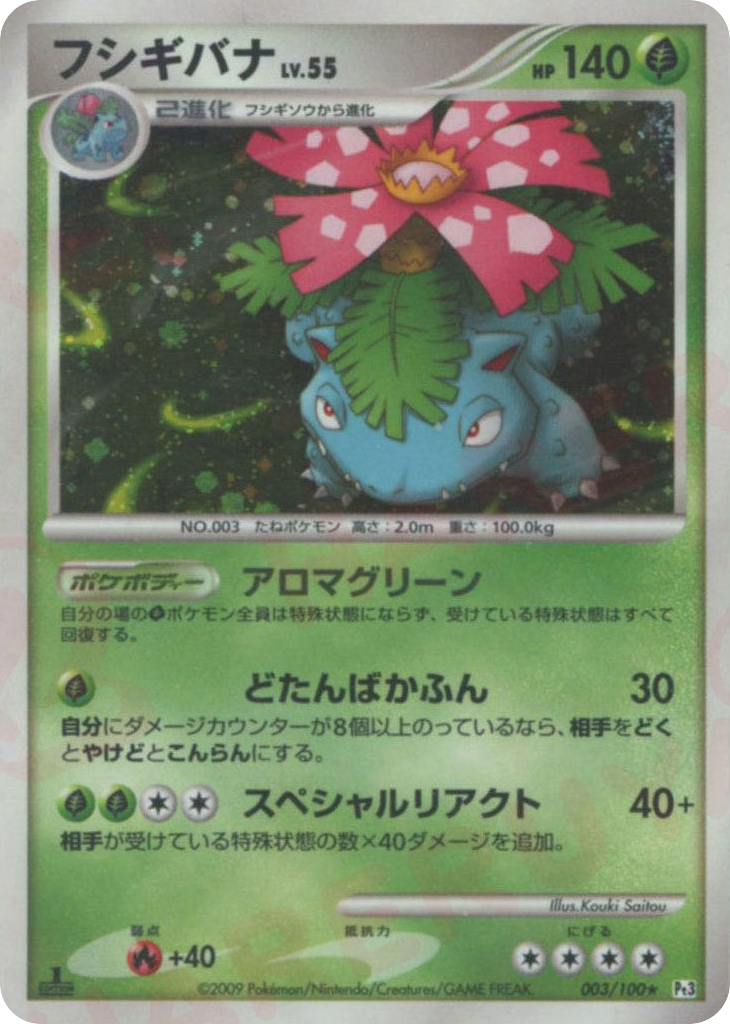
Japanese Bulbasaur — FAQ
How much is the Japanese Bulbasaur (フシギダネ) from Platinum (PT3) worth?
The Japanese Bulbasaur (フシギダネ) from Platinum (PT3), card #001/100, is worth approximately $19.00 ungraded (near-mint). Prices come from real eBay sold listings and TCGplayer and update daily.
Is the Japanese Bulbasaur different from the English version?
Yes. This is the Japanese-language printing (フシギダネ), from the Japanese set Platinum (PT3). Japanese cards usually have a different print run, set and price from their English counterparts, and are graded on the same PSA, BGS and CGC scales.