How to Tell if a Pokémon Card Is Fake
Card values in this article's embedded cards are live from CardTrack's catalogue as of 1 October 2026; figures quoted in the text are as at publication.
How to Tell if a Pokémon Card Is Fake
If you're wondering how to tell if a Pokémon card is fake, the short answer is: check the back design, the text, the weight, and how light passes through it, and compare all four against a card you know is real. No single test proves anything on its own — you're looking for a pattern of red flags. Before you spend real money on anything rare, it's worth running the card through a card value checker too, since a price that's way below market is often the first sign something's off.
I've been buying and selling for close to two decades now, and I still get fooled for a second or two when I see a good fake in hand. They've gotten better. Here's what I actually check.
Why Counterfeit Pokémon Cards Exist in the First Place
It comes down to money, plain and simple. Pokémon is the biggest trading card game in the world by collector count, and the top end of the market has gotten genuinely absurd — sealed vintage boxes and graded Base Set Charizards regularly sell for five and six figures. You can see how wild the ceiling is on the most expensive Pokémon cards ever sold.
That gap between "what people want" and "what people can afford" is exactly where counterfeiters live. They're not usually faking common cards from a bulk box — there's no money in that. They're faking Charizards, Umbreons, anything from the rarer end of the rarity guide, and increasingly, sealed product itself.
Counterfeiting has been a known problem in the hobby for years, and PSA and other authentication companies have publicly flagged Pokémon as one of the categories they see the most fakes and altered cards come through. I won't throw out a specific growth percentage because I can't verify one that holds up — but anecdotally, from forums, from Discord servers, from stuff I've been sent to look at personally, fake Pokémon cards are more common now than they were five years ago, not less.
The Light Test: Quick, But Not Definitive
This is the first thing I do with anything I'm unsure about, mostly because it takes five seconds.
Hold the card up in front of a bright light — phone flashlight works fine. Real Pokémon cards are made with a black or dark layer sandwiched between two layers of paper stock, so very little light gets through. You'll see a faint glow around the edges at most.
- If a lot of light pours through the middle of the card, that's a bad sign.
- If literally zero light gets through, that's not automatically good news either — some counterfeiters use thicker cardstock specifically to fail this test in the "safe" direction.
- A small, even amount of light bleeding through is what you want to see.
I've had genuine cards throw slightly weird results because of foil treatment or because my flashlight was too strong. Use this as a first pass, not a verdict.
Check the Back of the Card First
This is where I catch most fakes, honestly, before I ever flip to the front.
Get a card you know is real and put it next to the one you're checking, same lighting, same angle. A few things to look at:
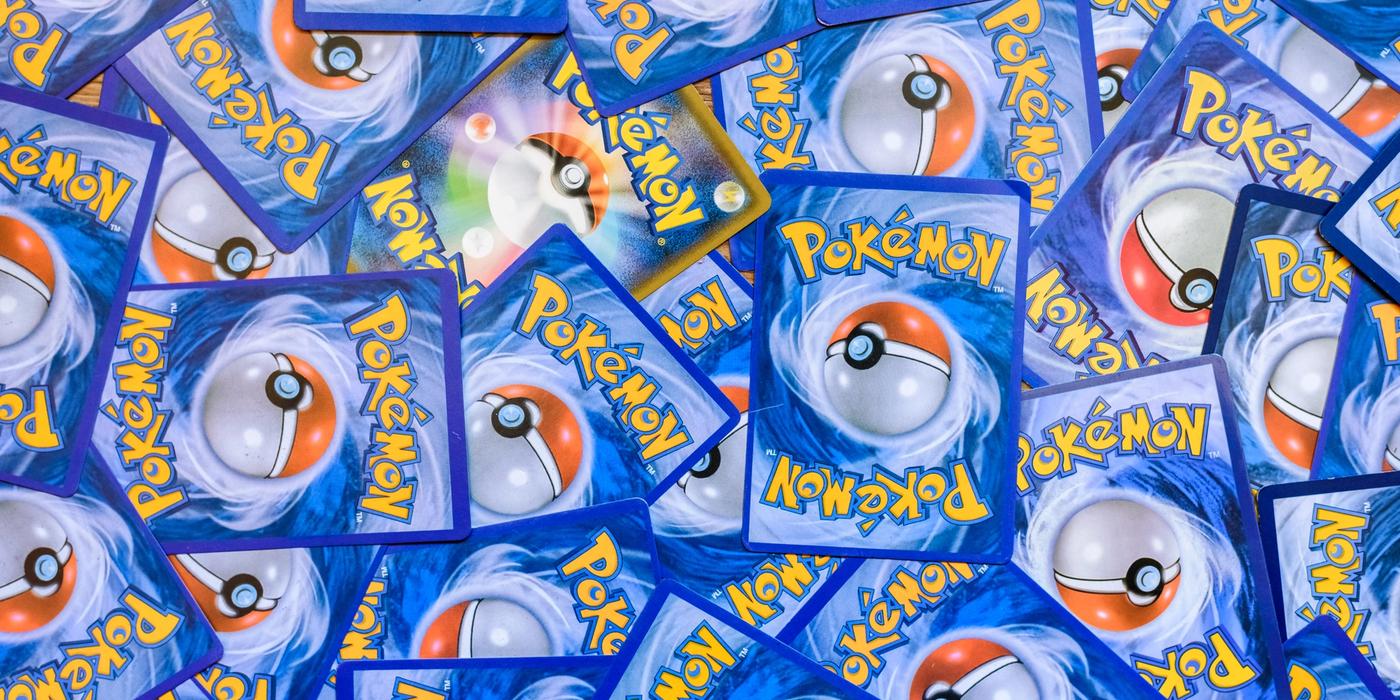
The blue border. Genuine cards have a rich, consistent blue. Fakes tend to run either too purple or washed-out and pale. It sounds subtle until you have two cards side by side — then it's obvious.
The Poké Ball. On a real card it's centered, crisp, with clean red and white halves. On fakes I've seen it printed off-center, slightly blurry, or with the red looking more orange than red.
The word "Pokémon" top and bottom. It should be sharp and separated cleanly from the background. Blurry or "fuzzy" lettering that blends into the border is a common tell.
The finish. Genuine card backs aren't glossy and aren't chalky-dull. Somewhere in between.
One caveat that matters: back designs have shifted slightly over the decades, and the exact tone can vary a bit by print run and printing plant. Always compare a suspect card against something from the same rough era — don't compare a 2024 pack pull against a 1999 Base Set card and assume any difference means fake. If you're not sure what a given set's cards should look like, the full sets list is a good reference point.
Font, Spelling, and Text Errors
Flip the card over and read everything. Actually read it, not skim it.
Spelling mistakes are the most obvious tell and, in my experience, still the most common one on cheap fakes. "Charzard" instead of Charizard. Attack names slightly off. Extra or missing accents on names like "Flabébé" or "Porygon-Z."
Beyond spelling, look at:
- Spacing. Real cards have even, consistent letter spacing. Fakes often look cramped in one spot and stretched in another.
- Alignment. Text that drifts left or right across lines, or sits slightly crooked, is a bad sign.
- Font weight. Pokémon uses the same typefaces consistently across a set. If the text on your card looks noticeably thicker, thinner, or just "off" compared to a known real card, pay attention.
- Copyright line. Missing it, or getting the year wrong, is common on lower-effort fakes.
- Illustrator credit. Every official card lists the artist. If it's missing, that's a flag.
- HP and attack damage. Some fakes just make up numbers or get the energy symbol size wrong — usually printed too large.
Genuine cards go through real production quality control. Spelling errors on legitimately printed Pokémon cards are rare enough that finding one should make you suspicious first, not assume it's a quirky misprint.
Texture and Weight
This is the test I trust the most once I actually have the card in hand, because it's the hardest thing to fake convincingly.
Real Pokémon cards have a specific feel — sturdy without being stiff, a little flexible without feeling flimsy, smooth without being slick or slippery. Counterfeits vary a lot because they're made on different equipment with different stock. Some feel like glossy printer paper. Some feel like they're laminated. Some feel almost sandpapery on the surface.
If a card is supposed to have texture — like a Special Illustration Rare or other textured modern rarity — and it's completely flat, that's a serious red flag. Same goes for holofoil patterns that look printed-on rather than reflective and layered.
On weight, real cards generally land somewhere around 1.7 to 2 grams depending on the set and finish, and you do need a decent gram scale to notice the difference — you won't feel a tenth of a gram in your hand. Lighter counterfeits usually skip a layer of cardstock. But don't assume "heavier automatically means real" either — some counterfeiters overcompensate with thicker stock. Weight is a supporting data point, not proof on its own.
If you're regularly checking condition and want something more consistent than your gut, running the card through a proper card grader tool or getting centering checked with a centering tool can help you spot printing inconsistencies that also show up on fakes.
Fake Pokémon Card Checklist
Run through this list before you buy, trade, or grade anything you're not 100% sure about:
- Does light pass through evenly, or does it flood through / not show at all?
- Is the blue border on the back rich and consistent, not purple or washed out?
- Is the Poké Ball on the back centered, sharp, with clean colors?
- Is the "Pokémon" lettering crisp, not blurry or blending into the background?
- Any spelling or grammar errors anywhere on the card?
- Is spacing and alignment of the text even and consistent?
- Is there an illustrator credit and a correct copyright line?
- Does the texture match what that card/rarity is supposed to have?
- Does the weight feel roughly consistent with a known genuine card?
- Have you compared it side by side with a real card from the same set and era?
- Does the artwork match official images for that card?
If you're still unsure after all that, a dedicated fake card checker tool or a second opinion from someone experienced is worth more than guessing.
Top Pokémon Cards by Value Right Now
These carry some of the highest estimated market values on CardTrack today. Figures are based on recent sales and can move quickly, so treat them as a snapshot:
Frequently Asked Questions
Are fake Pokémon cards worth anything? No, not in any meaningful collector sense. They're not produced or licensed by The Pokémon Company, so they carry no recognized market value, and most collectors won't touch them even as novelty items. Some people keep obvious, cheap fakes as curiosities, but that's not the same as them having resale value.
Can PSA or other grading companies catch fake Pokémon cards? Yes — authenticators check print quality, card stock, and other physical details as part of grading, and fakes typically get flagged and returned rather than graded. That said, no system catches every fake, which is exactly why it's worth checking a card yourself before you pay for grading or a sale.
Is it illegal to sell fake Pokémon cards? Selling counterfeit cards as genuine can expose you to fraud claims and, depending on where you live, intellectual property law issues, since it involves reproducing copyrighted artwork and trademarks without permission. Beyond the legal risk, it's a fast way to burn your reputation in a hobby that runs heavily on trust between buyers and sellers.
Why do counterfeiters target expensive or rare Pokémon cards specifically? Because that's where the profit margin is. Faking a common card isn't worth the effort, but a convincing fake of a card worth hundreds or thousands of dollars only needs to fool one buyer to pay off. That's why rarer, high-value cards get the most attention from counterfeiters — and why it's worth
Data and sources behind this article
CardTrack data pages: Pokemon Card Value Checker · Most expensive cards · Pokemon Rarity · All sets · Pokemon Card Grader · Pokemon Card Centering · Pokemon Fake Card Check
Latest Pokémon market report · live
September 2026 — Vintage Pokémon cards outpaced modern chase by 12 points over the past 30 days. 1 September 2026
Go to the numbers: Condition guide
Comments
No comments yet — be the first to weigh in.