The Back of a Pokémon Card Explained
Card values in this article's embedded cards are live from CardTrack's catalogue as of 1 October 2026; figures quoted in the text are as at publication.
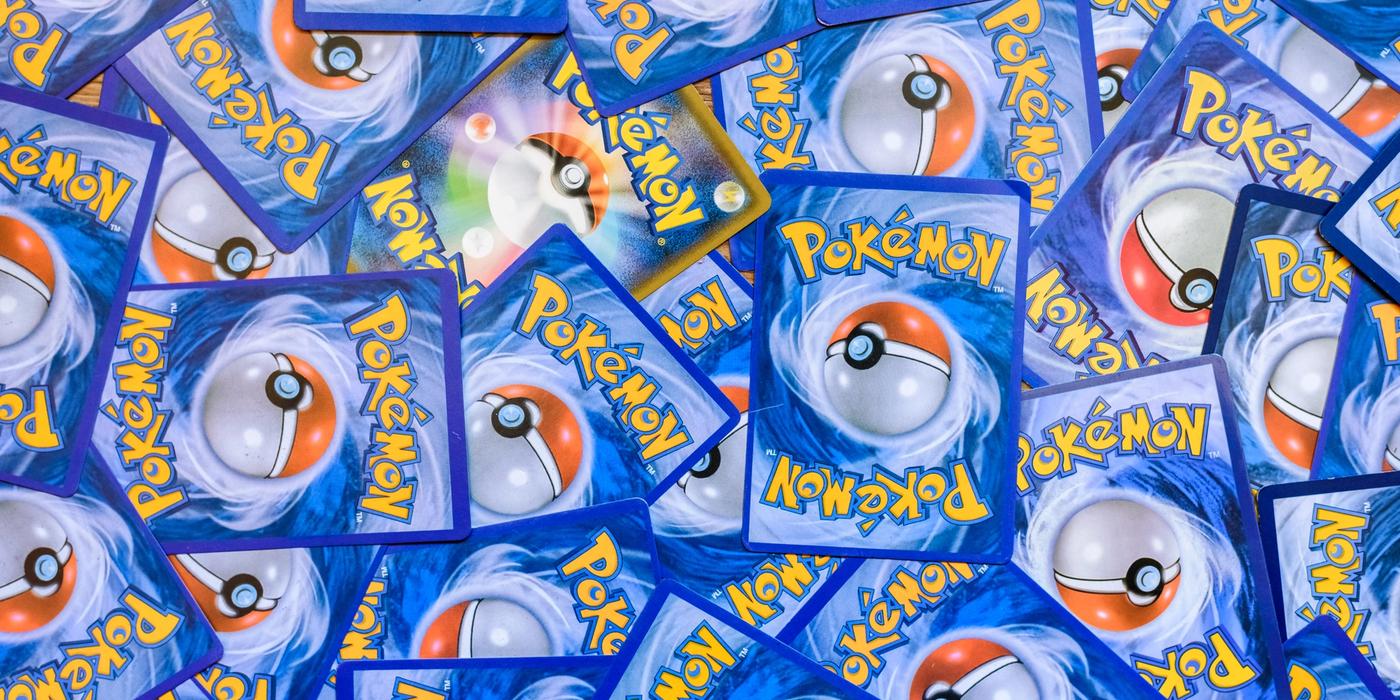
The back of a Pokémon card explained in one line: it's a dark navy blue design built around a centered Poké Ball, two mirrored Pokémon logos, and a swirling two-tone blue pattern that's been essentially unchanged on English-language cards since the Base Set launched in 1999. Sounds boring until you realize that consistency is exactly what makes it one of the fastest ways to catch a fake.
I've been buying, grading and reselling cards long enough that I barely look at the front of a card anymore when I'm checking if it's legit. The front is where counterfeiters spend their effort — the holo pattern, the typeface, the art. The back gets neglected, and that's where it falls apart. If you want to run a card through a proper check before you spend real money on it, our fake card checker is a good second opinion, but knowing what you're looking at yourself matters more.
Anatomy of a Genuine Pokémon Card Back
Flip any English-language Pokémon card from the last 25 years and you'll find the same five things:
- One Poké Ball, centered
- Two Pokémon logos, mirrored top and bottom
- A dark navy blue border running around the edge
- A swirling vortex pattern radiating out from the Poké Ball
- A layered blue-and-dark-blue background behind that vortex
This layout has been locked in since the English Base Set hit shelves in 1999, and it hasn't changed since — not for Jungle, not for Scarlet & Violet, not for any set in between. That's the whole point of a card back: it's supposed to be boring and identical, pack after pack, year after year.
The Poké Ball itself sits dead center, red on top, white below. Look closely at the center button — it's attached to the white half, not the red half. People flag this as an error the first time they notice it. It's not. Every genuine card looks like this.
Above and below the ball sit the two Pokémon logos, one right-side up, one upside down. That's deliberate, not sloppy design. Rotate the card 180 degrees and the logo that was upside down is now readable — so whichever way you're holding the card, one logo always reads correctly. The logo itself uses a yellow fill with a lighter blue outline and a navy drop shadow so it pops against the busy background behind it, plus the accented é and the ™ symbol.
The swirl pattern fans out from behind the Poké Ball toward the top and bottom of the card, built from several shades of blue layered to fake a bit of depth and motion. Behind that sits the gradient background — lighter blue blending into darker blue — which is what gives the whole design its sense of dimension instead of looking flat. Wrap all of that in a solid navy border a couple of millimeters wide and that's a genuine back, every single time.
Do Japanese Pokémon Card Backs Look the Same?
No, and this trips people up constantly. Japanese cards use a yellow-gold border instead of navy blue, with a radial rainbow-light effect instead of the swirling vortex, and translucent energy-orb shapes around the Poké Ball instead of the English swirl. The Poké Ball's angle is different too — English cards show it turned slightly to the side, Japanese cards show it closer to face-on. If you're buying Japanese singles regularly, it's worth spending ten minutes with our Japanese cards guide just so you know what "normal" looks like before you need to spot "wrong."
Real vs Fake: What the Back Actually Tells You
Once the genuine layout is burned into your head, fakes start looking obviously off.
Counterfeit backs tend to go flat. The blue loses its depth — sometimes it skews slightly purple, sometimes it's just one uniform shade with none of the light-dark contrast that makes the swirl pattern pop on a real card. The border on a genuine card is a deep, almost ink-like navy. Fakes often print lighter or muddier.
Detail is the bigger giveaway. On a counterfeit, the lettering in the logo can look blurry, the Poké Ball's edges go soft, and the swirl pattern turns into a mushy blob instead of distinct lines. I've seen bootlegs where the Poké Ball is barely more than a dark smudge in the middle of the card. A real card, even a beat-up one from a 1999 binder, still has crisp linework on the back.
Then there's texture. Genuine cards have a consistent, slightly matte-smooth cardstock finish. Fakes frequently feel wrong before you even flip them over — too glossy, too slick, sometimes almost rubbery. If a card feels like a playing card from a dollar-store deck, that's a bad sign regardless of what the front looks like.
A Simple Color Comparison Test
If you've got a card you're unsure about, put it next to one you know is real — ideally something you pulled yourself from a sealed pack, not a photo off eBay.
Look at the top-right quadrant above the logo first. On a real card the lighter and darker blues sit next to each other with a visible edge between them. On a fake, that contrast often just isn't there.
Check the swirl lines next. Real cards keep the light-blue swirl distinct against the dark navy field around it. Fakes tend to blur the two together, or the swirl just disappears into the background entirely.
Last, step back and look at the overall tone. Washed-out, flat blue is one common fake tell. Oddly vivid, overly saturated blue with no gradient at all is another — both are signs something's off. And check the border transition: on a genuine card, the frame meets the swirl pattern cleanly, with no bleeding or blurring at that edge.
None of this replaces an actual grading opinion if there's real money on the line. If you're sitting on something you think might be a genuine vintage pull, it's worth running it through a card grader and checking current estimated market value before you decide what to do with it. Centering matters a lot for grade too — our centering tool is useful if you're trying to figure out whether a card's worth submitting at all.
Top Pokémon Cards by Value Right Now
These carry some of the highest estimated market values on CardTrack today. Figures are based on recent sales and can move quickly, so treat them as a snapshot:
Frequently Asked Questions
Do vintage Pokémon cards have different backs?
Early Japanese cards used an older back design before Japanese sets moved to the yellow-gold, rainbow-radial layout still used today. English and other international cards, by contrast, have used the same navy blue back since the 1999 Base Set launch, so vintage English cards look just like modern ones on the back.
Can scratches on the back affect a Pokémon card's value?
Yes. Whitening, scuffs, dents and scratches on the back all factor into condition grading whether you sell raw or send it in for grading. How much it knocks off the value depends on severity — light edge wear is very different from a deep crease across the swirl pattern. Check our grading guide if you're trying to gauge where a card might land.
Can a Japanese Pokémon card have an English card back?
No. A genuine Japanese card will never have a navy blue English-style back — if you see that combination, you're looking at a fake or a mislabeled reprint, not an official Japanese release. The back design is tied to the language and region the card was printed for, full stop.
Why does the Poké Ball's center button look attached to the wrong color?
It's not an error — the button sitting on the white half rather than the red half is how the design has always been printed, on every genuine English card since 1999. If you've only ever glanced at the back, it's an easy thing to mistake for a flaw, but it's actually one of the small consistent details you can use to confirm authenticity.
Data and sources behind this article
CardTrack data pages: Pokemon Fake Card Check · Pokemon Japanese · Pokemon Card Grader · Pokemon Card Value Checker · Pokemon Card Centering · Best cards to grade
Latest Pokémon market report · live
September 2026 — Vintage Pokémon cards outpaced modern chase by 12 points over the past 30 days. 1 September 2026
Go to the numbers: Pokemon hub · Collection tracker
Comments
No comments yet — be the first to weigh in.