What Is a Full Art Pokémon Card?
Card values in this article's embedded cards are live from CardTrack's catalogue as of 16 October 2026; figures quoted in the text are as at publication.
What Is a Full Art Pokémon Card, Exactly?
A full art Pokémon card is one where the illustration stretches across almost the whole front of the card instead of sitting inside a small artwork box. That's it. No fancy definition needed — if the art bleeds out past where a normal illustration box would end, you're looking at a full art design.
The tricky part isn't spotting a full-art-style card. It's telling a true Full Art apart from an Alternate Art or a Special Illustration Rare (SIR), since all three share that same "art everywhere" look. I'll get into the differences below. If you've already got one in hand and just want a number, run it through our card value checker first — it'll save you some guesswork while you read.
When Full Art Cards First Showed Up
People assume Full Arts are a recent thing because Alt Arts and SIRs get so much hype now. They're not new. Full Art cards go back to the English Black & White base set in 2011 — Reshiram (#113/114) and Zekrom (#114/114) were among the first, printed as Full Art Legendary Pokémon alongside Audino at #112/114. So this design has been around for well over a decade, it's just gone through a few style changes since then.
Full Art vs Alt Art vs SIR — What Actually Separates Them
Line up a Full Art, an Alt Art, and an SIR side by side and at first glance they can look like the same thing. They're not, and the difference comes down to composition, naming, and in SIR's case, an actual rarity designation.
Full Art puts the Pokémon front and center, usually against a clean geometric or colored background. Most have a textured foil finish you can feel if you run a finger over the surface. Trainer Full Arts (Supporters, Items) follow the same layout — character or object as the main subject, simple backdrop behind it.
Alt Art is short for alternate art, and it's not an official Pokémon Company rarity — it's a term collectors started using during the Sun & Moon and Sword & Shield eras when certain cards got a second, more scene-driven illustration. A good example is Umbreon VMAX from Sword & Shield: Evolving Skies. The standard Full Art VMAX is #095/203, and the Alternate Art version — Umbreon lounging under string lights, probably the most talked-about pull from that set — is #215/203. Same attacks, same HP, completely different artwork and mood.
SIR, or Special Illustration Rare, is an actual printed rarity that started with the Scarlet & Violet series. These replaced what collectors were calling "Alt Art" in earlier sets. SIRs lean into storytelling artwork — a Pokémon in a scene, doing something, rather than just posing — and carry a more elaborate textured foil than a standard Full Art. You'll know one by its rarity symbol: two gold stars.
If you want the short version collectors actually use at a trade table:
- Full Art — Pokémon takes up most of the frame, background kept simple, textured foil.
- Alt Art — a fan term for a second illustration on an existing card, not an official rarity.
- SIR — official rarity, elaborate scene-based art, heavier foil texture, two gold stars as the symbol.
For the full breakdown of how these sit against other rarities like Ultra Rare or Hyper Rare, our Pokémon rarity guide lays out the whole ladder.
How to Tell If Your Card Is a True Full Art
Work through this before you slap a label on it or start checking prices:
1. Look at the illustration first. Does it run across most or all of the front, past where a normal card's art box would stop? If yes, you've got a full-art-style card. That only confirms the layout though — not which of the three types it is. 2. Check the composition. Portrait-style, Pokémon dominating the frame, simple background = likely a traditional Full Art. If it looks like a moment from an episode — two Pokémon interacting, a landscape, a mood — you're probably looking at an Alt Art or SIR. 3. Feel the texture. Full Arts almost always have raised or etched foil. Don't rely on this alone though — Alt Arts and SIRs have texture too, just applied differently. 4. Confirm the card number. It's printed near the bottom corner. Cross-check it against the set list on a card database or our card catalogue to nail down exactly which print you're holding.
Is a Full Art Card Actually Worth Anything?
Sometimes, yes. But the full-art treatment by itself doesn't set the price — demand for that specific card does. Charizard, Umbreon, Pikachu, Mewtwo — these pull in buyers no matter what rarity they're printed in, but even within one Pokémon's run of cards, prices swing hard. A Full Art from a set nobody opened much can sit at $15–20 while a Full Art of the same Pokémon from a chase set goes for ten times that.
A quick way to check where yours lands:
1. ID the card properly — name and collector number, both found at the bottom of the card. 2. Run it through a [card value checker](/pokemon/card-value-checker). Enter the number or name and you'll get an estimated market value for raw and graded copies. Treat that as a reference point, not a guaranteed sale price — prices can move quickly depending on demand. 3. Check recent actual sales, not just listed asking prices, before you decide to sell. Listings and completed sales are often two very different numbers.
You can also browse our most expensive Pokémon cards list for context on what the real chase cards in this category have done. Just make sure you're comparing the exact same set and card number — pricing a common Full Art off a secret rare's sale will give you a number that means nothing.
Top Pokémon Cards by Value Right Now
These carry some of the highest estimated market values on CardTrack today. Figures are based on recent sales and can move quickly, so treat them as a snapshot:
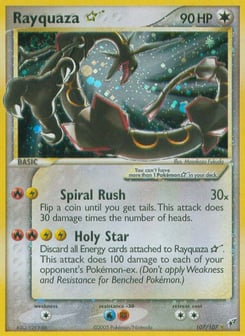 Rayquaza ☆Deoxys · #107$20,000 · PSA 10 $682,500Live market value · 16 Oct 2026 · medium confidenceView live price on CardTrack →
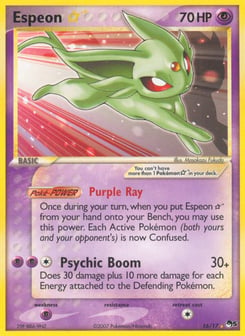 Espeon ☆POP Series 5 · #16$10,211 · PSA 10 $204,000Live market value · 16 Oct 2026 · medium confidenceView live price on CardTrack →
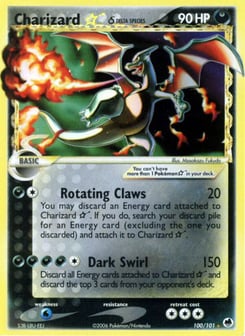 Charizard ☆ δDragon Frontiers · #100$10,099 · PSA 10 $475,000Live market value · 16 Oct 2026 · medium confidenceView live price on CardTrack →
Frequently Asked Questions
Do all Pokémon cards get a Full Art version? No. Full Art treatment is reserved for select Pokémon and Trainer cards in a set, not every card. Check the set's actual card list rather than assuming your favorite Pokémon has one — plenty of popular Pokémon have multiple cards and zero Full Arts.
Are Full Art Pokémon cards valuable? Some are, plenty aren't. The Pokémon itself, the set it's from, scarcity, and condition all matter more than the "Full Art" label alone — two Full Arts of the same Pokémon from different sets can sell for very different amounts.
Should I get my Full Art card graded? Weigh the card's estimated value and current condition before paying for grading. A Full Art isn't automatically worth submitting — our grading guide walks through the costs involved so you can work out whether it makes sense for that specific card.
What's the difference between a Full Art and a Rainbow or Gold card? Full Arts use full-bleed illustration with a foil texture over standard card colors. Gold and Rainbow Rares take it further with metallic or rainbow foil treatments across the whole card — our gold cards guide covers how those are classified and where they sit in rarity compared to a standard Full Art.
Data and sources behind this article
CardTrack data pages: Pokemon Card Value Checker · Pokemon Rarity · Pokemon Cards · Most expensive cards · Best cards to grade · Pokemon Gold
Latest Pokémon market report · live
October 2026 — Pikachu (Black & White) led the Pokémon card market, up 87.3% over the past 30 days. 1 October 2026
Go to the numbers: Pokemon hub · Collection tracker
Comments
No comments yet — be the first to weigh in.