Blue-Eyes White Dragon: Every Printing and What It's Worth
Card values in this article's embedded cards are live from CardTrack's catalogue as of 22 June 2026; figures quoted in the text are as at publication.
Blue-Eyes White Dragon is the most printed, most reprinted, and most recognizable card in the entire game, and that's exactly why its price runs from a couple bucks to five figures depending on which copy you're holding. The blue eyes white dragon price question doesn't have one answer — it has about fifteen answers, one for each major printing.
I've bought and sold more copies of this card than I can count, mostly because everyone who's ever seen the show wants one. Let me walk you through what actually matters when you're pricing a Blue-Eyes.
Why Blue-Eyes White Dragon Prices Vary So Much
This card has been printed so many times across the Yu-Gi-Oh TCG that condition and edition matter more than the card itself. A beat-up 1996 Japanese copy and a mint Quarter Century Secret Rare from 2022 share a name and nothing else in terms of value. Before you even look at a listing, check the set code in the corner — that three-to-five letter code is what separates a $3 card from a $3,000 one.
If you're trying to figure out what a specific copy in your binder is worth right now, I'd run it through a card value checker rather than trust a random eBay "sold" listing, because sold prices swing wildly based on grading and photos.
Legend of Blue Eyes White Dragon: The One Everyone Wants
The card almost every collector means when they say "Blue-Eyes" is the LOB-001 Ultra Rare from Legend of Blue Eyes White Dragon, the very first English booster set, released in 2002.
Blue-Eyes 1st Edition Value
The 1st edition LOB-001 is the crown jewel here. Based on recent sales, raw copies in played condition go for $150 to $400, but that number climbs fast once grading gets involved:
- PSA 7–8 — roughly $400–$900
- PSA 9 — commonly $1,200–$2,500
- PSA 10 — this is where it gets serious, with clean copies pulling $6,000–$10,000+, and exceptional ones going higher at auction
The blue eyes 1st edition value has been climbing for years because supply is fixed and demand from nostalgia buyers keeps growing. A lot of guys my age are re-buying the cards they pulled as kids, and this is the number one card on that list.
Unlimited LOB Blue-Eyes
The unlimited edition from the same set is far more common — it was reprinted heavily to meet demand back in 2002 — and sells for a fraction of the 1st edition price. Raw copies typically run $15–$40, with PSA 9s landing around $80–$150 and PSA 10s in the $200–$400 range. Still a real card, just nowhere near as scarce.
Starter Deck Kaiba: The "Cheap" Blue-Eyes
The Starter Deck Kaiba version (SDK-001) is the one most players actually owned growing up, since it came three-to-a-deck. It's common, it's everywhere, and that keeps blue eyes white dragon value low for this print — usually $2 to $10 raw, maybe $20-$30 for a pristine unplayed copy. Don't confuse this with the LOB Ultra Rare; the artwork's nearly identical but the rarity and price are worlds apart.
Ghost Rares, Secret Rares, and Modern Reprints
Konami knows Blue-Eyes sells product, so they've kept bringing it back in flashier finishes:
- Ghost Rare (Legendary Collection, 2011) — the shiny, ghostly finish makes this a fan favorite. Raw copies run $40–$90, with graded gem mint copies pushing past $200.
- Secret Rare printings (various Legendary Duelists and structure deck reprints) — generally $10–$30 depending on the specific set.
- Platinum Rare / Ultimate Rare textured versions — collectors like the embossed look, prices sit around $15–$40 in most cases.
- Quarter Century Secret Rare (25th Anniversary Rarity Collection, 2022) — this one surprised people. The QCSR finish is gorgeous and pull rates were low, so raw copies still command $80–$200, with graded 10s well above that.
If you're not sure which reprint you're holding, the full breakdown of every set Blue-Eyes has appeared in is easier to trace using the sets list than trying to remember every reprint from memory — trust me, there are too many.
Alternate Art and Special Blue-Eyes Cards
Beyond the "standard" dragon, there's a whole family of Blue-Eyes variants that trade completely separately:
- Blue-Eyes Ultimate Dragon (fused three-headed version) — early prints from Invasion of Chaos in Ultra Rare can hit $50–$150 raw.
- Blue-Eyes Alternative White Dragon — a fan favorite from Duelist Alliance, generally $20–$50 depending on rarity.
- Blue-Eyes Jack's Knight and other spin-off art cards — mostly low value, $2–$10, but fun for a collection.
- Anniversary Dragon (Rainbow Neos-adjacent promo) — much rarer, and prices vary a lot based on the specific promo event it came from.
None of these touch the original LOB Ultra Rare in value, but they matter if you're building a complete Blue-Eyes collection rather than chasing one grail card.
How Grading Changes the Blue-Eyes White Dragon Price
Grading is where the real money moves. A raw PSA-worthy 1st edition LOB copy might sell for $500. The same card back from PSA as a 10 can be worth ten times that. This isn't unique to Blue-Eyes, but because it's the most counterfeited card in the game, buyers pay a premium for a graded, verified copy.
Before you submit anything, look the card over yourself. Learn the difference between a genuine printing and a bootleg using a fake card checker — Blue-Eyes is one of the most faked cards in existence because of its value, and I've seen convincing fakes at local shops. Check the centering with a centering tool too, since off-center copies get knocked down a grade even when everything else looks clean, and centering is the number one reason a "10 candidate" comes back as an 8.
If you're new to submitting cards, our grading guide walks through what companies actually look for, and a card grader tool can give you a rough idea of where a raw copy might land before you spend money on submission fees.
Where Blue-Eyes Sits Among the Game's Most Valuable Cards
Blue-Eyes doesn't usually crack the very top of the game's price charts — that list is dominated by tournament prize cards and one-off promos — but the 1st edition LOB copy in high grade regularly shows up near the top of searches for iconic chase cards. You can see how it stacks up against the true blue-chip cards on the most expensive cards page, and it's a good reminder that fame and rarity aren't the same thing. Blue-Eyes is famous. Some of the cards worth more than it, most players have never heard of.
For a running snapshot of current numbers across all the major printings, I'd bookmark the Yu-Gi-Oh price guide rather than relying on this post alone — prices can move quickly, especially around anniversary reprints or when Konami announces a new structure deck.
Understanding Rarity Before You Buy or Sell
One mistake I see constantly: people assume "Blue-Eyes White Dragon" is one card with one price. It's not. The rarity symbol next to the card number tells you almost everything. If you're not confident reading Ultra Rare versus Secret Rare versus Ghost Rare on sight, spend ten minutes with the rarity guide before your next trade. It'll save you from either underselling a genuine 1st edition Ultra Rare or overpaying for a common Starter Deck copy someone's trying to pass off as rare.
Top Yu-Gi-Oh Cards by Value Right Now
These carry some of the highest estimated market values on CardTrack today. Figures are based on recent sales and can move quickly, so treat them as a snapshot:
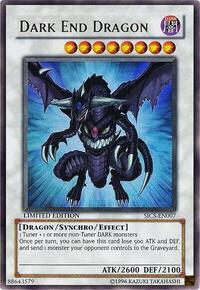 Dark End DragonShonen Jump Championship Series Prize Cards · #SJCS-EN007$5,000Live market value · 22 Jun 2026 · medium confidenceView live price on CardTrack →
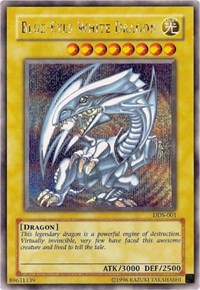 Blue-Eyes White Dragon (Dark Duel Stories)Yu-Gi-Oh! Video Game Promotional Cards · #DDS-001$3,000Live market value · 22 Jun 2026 · medium confidenceView live price on CardTrack →
Frequently Asked Questions
How much is a Blue-Eyes White Dragon 1st edition worth? Based on recent sales, raw 1st edition copies from Legend of Blue Eyes White Dragon run roughly $150–$400, while graded PSA 10 copies have sold for $6,000 or more. The blue eyes 1st edition value depends heavily on centering and surface condition, since this print is notoriously hard to find flawless.
What's the rarest version of Blue-Eyes White Dragon? The original LOB-001 1st edition Ultra Rare is generally considered the most sought-after standard printing, though limited promos and low-pop Quarter Century Secret Rare copies can command similar or higher prices in top grades. Rarity here is really a mix of print run size and how many survived in good shape.
Is the Starter Deck Kaiba Blue-Eyes the same as the rare one? No. The SDK version is a common card printed in huge quantities and typically sells for just a few dollars. The valuable version is the Ultra Rare LOB-001 print, which looks similar but has a different set code and rarity symbol.
Why are there so many fake Blue-Eyes White Dragon cards? Because it's the most iconic card in the game and the 1st edition version carries real money, counterfeiters target it constantly. Always check holo patterns, font, and card stock against a known-genuine copy, or run it through a fake card checker before buying or selling anything above a few dollars.
Data and sources behind this article
CardTrack data pages: Yugioh · Yugioh Card Value Checker · Yugioh Sets · Yugioh Fake Card Check · Yugioh Card Centering · Yugioh Grade · Yugioh Card Grader · Yugioh Most Expensive · Yugioh Prices · Yugioh Rarity
Latest Yu-Gi-Oh! market report · live
September 2026 — Pyramid Turtle (Champion Pack 2) led the Yu-Gi-Oh! card market, up 55.7% over the past 30 days. 1 September 2026
Go to the numbers: Compare two cards
Comments
No comments yet — be the first to weigh in.