How to flip Pokémon cards: buy on TCGplayer or Cardmarket, sell on eBay
These are cards you can buy on TCGplayer or Cardmarket for less than they sell for on eBay. The sell price on every row is the median of what raw (ungraded) copies of the card actually sold for over the last 12 months, mostly on eBay and including our own daily eBay trawl, not an asking price. The buy price is the cheaper of its TCGplayer and Cardmarket prices. Rows are ranked by the net after eBay's selling fees (as a percentage of the buy price), because the headline gap is not what you keep. Shipping, tax, import charges and condition differences come on top. This is independent market data, not trading advice.
Of 20,902 cards, 14,751 have a raw sold median from at least 3 sales in the last 12 months and 14,475 of those also have a TCGplayer or Cardmarket price. 144 of those have a buy price of at least $8 and a sold median 25–150% above it; 95 are shown and 49 are hidden because a price sits more than 1.5× from our estimate. 95 of the 95 shown sold at least once raw in the last 90 days. Catalogue prices as of 8 October 2026; sold medians updated 8 October 2026.
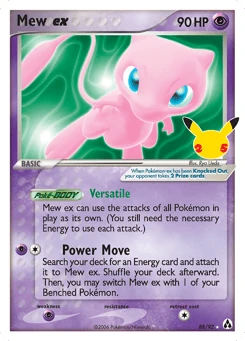 Mew exCelebrations: Classic Collection · #883 raw sales · 90d · our estimate $20Buy · TCGplayer$17.06→Sell · sold median$30.00Gross+$12.94eBay fees−$4.38Net+$8.57+50%
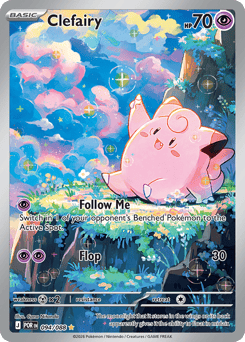 ClefairyPerfect Order · #94249 raw sales · 90d · our estimate $15Buy · TCGplayer$11.38→Sell · sold median$19.99Gross+$8.61eBay fees−$3.05Net+$5.56+49%
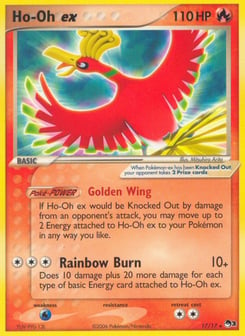 Ho-Oh exPOP Series 3 · #173 raw sales · 90d · our estimate $153Buy · TCGplayer$125.00→Sell · sold median$199.99Gross+$74.99eBay fees−$26.90Net+$48.09+38%
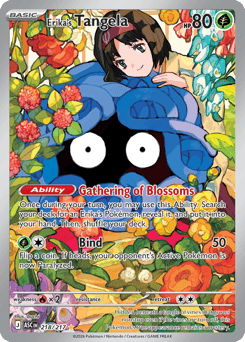 Erika's TangelaAscended Heroes · #218474 raw sales · 90d · our estimate $16Buy · TCGplayer$11.27→Sell · sold median$17.99Gross+$6.72eBay fees−$2.78Net+$3.94+35%
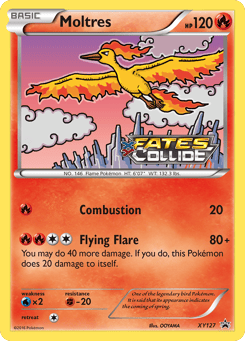 MoltresXY Black Star Promos · #XY1279 raw sales · 90d · our estimate $66Buy · TCGplayer$54.73→Sell · sold median$85.00Gross+$30.27eBay fees−$11.66Net+$18.61+34%
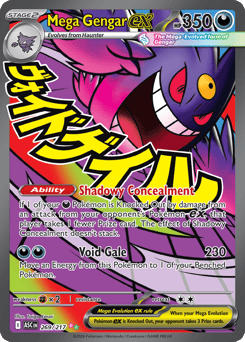 Mega Gengar exAscended Heroes · #269686 raw sales · 90d · our estimate $45Buy · TCGplayer$35.92→Sell · sold median$55.00Gross+$19.08eBay fees−$7.69Net+$11.39+32%
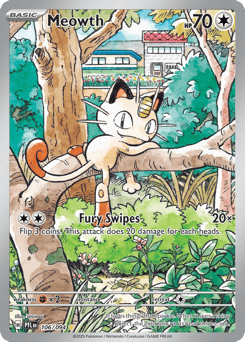 MeowthPhantasmal Flames · #106574 raw sales · 90d · our estimate $18Buy · TCGplayer$12.61→Sell · sold median$19.29Gross+$6.68eBay fees−$2.96Net+$3.72+30%
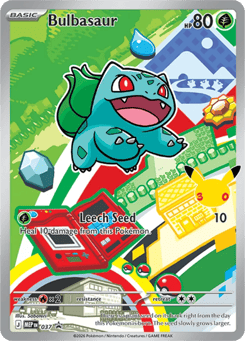 BulbasaurMega Evolution Black Star Promos · #3799 raw sales · 90d · our estimate $20Buy · TCGplayer$19.93→Sell · sold median$29.99Gross+$10.06eBay fees−$4.37Net+$5.69+29%
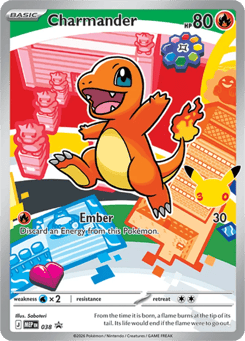 CharmanderMega Evolution Black Star Promos · #38106 raw sales · 90d · our estimate $28Buy · TCGplayer$26.71→Sell · sold median$40.00Gross+$13.29eBay fees−$5.70Net+$7.59+28%
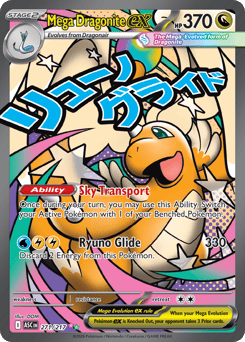 Mega Dragonite exAscended Heroes · #271592 raw sales · 90d · our estimate $34Buy · TCGplayer$26.83→Sell · sold median$39.99Gross+$13.16eBay fees−$5.70Net+$7.46+28%
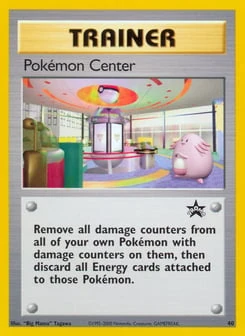 Pokémon CenterWizards Black Star Promos · #4011 raw sales · 90d · our estimate $1,516Buy · TCGplayer$1,199.00→Sell · sold median$1,725.00Gross+$526.00eBay fees−$228.96Net+$297.04+25%
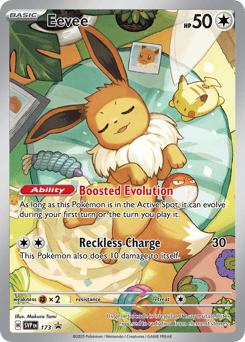 EeveeScarlet & Violet Black Star Promos · #173248 raw sales · 90d · our estimate $9Buy · TCGplayer$9.49→Sell · sold median$14.00Gross+$4.51eBay fees−$2.26Net+$2.26+24%
 Mega Dragalge exChaos Rising · #118484 raw sales · 90d · our estimate $31Buy · TCGplayer$24.97→Sell · sold median$35.95Gross+$10.98eBay fees−$5.16Net+$5.82+23%
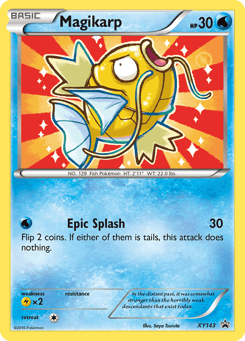 MagikarpXY Black Star Promos · #XY143131 raw sales · 90d · our estimate $101Buy · TCGplayer$86.59→Sell · sold median$123.00Gross+$36.41eBay fees−$16.70Net+$19.71+23%
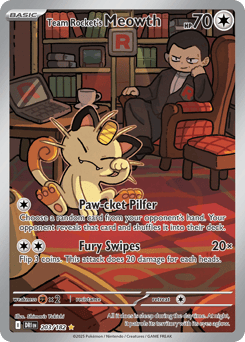 Team Rocket's MeowthDestined Rivals · #203390 raw sales · 90d · our estimate $21Buy · TCGplayer$17.38→Sell · sold median$25.00Gross+$7.62eBay fees−$3.71Net+$3.91+22%
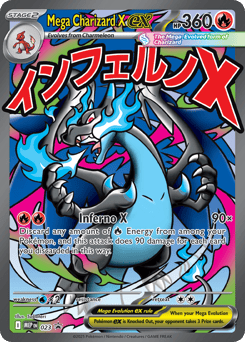 Mega Charizard X exMega Evolution Black Star Promos · #23135 raw sales · 90d · our estimate $28Buy · TCGplayer$24.48→Sell · sold median$35.00Gross+$10.52eBay fees−$5.04Net+$5.48+22%
 Professor's LetterBREAKthrough · #146a5 raw sales · 90d · our estimate $10Buy · TCGplayer$9.62→Sell · sold median$13.99Gross+$4.37eBay fees−$2.25Net+$2.12+22%
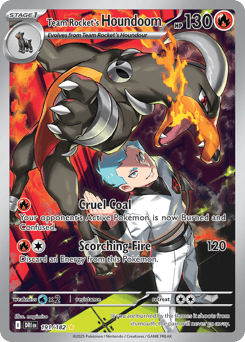 Team Rocket's HoundoomDestined Rivals · #191307 raw sales · 90d · our estimate $10Buy · TCGplayer$9.50→Sell · sold median$13.79Gross+$4.29eBay fees−$2.23Net+$2.06+22%
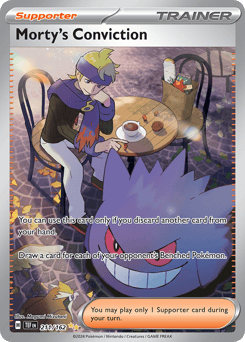 Morty's ConvictionTemporal Forces · #21195 raw sales · 90d · our estimate $65Buy · TCGplayer$49.82→Sell · sold median$69.99Gross+$20.17eBay fees−$9.67Net+$10.50+21%
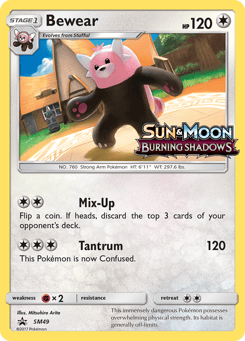 BewearSM Black Star Promos · #SM495 raw sales · 90d · our estimate $14Buy · TCGplayer$14.17→Sell · sold median$20.22Gross+$6.05eBay fees−$3.08Net+$2.97+21%
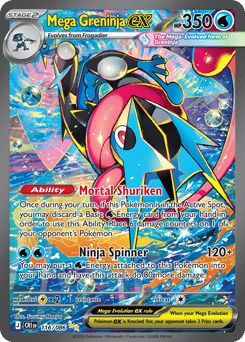 Mega Greninja exChaos Rising · #116525 raw sales · 90d · our estimate $159Buy · TCGplayer$133.56→Sell · sold median$185.00Gross+$51.44eBay fees−$24.91Net+$26.53+20%
 Misty's VitalityPitch Black · #111497 raw sales · 90d · our estimate $12Buy · TCGplayer$10.19→Sell · sold median$14.39Gross+$4.20eBay fees−$2.31Net+$1.89+19%
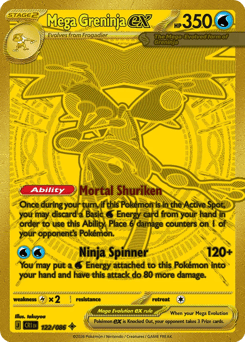 Mega Greninja exChaos Rising · #122434 raw sales · 90d · our estimate $148Buy · TCGplayer$128.02→Sell · sold median$175.00Gross+$46.98eBay fees−$23.59Net+$23.39+18%
 Morpeko exPitch Black · #117640 raw sales · 90d · our estimate $78Buy · TCGplayer$63.81→Sell · sold median$87.00Gross+$23.19eBay fees−$11.93Net+$11.26+18%
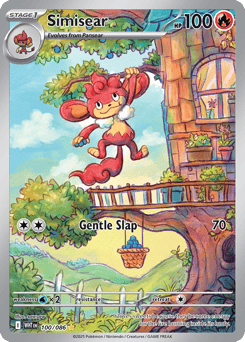 SimisearWhite Flare · #100100 raw sales · 90d · our estimate $15Buy · TCGplayer$10.73→Sell · sold median$15.00Gross+$4.27eBay fees−$2.39Net+$1.88+18%
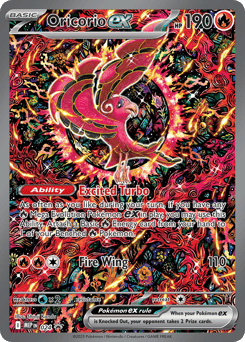 Oricorio exMega Evolution Black Star Promos · #24181 raw sales · 90d · our estimate $9Buy · TCGplayer$8.90→Sell · sold median$12.49Gross+$3.59eBay fees−$2.05Net+$1.54+17%
 Iris's Fighting SpiritAscended Heroes · #292189 raw sales · 90d · our estimate $26Buy · TCGplayer$22.58→Sell · sold median$30.93Gross+$8.35eBay fees−$4.50Net+$3.85+17%
 PsyduckAscended Heroes · #226435 raw sales · 90d · our estimate $55Buy · TCGplayer$45.67→Sell · sold median$62.00Gross+$16.33eBay fees−$8.62Net+$7.71+17%
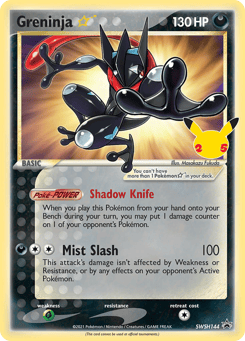 Greninja ☆SWSH Black Star Promos · #SWSH144252 raw sales · 90d · our estimate $27Buy · TCGplayer$19.73→Sell · sold median$27.00Gross+$7.27eBay fees−$3.98Net+$3.29+17%
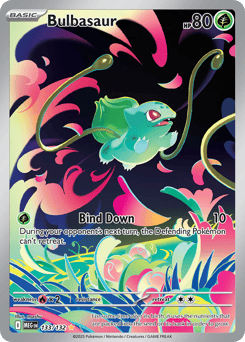 BulbasaurMega Evolution · #133608 raw sales · 90d · our estimate $20Buy · TCGplayer$14.55→Sell · sold median$20.00Gross+$5.45eBay fees−$3.05Net+$2.40+16%
 Heal EnergyPOP Series 4 · #82 raw sales · 90d · our estimate $10Buy · TCGplayer$10.23→Sell · sold median$14.18Gross+$3.95eBay fees−$2.28Net+$1.67+16%
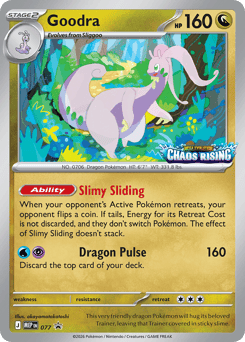 GoodraMega Evolution Black Star Promos · #7715 raw sales · 90d · our estimate $15Buy · TCGplayer$10.85→Sell · sold median$14.99Gross+$4.14eBay fees−$2.39Net+$1.75+16%
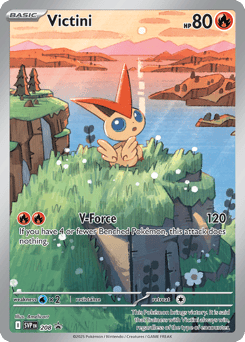 VictiniScarlet & Violet Black Star Promos · #20895 raw sales · 90d · our estimate $9Buy · TCGplayer$8.58→Sell · sold median$11.92Gross+$3.34eBay fees−$1.98Net+$1.36+16%
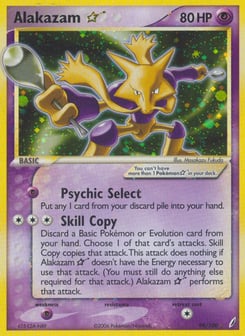 Alakazam ☆Crystal Guardians · #9934 raw sales · 90d · our estimate $1,102Buy · TCGplayer$900.00→Sell · sold median$1,200.00Gross+$300.00eBay fees−$159.40Net+$140.60+16%
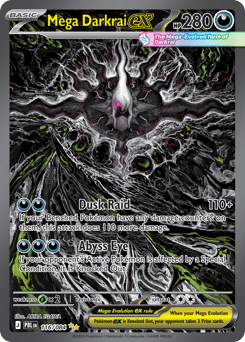 Mega Darkrai exPitch Black · #116789 raw sales · 90d · our estimate $185Buy · TCGplayer$158.33→Sell · sold median$210.00Gross+$51.67eBay fees−$28.23Net+$23.44+15%
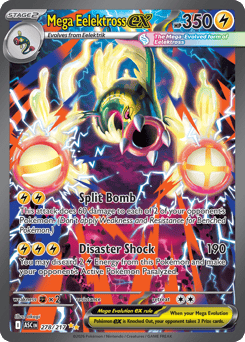 Mega Eelektross exAscended Heroes · #278147 raw sales · 90d · our estimate $30Buy · TCGplayer$24.44→Sell · sold median$32.75Gross+$8.31eBay fees−$4.74Net+$3.57+15%
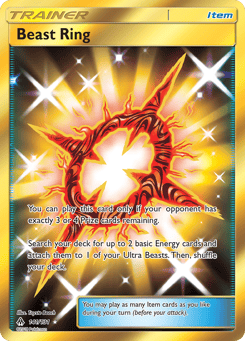 Beast RingForbidden Light · #1414 raw sales · 90d · our estimate $9Buy · TCGplayer$9.39→Sell · sold median$12.85Gross+$3.46eBay fees−$2.10Net+$1.36+14%
 CanariAscended Heroes · #291208 raw sales · 90d · our estimate $32Buy · TCGplayer$25.33→Sell · sold median$33.88Gross+$8.55eBay fees−$4.89Net+$3.66+14%
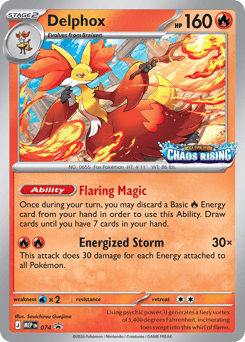 DelphoxMega Evolution Black Star Promos · #7485 raw sales · 90d · our estimate $15Buy · TCGplayer$11.84→Sell · sold median$15.99Gross+$4.15eBay fees−$2.52Net+$1.63+14%
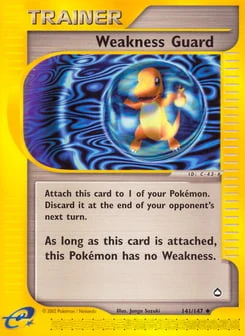 Weakness GuardAquapolis · #14121 raw sales · 90d · our estimate $80Buy · TCGplayer$60.87→Sell · sold median$80.00Gross+$19.13eBay fees−$11.00Net+$8.13+13%
 SquirtleMega Evolution Black Star Promos · #39115 raw sales · 90d · our estimate $21Buy · TCGplayer$22.64→Sell · sold median$30.00Gross+$7.36eBay fees−$4.38Net+$2.98+13%
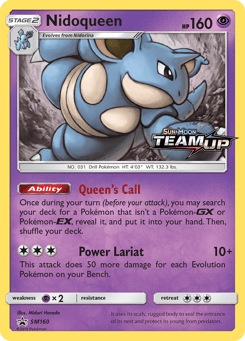 NidoqueenSM Black Star Promos · #SM16019 raw sales · 90d · our estimate $10Buy · TCGplayer$9.62→Sell · sold median$12.99Gross+$3.37eBay fees−$2.12Net+$1.25+13%
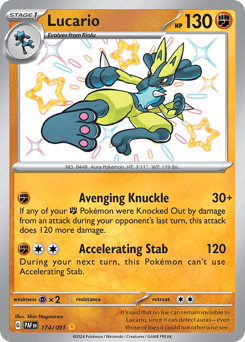 LucarioPaldean Fates · #17488 raw sales · 90d · our estimate $20Buy · TCGplayer$19.64→Sell · sold median$26.00Gross+$6.36eBay fees−$3.85Net+$2.51+13%
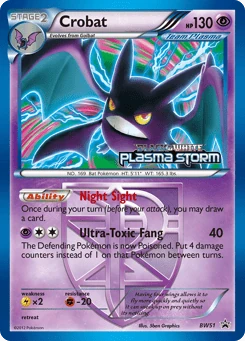 CrobatBW Black Star Promos · #BW5115 raw sales · 90d · our estimate $50Buy · TCGplayer$34.30→Sell · sold median$44.99Gross+$10.69eBay fees−$6.36Net+$4.33+13%
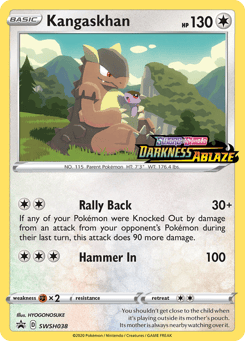 KangaskhanSWSH Black Star Promos · #SWSH03815 raw sales · 90d · our estimate $15Buy · TCGplayer$11.58→Sell · sold median$15.49Gross+$3.91eBay fees−$2.45Net+$1.46+13%
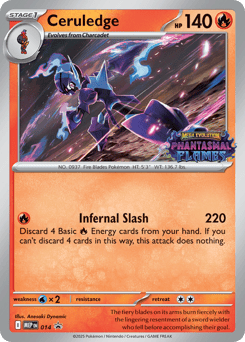 CeruledgeMega Evolution Black Star Promos · #1470 raw sales · 90d · our estimate $16Buy · TCGplayer$13.43→Sell · sold median$17.87Gross+$4.44eBay fees−$2.77Net+$1.67+12%
 ClivePaldean Fates · #236152 raw sales · 90d · our estimate $26Buy · TCGplayer$21.30→Sell · sold median$28.00Gross+$6.70eBay fees−$4.11Net+$2.59+12%
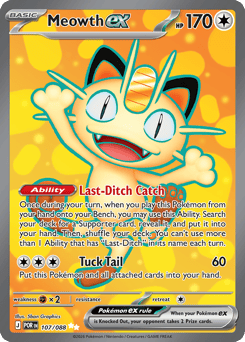 Meowth exPerfect Order · #107484 raw sales · 90d · our estimate $10Buy · TCGplayer$9.62→Sell · sold median$12.89Gross+$3.27eBay fees−$2.11Net+$1.16+12%
 SkylaShining Fates · #7295 raw sales · 90d · our estimate $9Buy · TCGplayer$8.78→Sell · sold median$11.78Gross+$3.00eBay fees−$1.96Net+$1.04+12%
 Iron Hands exPrismatic Evolutions · #154120 raw sales · 90d · our estimate $30Buy · TCGplayer$22.95→Sell · sold median$29.99Gross+$7.04eBay fees−$4.37Net+$2.67+12%
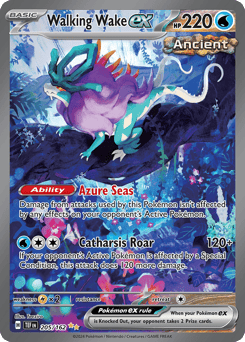 Walking Wake exTemporal Forces · #20594 raw sales · 90d · our estimate $55Buy · TCGplayer$38.51→Sell · sold median$50.00Gross+$11.49eBay fees−$7.03Net+$4.47+12%
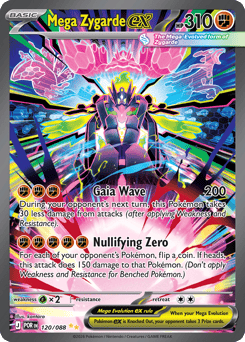 Mega Zygarde exPerfect Order · #120344 raw sales · 90d · our estimate $50Buy · TCGplayer$42.41→Sell · sold median$55.00Gross+$12.59eBay fees−$7.69Net+$4.90+12%
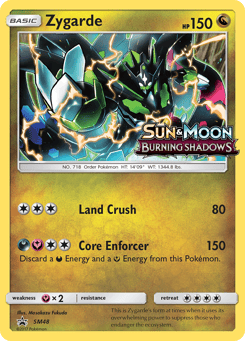 ZygardeSM Black Star Promos · #SM484 raw sales · 90d · our estimate $18 · TCGplayer $16Buy · Cardmarket$13.64→Sell · sold median$18.00Gross+$4.36eBay fees−$2.79Net+$1.57+12%
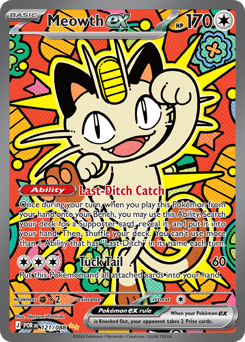 Meowth exPerfect Order · #121414 raw sales · 90d · our estimate $100Buy · TCGplayer$92.48→Sell · sold median$119.22Gross+$26.74eBay fees−$16.20Net+$10.54+11%
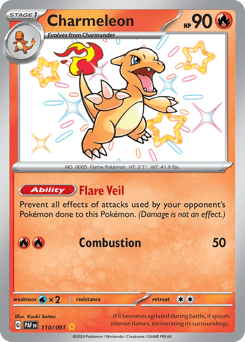 CharmeleonPaldean Fates · #110106 raw sales · 90d · our estimate $17Buy · TCGplayer$14.43→Sell · sold median$18.99Gross+$4.56eBay fees−$2.92Net+$1.64+11%
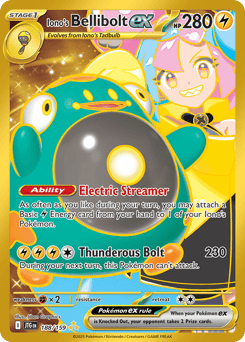 Iono's Bellibolt exJourney Together · #188139 raw sales · 90d · our estimate $13Buy · TCGplayer$10.74→Sell · sold median$14.25Gross+$3.51eBay fees−$2.29Net+$1.22+11%
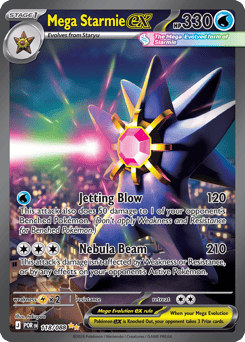 Mega Starmie exPerfect Order · #118423 raw sales · 90d · our estimate $37Buy · TCGplayer$30.84→Sell · sold median$40.00Gross+$9.16eBay fees−$5.70Net+$3.46+11%
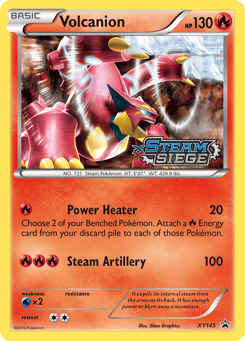 VolcanionXY Black Star Promos · #XY1455 raw sales · 90d · our estimate $20 · Cardmarket $43Buy · TCGplayer$15.24→Sell · sold median$19.96Gross+$4.72eBay fees−$3.04Net+$1.68+11%
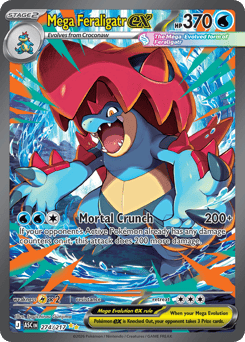 Mega Feraligatr exAscended Heroes · #274151 raw sales · 90d · our estimate $102Buy · TCGplayer$93.75→Sell · sold median$120.00Gross+$26.25eBay fees−$16.30Net+$9.95+11%
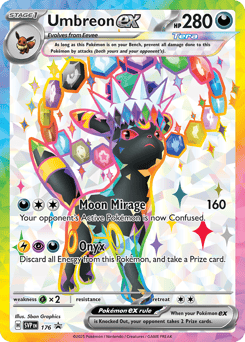 Umbreon exScarlet & Violet Black Star Promos · #17688 raw sales · 90d · our estimate $30Buy · TCGplayer$28.77→Sell · sold median$37.00Gross+$8.23eBay fees−$5.30Net+$2.93+10%
 PidgeyObsidian Flames · #207243 raw sales · 90d · our estimate $15Buy · TCGplayer$11.86→Sell · sold median$15.50Gross+$3.64eBay fees−$2.45Net+$1.19+10%
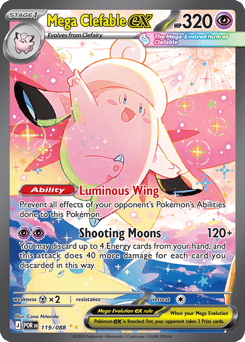 Mega Clefable exPerfect Order · #119401 raw sales · 90d · our estimate $50Buy · TCGplayer$39.13→Sell · sold median$50.00Gross+$10.87eBay fees−$7.03Net+$3.84+10%
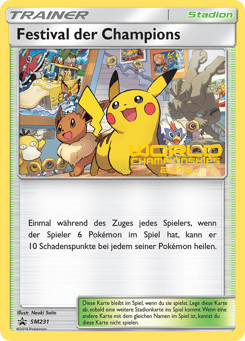 Champions FestivalSM Black Star Promos · #SM2314 raw sales · 90d · our estimate $263Buy · TCGplayer$262.99→Sell · sold median$333.00Gross+$70.01eBay fees−$44.52Net+$25.49+10%
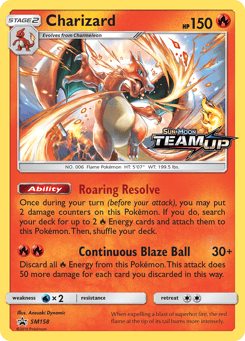 CharizardSM Black Star Promos · #SM15830 raw sales · 90d · our estimate $121Buy · TCGplayer$107.34→Sell · sold median$135.99Gross+$28.65eBay fees−$18.42Net+$10.23+10%
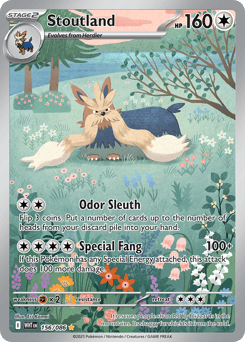 StoutlandWhite Flare · #15679 raw sales · 90d · our estimate $24Buy · TCGplayer$21.82→Sell · sold median$28.00Gross+$6.18eBay fees−$4.11Net+$2.07+9%
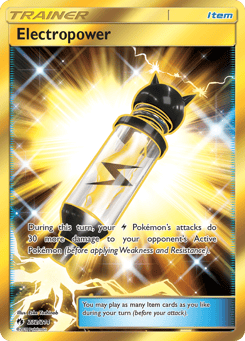 ElectropowerLost Thunder · #2324 raw sales · 90d · our estimate $8Buy · TCGplayer$8.36→Sell · sold median$11.00Gross+$2.64eBay fees−$1.86Net+$0.78+9%
 PikachuScarlet & Violet Black Star Promos · #2746 raw sales · 90d · our estimate $25Buy · TCGplayer$19.49→Sell · sold median$24.99Gross+$5.50eBay fees−$3.71Net+$1.79+9%
 PennyPaldean Fates · #239114 raw sales · 90d · our estimate $17Buy · TCGplayer$13.94→Sell · sold median$18.00Gross+$4.06eBay fees−$2.79Net+$1.28+9%
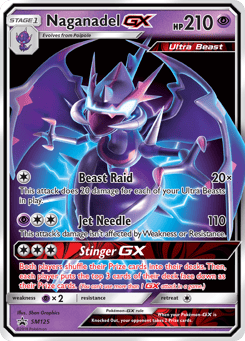 Naganadel-GXSM Black Star Promos · #SM12529 raw sales · 90d · our estimate $10Buy · TCGplayer$9.68→Sell · sold median$12.62Gross+$2.94eBay fees−$2.07Net+$0.87+9%
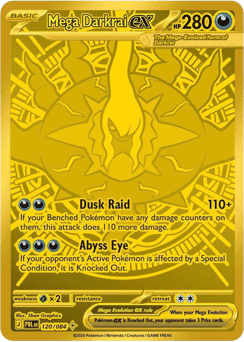 Mega Darkrai exPitch Black · #120504 raw sales · 90d · our estimate $160Buy · TCGplayer$139.00→Sell · sold median$175.00Gross+$36.00eBay fees−$23.59Net+$12.41+9%
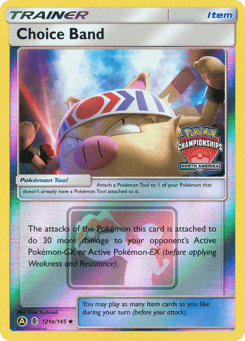 Choice BandGuardians Rising · #121a1 raw sale · 90d · our estimate $28Buy · TCGplayer$28.04→Sell · sold median$35.67Gross+$7.63eBay fees−$5.13Net+$2.50+9%
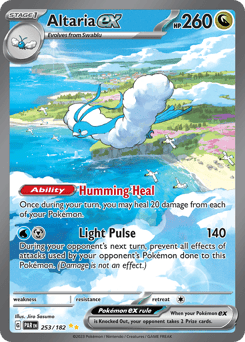 Altaria exParadox Rift · #253116 raw sales · 90d · our estimate $55Buy · TCGplayer$45.93→Sell · sold median$58.00Gross+$12.07eBay fees−$8.09Net+$3.98+9%
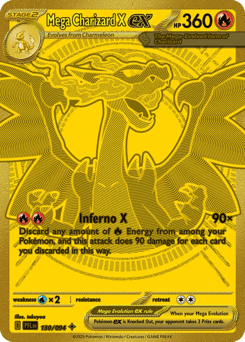 Mega Charizard X exPhantasmal Flames · #130331 raw sales · 90d · our estimate $250Buy · TCGplayer$219.22→Sell · sold median$275.00Gross+$55.78eBay fees−$36.84Net+$18.94+9%
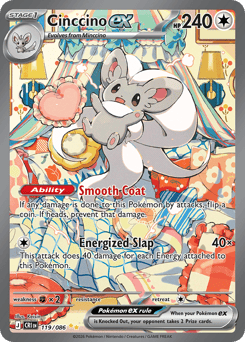 Cinccino exChaos Rising · #119490 raw sales · 90d · our estimate $46Buy · TCGplayer$43.71→Sell · sold median$55.00Gross+$11.29eBay fees−$7.69Net+$3.60+8%
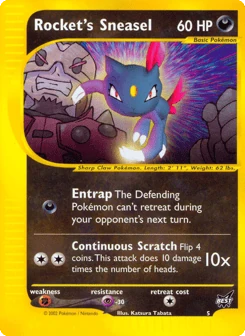 Rocket's SneaselBest of Game · #529 raw sales · 90d · our estimate $25Buy · TCGplayer$20.48→Sell · sold median$26.00Gross+$5.52eBay fees−$3.85Net+$1.67+8%
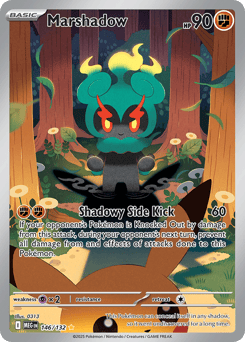 MarshadowMega Evolution · #146292 raw sales · 90d · our estimate $13Buy · TCGplayer$10.32→Sell · sold median$13.33Gross+$3.01eBay fees−$2.17Net+$0.84+8%
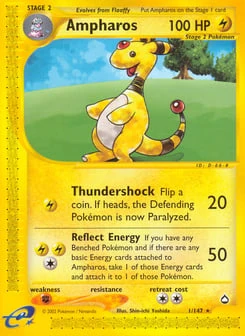 AmpharosAquapolis · #13 raw sales · 90d · our estimate $40Buy · TCGplayer$31.72→Sell · sold median$40.00Gross+$8.28eBay fees−$5.70Net+$2.58+8%
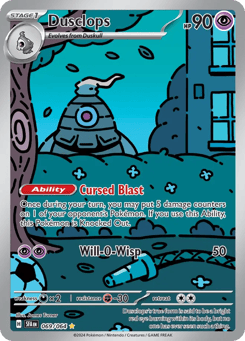 DusclopsShrouded Fable · #6992 raw sales · 90d · our estimate $34Buy · TCGplayer$27.73→Sell · sold median$35.00Gross+$7.27eBay fees−$5.04Net+$2.23+8%
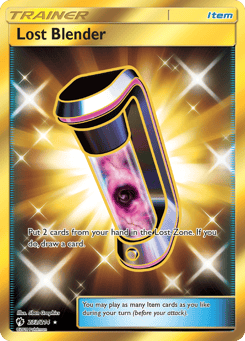 Lost BlenderLost Thunder · #2337 raw sales · 90d · our estimate $13Buy · TCGplayer$10.07→Sell · sold median$13.00Gross+$2.93eBay fees−$2.12Net+$0.81+8%
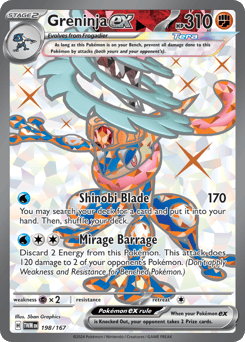 Greninja exTwilight Masquerade · #198178 raw sales · 90d · our estimate $16Buy · TCGplayer$12.49→Sell · sold median$15.99Gross+$3.50eBay fees−$2.52Net+$0.98+8%
 Roxie's PerformanceChaos Rising · #121538 raw sales · 90d · our estimate $20Buy · TCGplayer$15.72→Sell · sold median$19.99Gross+$4.27eBay fees−$3.05Net+$1.22+8%
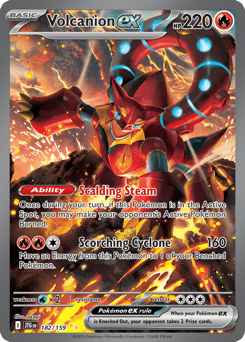 Volcanion exJourney Together · #182267 raw sales · 90d · our estimate $19Buy · TCGplayer$14.93→Sell · sold median$18.99Gross+$4.06eBay fees−$2.92Net+$1.14+8%
 Team Rocket's ArianaDestined Rivals · #237161 raw sales · 90d · our estimate $20Buy · TCGplayer$15.75→Sell · sold median$19.99Gross+$4.24eBay fees−$3.05Net+$1.19+8%
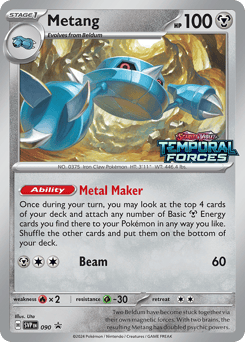 MetangScarlet & Violet Black Star Promos · #9010 raw sales · 90d · our estimate $14 · Cardmarket $13Buy · TCGplayer$11.70→Sell · sold median$14.95Gross+$3.25eBay fees−$2.38Net+$0.87+7%
 Mew exPaldean Fates · #216249 raw sales · 90d · our estimate $35Buy · TCGplayer$27.93→Sell · sold median$35.00Gross+$7.07eBay fees−$5.04Net+$2.03+7%
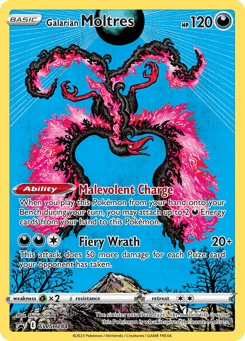 Galarian MoltresSWSH Black Star Promos · #SWSH284189 raw sales · 90d · our estimate $15Buy · TCGplayer$11.76→Sell · sold median$15.00Gross+$3.24eBay fees−$2.39Net+$0.85+7%
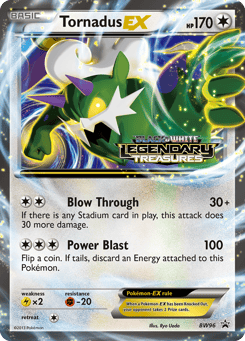 Tornadus-EXBW Black Star Promos · #BW966 raw sales · 90d · our estimate $21 · TCGplayer $18Buy · Cardmarket$16.86→Sell · sold median$21.20Gross+$4.34eBay fees−$3.21Net+$1.13+7%
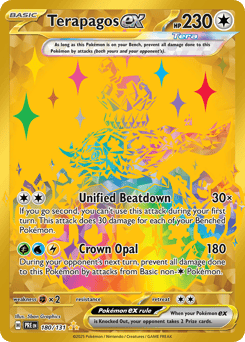 Terapagos exPrismatic Evolutions · #180207 raw sales · 90d · our estimate $8Buy · TCGplayer$8.17→Sell · sold median$10.50Gross+$2.33eBay fees−$1.79Net+$0.54+7%
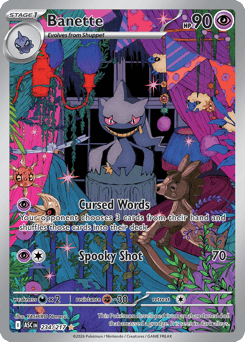 BanetteAscended Heroes · #234331 raw sales · 90d · our estimate $8Buy · TCGplayer$8.39→Sell · sold median$10.75Gross+$2.36eBay fees−$1.82Net+$0.54+6%
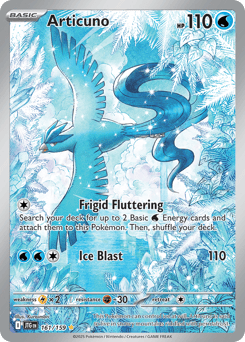 ArticunoJourney Together · #161577 raw sales · 90d · our estimate $20Buy · TCGplayer$15.97→Sell · sold median$19.99Gross+$4.02eBay fees−$3.05Net+$0.97+6%
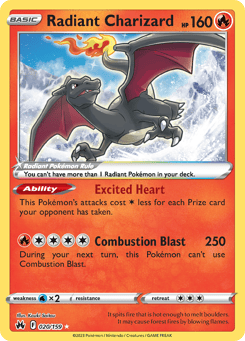 Radiant CharizardCrown Zenith · #20113 raw sales · 90d · our estimate $13Buy · TCGplayer$10.06→Sell · sold median$12.75Gross+$2.69eBay fees−$2.09Net+$0.60+6%
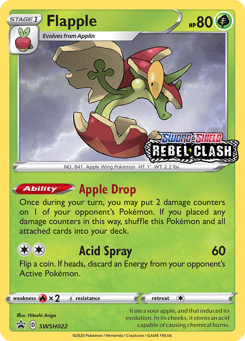 FlappleSWSH Black Star Promos · #SWSH02211 raw sales · 90d · our estimate $9Buy · TCGplayer$8.63→Sell · sold median$10.99Gross+$2.36eBay fees−$1.86Net+$0.50+6%
 Missing CloverUltra Prism · #1685 raw sales · 90d · our estimate $10Buy · TCGplayer$10.27→Sell · sold median$12.99Gross+$2.72eBay fees−$2.12Net+$0.60+6%
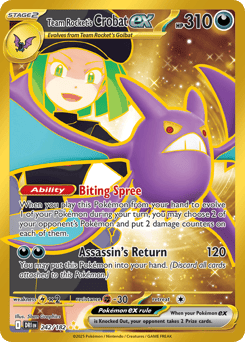 Team Rocket's Crobat exDestined Rivals · #242164 raw sales · 90d · our estimate $14Buy · TCGplayer$11.99→Sell · sold median$15.00Gross+$3.01eBay fees−$2.39Net+$0.62+5%
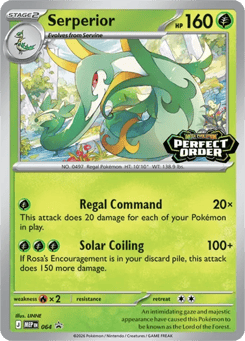 SerperiorMega Evolution Black Star Promos · #6450 raw sales · 90d · our estimate $9Buy · TCGplayer$9.49→Sell · sold median$11.91Gross+$2.42eBay fees−$1.98Net+$0.44+5%
Net = raw sold median − eBay selling fees − buy price (the cheaper of TCGplayer and Cardmarket); the % is net as a share of the buy price. Shipping both ways, sales tax, Cardmarket import charges and condition differences are not included, so treat net as the optimistic bound.
How to flip Pokémon cards using this list
1. Match the exact card. Open the card page and check the set, number and printing on both the listing you buy and the eBay sales. A 1st Edition, shadowless or reverse holo copy can sell for several times the regular one, and a mismatch creates a gap that does not exist.
2. Check the exit. Each row shows how many raw copies sold in the last 90 days. With none, the sold median rests on sales up to a year old and may not hold. The most-traded cards are the easiest to resell.
3. Price every cost before you buy. The net column already takes off eBay's selling fees. It does not include shipping to you, sales tax, Cardmarket's cross-border shipping and import charges, or postage to your eBay buyer. The fee calculator works out your break-even price.
4. Judge condition from photos. The buy prices are near-mint prices. The sold median leaves out copies whose listing says they are worn, but a listing can undersell a copy's wear. Whitening, scratches or poor centering on the copy you buy can wipe out a flip. The condition guide shows what each grade looks like.
5. Sanity-check the gap. We hide rows where the sold median is more than 1.5× above CardTrack's own estimate, or the buy price more than 1.5× below it. Those are usually a different printing or a thin market, not a profit. You can show them with the toggle above the list.
What each price means
- Sold median (sell): the median of the card's raw (ungraded) completed sales over the last 12 months, from CardTrack's sales ledger: eBay sales from several feeds, including our own daily eBay trawl, plus the occasional raw Fanatics sale. Listings that say the copy is worn, graded, fake or a different printing are removed, one sale recorded by two feeds counts once, and recent sales count more (a sale's weight halves every 120 days). A card needs at least 3 sales in the 12 months to be listed.
- TCGplayer (buy): TCGplayer's near-mint market price for this printing from our TCGplayer price feed, or a TCGplayer near-mint price we have matched to this printing. TCGplayer calculates its market price from recent sales, so it is a typical price, not a live listing. Check current listings before you buy. Where we cannot tie a TCGplayer figure to the printing (261 cards), we leave the card out rather than fall back to our own estimate.
- Cardmarket (buy): Cardmarket is a European marketplace priced in euros. Our feed stores its price converted to US dollars when the price was fetched, so the euro price you see today can differ. Our current feed has a usable Cardmarket price for only 31 of 20,902 cards, and it is the cheaper leg on 2 of the 95 rows shown. Buying from Cardmarket into the US adds cross-border shipping and can add import duty or tax, none of which is included.
PriceCharting and CardTrack's own estimate are not used as buy prices: neither is somewhere you can buy a card.
eBay fees that come off the flip
eBay charges its fees on the sale price, so they come off the sold median. This is what our fee model charges on a $100 raw card:
| Marketplace | Fee rule | Fees on $100 | You keep |
|---|---|---|---|
| eBay | 13.25% final value fee (2.35% on any portion over $7,500) + $0.40 per order ($0.30 on orders of $10 or less) | $13.65 | $86.35 |
Rates checked against eBay's fee page on 26 September 2026. Standard-seller rates only; store subscriptions, promotions and promoted listings change them. Buying costs money too: shipping to you, sales tax, and on Cardmarket orders cross-border shipping and import charges. None of these is in the net column.
Why a gap on this list is not yet a profit
Of the 144 cards in the scan band, 49 have a price more than 1.5× away from our estimate, which is why they are hidden. Of the 95 shown, 0 have no raw sale in the last 90 days, so their sold median rests on older sales. The median net is 12% of the buy price, before shipping and buying costs. Prices also move: a gap can close between buying a card and listing it, and a small flip on a cheap card may not cover postage. Treat this list as a shortlist to check card by card, not a buy list. The biggest movers show where prices are changing fastest.
Cheap flips and expensive flips are different trades
The median buy price on the rows shown is $17.38; 52 of the 95 rows have a buy price under $20, and 69 net less than $5 after eBay's fees. On a cheap card the fixed costs dominate. eBay's fees come to $1.63 on a $10 sale (16.3% of it) against $13.65 on $100 (13.7%), because the per-order fee is flat ($0.30 on a $10 sale, $0.40 on $100) rather than a share of the price, and a tracked postage label costs the same whether the card sold for $12 or $120. A $4 net on a $10 card is real, but it is a $4 payment for the time to buy, receive, photograph, list, pack and post one card. The largest net on the list is $297.04 on Pokémon Center (Wizards Black Star Promos), bought at $1,199.00, and 7 rows net $20 or more, which is where a flip starts to pay for the handling.
Modern sets sell faster than vintage
67 of the 95 rows shown are from sets released in 2020 or later. That matters for the exit. A modern card has more copies in circulation, more buyers searching for it and more completed sales behind its median, so the price you see is closer to the price you will get. A vintage card can show a wider gap because its sold median rests on a handful of sales, where one strong result lifts the whole figure, and it can sit unsold for weeks at a price the median says it should reach. The 90-day sale count on each row is the quickest way to tell which kind of row you are looking at; the most-traded cards are the ones with the most behind them.
Selling the card once you have it
The sold median is a median, so roughly half of the weighted sales in the ledger came in below it. A clean listing sits in the upper half: your own photos of the actual card, front and back, in daylight, with any whitening or scratch visible in the picture rather than discovered on arrival; the set, number and printing in the title exactly as the card page states them; and a condition stated plainly in the terms of the condition guide. Stock photos and vague titles are how a card ends up in the lower half, or comes back as a return.
Fixed-price listings let you hold out for the median; an auction finds a price by its close, and can close below the median when few bidders are watching — the live marketplace shows how current auctions are tracking against value. Ship tracked in a rigid holder, because a return for a bent or lost card takes the whole margin with it, and price the postage into your net before you buy rather than after. If a flip only works when the buyer pays inflated postage, it does not work: buyers see the total.