The Pokémon card market cap
Every graded Pokémon card we can identify, at today's price for its grade, comes to $10.24B: $9.79B in PSA slabs, $308M in CGC and $144M in Beckett. That is 33.4M slabs we can price, out of 47.0M the three have graded. The rest are counted below rather than estimated.
Method note, 23 October 2026: the headline now counts CGC and Beckett slabs beside PSA's, and PSA counts come from GemRate's daily reading of PSA's report where it has one (36,912 entries, 28.9M slabs, read 13 October 2026 to 13 November 2026; the rest keep our crawl of 28 September 2026). Neither change moved the two history lines, which keep their English PSA 8–10 basis, and the 30-day figure is on that basis too. A change of method is never a market move.
By grader
| Grader | Value | Share | Slabs | Slabs priced |
|---|---|---|---|---|
| PSA | $9.79B | 95.6% | 37.2M | 75.1% |
| CGC | $308M | 3.0% | 8.9M | 57.7% |
| Beckett (BGS) | $144M | 1.4% | 0.9M | 38.9% |
| SGC · beside the headline | $6.9M | — | 0.2M | 40.3% |
| TAG · beside the headline | $39.4M | — | 0.4M | 56.9% |
A CGC or Beckett slab is valued at that grader's own price for the grade, never at PSA's. Their populations are GemRate's counts of the same card and printing as each PSA entry, English and Japanese. SGC and TAG join to too few prices to carry, so they sit beside the headline with their coverage stated.
How it has moved · today's population at each day's prices
This line holds today's population fixed and moves only with prices. It covers English PSA 8–10 slabs, $7.02B of the $10.24B headline (68.6%): those are the cards and grades with a price history. Japanese cards, CGC and Beckett have none yet. The same slabs were worth $1.14B at 1 January 2022, $2.94B a year ago, $7.13B thirty days ago and $7.02B on 15 November 2026. A card released since then counts from its first price. Not every card already out had a price at the start: 92.9% of their value was priced then, and 100% is now. The line starts in 2022 because before that the share was under three quarters, and the line would have climbed on coverage rather than prices. Read as a price index instead, chain-linked over the slabs priced at both ends of each step so a new set never counts as a move, the same market is up 106% since 1 January 2022; that index sits beside the CardTrack 100 on the index page.
Week by week · each week's population at that week's prices
This line also grows as new slabs are graded. From 24 July 2026 to 9 November 2026 it went from $5.14B to $7.11B (+38.5%); prices alone, on today's population, moved +28.6% over the same weeks, and the rest is newly graded slabs. It starts when our weekly crawl of PSA's population report began.
By Pokémon · every graded card of each, English and Japanese
| # | Pokémon | Market cap | Share | Cards | Slabs | 30 days | Biggest card |
|---|---|---|---|---|---|---|---|
| 1 | 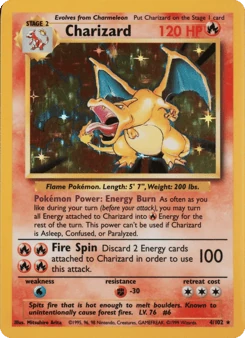 Charizard | $1.47B | 14.4% | 155 | 3.1M | −5.6% | Charizard · Base #4 · $264M |
| 2 | 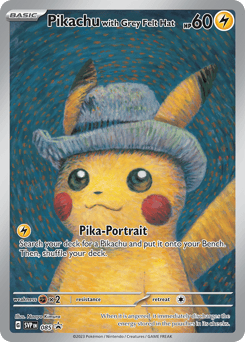 Pikachu | $1.29B | 12.6% | 297 | 2.9M | −4.9% | Pikachu with Grey Felt Hat · Scarlet & Violet Black Star Promos #85 · $193M |
| 3 | 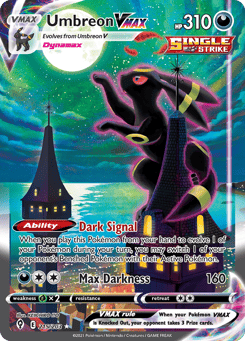 Umbreon | $496M | 4.8% | 72 | 0.6M | −4.8% | Umbreon VMAX · Evolving Skies #215 · $109M |
| 4 | 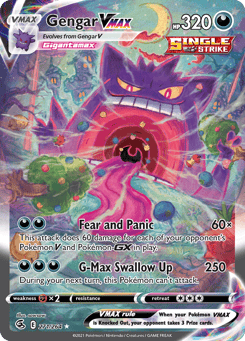 Gengar | $425M | 4.2% | 77 | 0.6M | −13.1% | Gengar VMAX · Fusion Strike #271 · $46.0M |
| 5 | 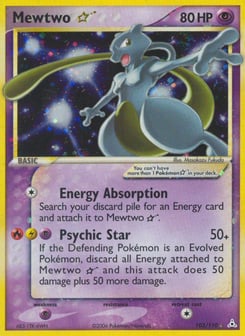 Mewtwo | $410M | 4.0% | 125 | 0.8M | −7.7% | Mewtwo ☆ · Holon Phantoms #103 · $48.8M |
| 6 | 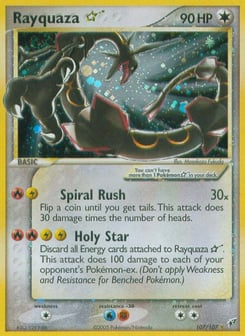 Rayquaza | $403M | 3.9% | 92 | 0.4M | −4.2% | Rayquaza ☆ · Deoxys #107 · $114M |
| 7 | 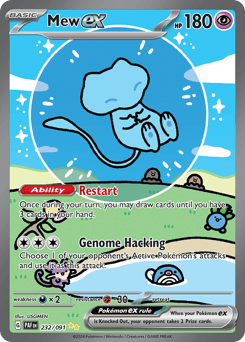 Mew | $384M | 3.7% | 77 | 0.7M | −7.3% | Mew ex · Paldean Fates #232 · $66.5M |
| 8 | 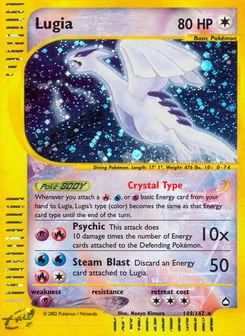 Lugia | $301M | 2.9% | 52 | 0.3M | +10.9% | Lugia · Aquapolis #149 · $88.8M |
| 9 | 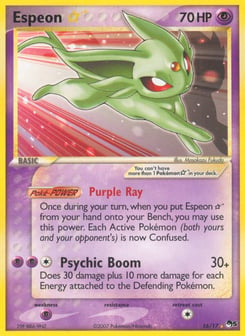 Espeon | $163M | 1.6% | 58 | 0.3M | +9.1% | Espeon ☆ · POP Series 5 #16 · $48.9M |
| 10 | 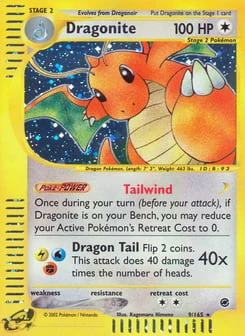 Dragonite | $157M | 1.5% | 72 | 0.4M | +1.8% | Dragonite · Expedition Base Set #9 · $20.4M |
Charizard alone is 14.4% of the graded market, across 155cards. The 30-day column is the history's basis (English PSA 8–10 slabs at today's population, prices only), so a Pokémon whose value is mostly Japanese or in lower grades shows a change on a smaller part of its cap. All 1,022 Pokémon, ranked →
The biggest cards · every grader and grade of one card
| # | Card | Market cap | PSA | CGC | BGS | Slabs | 30 days |
|---|---|---|---|---|---|---|---|
| 1 | Charizard Base #4 | $264M | $243M | $11.7M | $9.9M | 131,844 | −1.0% |
| 2 | Pikachu with Grey Felt Hat Scarlet & Violet Black Star Promos #85 | $193M | $180M | $8.7M | $4.3M | 131,941 | −1.1% |
| 3 | 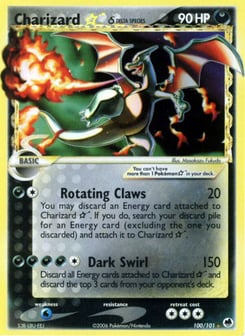 Charizard ☆ δ Dragon Frontiers #100 | $121M | $114M | $512.3K | $6.9M | 6,122 | −12.4% |
| 4 | Rayquaza ☆ Deoxys #107 | $114M | $112M | $1.0M | $1.3M | 2,141 | +1.2% |
| 5 | Umbreon VMAX Evolving Skies #215 | $109M | $96.2M | $4.9M | $7.8M | 37,409 | −7.0% |
| 6 | 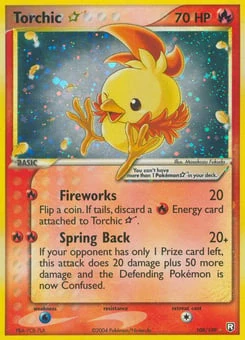 Torchic ☆ Team Rocket Returns #108 | $97.4M | $92.8M | $717.3K | $3.8M | 1,760 | +134.6% |
| 7 | 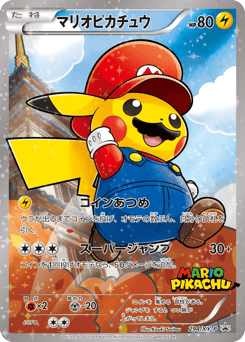 Mario Pikachu · Japanese XY #294/XY-P | $93.9M | $93.2M | $690.0K | — | 3,821 | — |
| 8 | Lugia Aquapolis #149 | $88.8M | $85.5M | $955.8K | $2.4M | 3,632 | +11.2% |
| 9 | 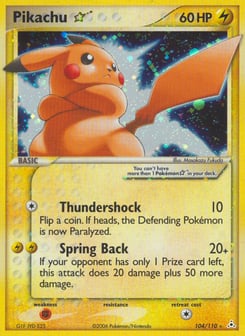 Pikachu ☆ Holon Phantoms #104 | $84.7M | $81.9M | $775.0K | $2.0M | 3,131 | −21.6% |
| 10 | 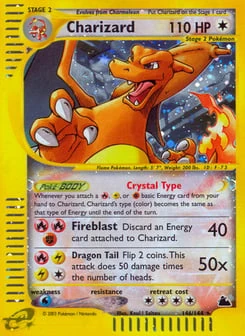 Charizard Skyridge #146 | $75.0M | $68.1M | $1.3M | $5.6M | 2,831 | −39.2% |
| 11 | 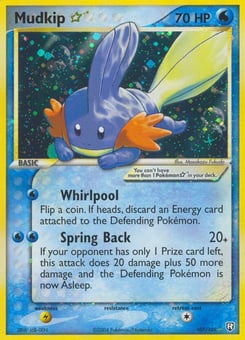 Mudkip ☆ Team Rocket Returns #107 | $66.8M | $64.0M | $841.6K | $2.0M | 1,471 | −11.8% |
| 12 | Mew ex Paldean Fates #232 | $66.5M | $61.8M | $3.0M | $1.7M | 55,843 | −18.2% |
| 13 | 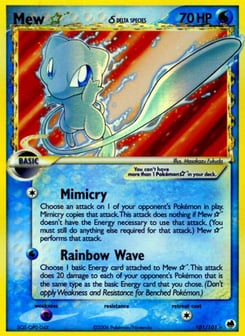 Mew ☆ δ Dragon Frontiers #101 | $65.2M | $64.5M | $453.3K | $233.7K | 4,229 | −2.8% |
| 14 | 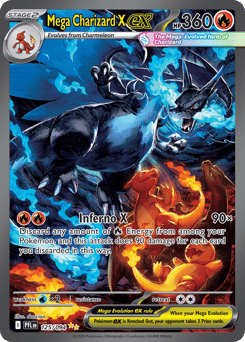 Mega Charizard X ex Phantasmal Flames #125 | $64.6M | $59.7M | $1.9M | $3.0M | 67,071 | −14.0% |
| 15 | 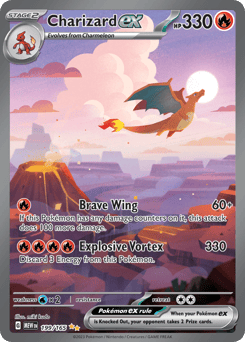 Charizard ex 151 #199 | $63.4M | $59.6M | $2.2M | $1.6M | 116,153 | −9.3% |
| 16 | 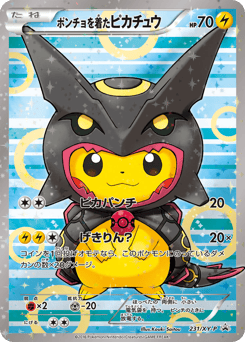 Poncho-Wearing Pikachu · Japanese XY #231/XY-P | $56.7M | $55.1M | $925.9K | $607.3K | 5,067 | — |
| 17 | 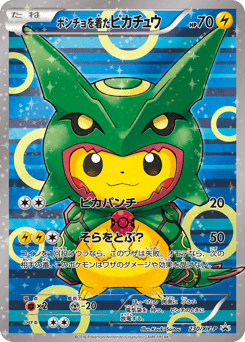 Poncho-Wearing Pikachu · Japanese XY #230/XY-P | $53.2M | $52.1M | $600.3K | $493.9K | 4,733 | — |
| 18 | 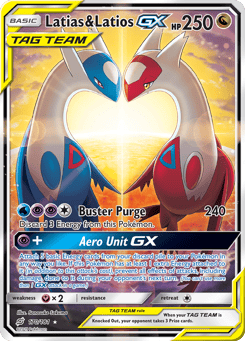 Latias & Latios-GX Team Up #170 | $52.7M | $49.5M | $1.1M | $2.1M | 7,544 | −9.3% |
| 19 |  Luigi Pikachu · Japanese XY #296/XY-P | $51.6M | $50.9M | $775.5K | — | 3,609 | — |
| 20 | 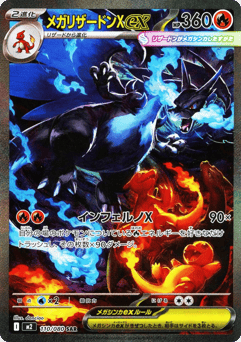 Mega Charizard X EX · Japanese Mega Evolution (M2) #110/080 | $49.2M | $48.5M | $544.6K | $144.5K | 67,106 | — |
| 21 | Espeon ☆ POP Series 5 #16 | $48.9M | $48.5M | $162.5K | $281.2K | 756 | +25.5% |
| 22 | Mewtwo ☆ Holon Phantoms #103 | $48.8M | $47.6M | $521.1K | $612.0K | 2,790 | −27.0% |
| 23 | 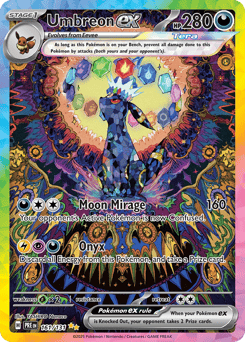 Umbreon ex Prismatic Evolutions #161 | $48.7M | $44.1M | $1.2M | $3.3M | 25,646 | −16.2% |
| 24 | Gengar VMAX Fusion Strike #271 | $46.0M | $42.3M | $2.6M | $1.2M | 31,759 | −7.1% |
| 25 | 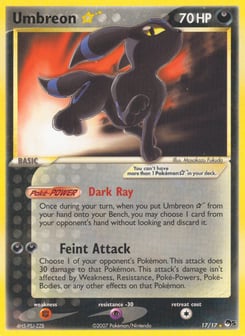 Umbreon ☆ POP Series 5 #17 | $45.2M | $44.2M | $686.5K | $243.6K | 809 | +55.9% |
A card's market cap is every slab of it we can price, at every grader and grade, all printings together: for Charizard that is 131,844 slabs, the biggest single line being PSA 10 at 123 copies × $343,098. Each card page carries its own figure under Population.
By grade · PSA
| Grade | Value | Share of PSA |
|---|---|---|
| PSA 10 | $6.23B | 63.7% |
| PSA 9 | $2.07B | 21.1% |
| PSA 8 and 8.5 | $789M | 8.1% |
| PSA 7 and 7.5 | $350M | 3.6% |
| PSA 6.5 and below | $354M | 3.6% |
PSA 10s carry 63.7% of PSA's value. A gem-mint grade is where most of a card's graded price sits, and the PSA 10 premium index measures how big that gap is. The PSA population report has the counts behind these numbers.
The biggest slab lines · population × price, one card, grader and grade
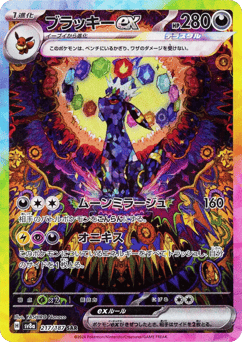

Two kinds of card lead. Modern chase cards graded in the tens of thousands, like Pikachu with Grey Felt Hat, sit next to vintage cards with a few hundred slabs at six-figure prices. A 1st Edition printing is valued at its own price, not the unlimited card's: Charizard 1st Edition in PSA 10 is 123 slabs at $343,098.
What is not counted
| Reason | PSA slabs | CGC slabs | BGS slabs |
|---|---|---|---|
| Not matched to a card we price (other languages, sets we do not catalogue) | 4.5M | — | — |
| A printing with no price of its own (stamped, staff, prerelease, Japanese 1st Edition; for CGC and BGS also 1st Edition, Shadowless and reverse holo) | 2.4M | 0.8M | 85,035 |
| A grade with no price for that card | 2.4M | 2.9M | 0.5M |
| Authentic and altered labels, with no grade | — | 65,872 | — |
| Priced under $1 | 688 | — | — |
None of these are estimated. A price borrowed from a neighbouring grade or a similar card would make the number bigger but not truer, so the 13.6M slabs here stay out until they have a price of their own. CGC and Beckett counts exist only for the cards GemRate has read, so a card outside those has no CGC or Beckett line rather than a zero.
For media
Free to cite · CC-BY 4.0- Updated
- RefreshesDaily prices; populations daily from GemRate, weekly from PSA
- SourcePSA's population report, with GemRate's daily readings of PSA, CGC and Beckett, joined card by card to CardTrack's graded prices.
Source: CardTrack, Pokémon graded market cap, 15 November 2026. https://cardtrack.com/pokemon/market-capCharts and tables may be reproduced with the attribution above under CC-BY 4.0. How the numbers are built: methodology. Press enquiries, corrections and custom cuts of the data: jd@cardtrack.com. CardTrack is a market measure, not investment advice.
FAQ
What is the Pokémon card market cap?
It is the value of every graded Pokémon card we can identify in PSA's, CGC's and Beckett's populations at today's price for its grade: $10.24B as of 15 November 2026, across 33.4M slabs we can price. It counts graded slabs only, not raw cards or sealed product, so it is a floor for the market rather than all of it.
How is it calculated?
For each card, printing, grader and grade, the population (how many slabs exist) times our price for that grader's grade. The card's own printing uses its published graded price. Another PSA printing of it (1st Edition, Shadowless, reverse holo) uses that printing's own price history. A grade with no price is left out and counted, never estimated.
Where do the population counts come from?
PSA's population report, each entry matched to a card and printing. GemRate reads the same entries daily and carries CGC's and Beckett's counts for the same card and printing: 36,912 entries (28.9M PSA slabs) are on GemRate's reading of 13 November 2026; the rest keep our own crawl of 28 September 2026. We publish the values, not the raw counts.
Why is it lower than other market-cap figures?
Because a slab with no price is left out rather than estimated: 13.6M of the 47.0M slabs carry no price we can stand behind (another language, a stamped or staff printing, or a grade with no sales). Other figures fill those in from neighbouring grades or similar cards; this one shows what it leaves out.
Why are SGC and TAG not in the headline?
Their populations join to far fewer prices: we can price 51.6% of their slabs against 71.1% of the headline's. They are listed beside it with that coverage stated, so the two can be added if you want a wider figure.
Why are there two history lines?
The first holds today's population fixed and moves only with prices, back to 2022: it answers what today's graded supply would have been worth then. The second values each week's actual population at that week's prices, so it also rises as new slabs are graded. Both cover English PSA 8, 9 and 10 slabs, the grades with both a price history and a weekly population history, and that did not change when CGC and BGS joined the headline on 23 October 2026.
How is a Pokémon's market cap counted?
Every valued slab of every card of that Pokémon, English and Japanese, by its National Dex number. A card shows one Pokémon in our catalogue, so a tag-team card counts toward the first Pokémon named on it.
Method: PSA's population report lists each card by set, number, name and variety. Each entry is matched to a card in our English or Japanese catalogue and to its printing. Sets are matched by how many of their cards agree on number and name, within a year of release. GemRate reads the same entries daily, and its reading carries CGC's and Beckett's counts of the same card and printing; where GemRate has read an entry its counts are used, otherwise our own weekly crawl's. The count at each grader's grade is multiplied by that card's published price for that grader and grade, or, for a PSA 1st Edition, Shadowless, reverse-holo or holo printing, by that printing's own price history. Prices are the same ones the card pages show, restated across changes in our pricing method so a change of method never reads as a market move. Per-card and per-Pokémon figures sum the same lines; a Pokémon is the card's National Dex number. Both history lines and the 30-day change stay on English PSA 8–10 slabs at today's population, and are recomputed in full every night. Population counts are published as values, not as counts. Market measures, not investment advice.