How to Read a Lorcana Card (Every Symbol Explained)
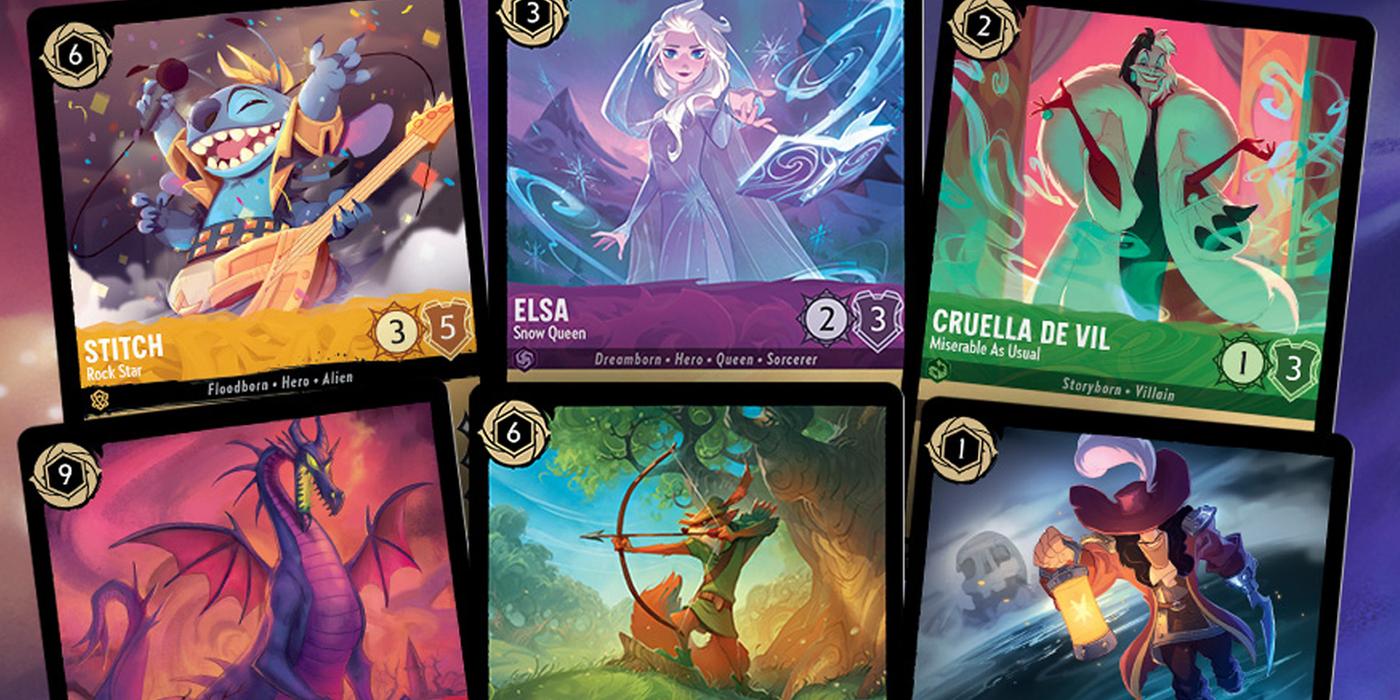
Learning how to read Lorcana cards is really just learning eight or nine spots on the card and what each one does. Once you know where to look, you can scan a card in about three seconds flat and know exactly what you're holding.
I get asked about this constantly from people who just picked up a starter deck at Target and have no idea why some cards say "Ink" in the corner and others don't. So let's go through a card top to bottom, left to right, the way I'd walk a new player through it at a draft table. If you're brand new to the game generally, my Lorcana hub page has the broader stuff like set lists and rules basics — this post is just about the card itself.
What Is Lorcana Card Anatomy? A Quick Overview
Lorcana card anatomy breaks down into a handful of zones: the name box, the ink cost circle, the character/action/item type line, classifications, the ink symbol, strength and willpower (for characters), the ability text box, flavor text, and the collector info strip at the bottom. That's it. Nine things, and most of them are self-explanatory once someone points them out.
The layout is honestly cleaner than Magic or Pokémon in my opinion. Ravensburger clearly wanted something a new player could pick up cold, and for the most part they nailed it.
The Ink Cost Circle (Top Left)
That number in the colored circle top-left corner is what it costs to play the card. You pay for it using "inked" cards from your inkwell, which is Lorcana's version of mana. A 3-cost Mickey Mouse needs three inked cards ready before you can play him.
Cost alone tells you a lot about power level before you even read the text. Early game you're looking at 1-3 cost cards to develop your board. By turn six or seven you're slamming 7-8 cost finishers like Ursula or a big Elsa.
Lorcana Ink Symbols Explained
This is the part that trips up new players the most, so let's slow down here.
Every card belongs to one of six inks: Amber, Amethyst, Emerald, Ruby, Sapphire, Steel. You'll see the ink color as the card's background/border treatment, but the actual ink symbol sits at the bottom of the card, usually center or center-right, near the collector number. It looks like a little inkwell/drop icon in that ink's color.
Why it matters: when you're building a deck, you pick two inks to play (in most standard formats), and you can only put cards *from your inkwell* face down to generate resources if they match your deck's chosen inks — but here's the actual trick that confuses people. Any card can go into your deck as long as it matches one of your two chosen inks. But only cards that say "Inkwell" eligible (there's a small icon for this too — a quill/splash icon near the cost circle) can actually be placed into your inkwell face-down. Not every card is inkable. Ravensburger flags this with a distinct symbol right on the ink cost circle itself — if that circle has a little glowing border/shape around it, it's inkable; if it's plain, it's not.
So when people say "lorcana ink symbols explained" what they usually actually want to know is:
- Ink color symbol (bottom of card) — tells you which of the 6 inks the card belongs to, relevant for deckbuilding.
- Inkable marker (around the cost circle) — tells you if you're allowed to place this specific card into your inkwell face-down as a resource.
Cards that are big bombs or legendary characters are very often marked non-inkable, because Ravensburger doesn't want your best rares getting buried as ink fuel.
Character, Action, Item, or Location — the Type Line
Right under the character's name you'll see the card type. Characters are the most common — they have strength and willpower, they can quest and challenge. Actions are one-time effects, like a spell. Items sit on your board and usually have an activated ability. Locations are the newer addition from later sets and they let characters "visit" for passive bonuses.
Below the type line you'll often see classifications in small caps — things like "Hero," "Princess," "Villain," "Storyborn," "Dreamborn," "Floodborn." These matter because a ton of abilities are keyed off classification. "Each of your Princess characters gets +1 strength" only works if the card actually says Princess in that line.
Strength and Willpower (Bottom Corners of the Art)
For character cards, you get two numbers flanking the bottom of the artwork. Strength (the sword icon) is how hard the character hits when challenging. Willpower (the shield icon) is how much damage it can take before it's banished. A 4/3 character can deal 4 damage and survive 3.
Lore value is the little diamond icon, usually top right near the ink cost or sometimes bottom — that's how many lore points the character generates when it quests. Getting to 20 lore wins the game, so that number matters more than people give it credit for early on.
Ability Text, Keywords, and Flavor Text
The text box is where the actual rules text lives. Keyword abilities like Rush, Bodyguard, Evasive, Ward, Ch\aallenger, and Support get bolded and often have reminder text underneath in italics explaining what they do in plain English — genuinely one of the more player-friendly design choices in the game.
Below that, in smaller italics, is flavor text — pure flavor, no game function, usually a quote or a line referencing the movie. Ignore it for gameplay, but it's genuinely part of why people collect these things. The Aladdin and Genie flavor text lines are some of my favorites in the whole game.
The Bottom Strip: Rarity, Set Info, and Collector Number
This is the zone collectors care about even more than players. Bottom left usually has the rarity symbol — a series of small icons (inkwell shapes, stacked differently) denoting Common, Uncommon, Rare, Super Rare, Legendary, and Enchanted. If you're ever unsure what a symbol means at a glance, my rarity guide breaks down every tier with pictures side by side.
Bottom right or center you get the collector number formatted like 104/204, telling you the card number and total set size, plus a tiny set icon showing which set it's from — a rose for Rise of the Floodborn, a shooting star for Into the Inklands, that kind of thing. Cross-reference that against the full sets list if you're not sure which era a card came from.
Special Foiling, Enchanted, and Variant Cues
Enchanted and Special/Promo cards have holographic foil treatment across the whole card face, not just a stamp. These are the chase cards — an Enchanted Elsa or Mickey can run into the hundreds of dollars based on recent sales, though prices swing a lot depending on print run and condition, so I'd check current market prices before assuming anything about value. If you're holding something that looks suspiciously perfect or a deal that seems too good, run it past a fake card checker before you pay real money — reprint scams have gotten sharper the last year or two.
Once you're comfortable reading the front of the card, the next skill worth building is judging condition — corner wear, surface scratches, and centering all affect what a card is actually worth. My centering tool and grading guide walk through that side of things if you're planning to submit cards or just want an honest read before you list something for sale.
Top Lorcana Cards by Value Right Now
These carry some of the highest estimated market values on CardTrack today. Figures are based on recent sales and can move quickly, so treat them as a snapshot:
Frequently Asked Questions
What do the symbols on a Lorcana card mean? Each symbol maps to a specific rule: the cost circle tells you what you pay to play it, the ink drop icon shows its ink color, the sword and shield icons are strength and willpower, and the diamond is lore value gained on questing. The bottom strip icons cover rarity and set/collector number.
How do you know if a Lorcana card is inkable? Look at the cost circle in the top left corner. Cards that can be placed face-down into your inkwell have a distinct glow/border shape around that circle; plain circles without it mean the card isn't inkable.
What does the diamond symbol mean on a Lorcana card? That's the lore value — the number of lore points you gain when that character successfully quests. Since the game is won at 20 lore, high lore-value characters are often prime removal targets from your opponent.
Why do some Lorcana cards not have strength and willpower? Only character cards use strength and willpower since those are the only cards that quest and challenge. Actions, items, and locations don't fight directly, so they skip those numbers entirely and rely on their text box for effect.
Comments
No comments yet — be the first to weigh in.