How to Value Your Yu-Gi-Oh Collection

How to value your Yu-Gi-Oh cards comes down to four things: identifying the exact print (set, rarity, edition), checking condition honestly, comparing against actual recent sales instead of asking prices, and tracking that number over time since this game's prices move fast. I've been doing this since the Metal Raiders days, and I still check comps before I sell anything worth more than a few bucks. If you want a fast starting point, our Yu-Gi-Oh price guide is where I'd point you before you do anything else.
That's the short answer. The rest of this is how I actually go through a binder or a box of commons and figure out what's worth my time.
Why Yu-Gi-Oh Card Values Are So Hard to Pin Down
Pokemon has it easier in some ways. Yu-Gi-Oh reprints cards constantly, sometimes years apart, in different rarities, in structure decks, in tins, in anniversary sets. Dark Magician alone has been printed as an Ultra Rare, Secret Rare, Ghost Rare, and probably a dozen other things I'm forgetting.
That means a card's name means almost nothing on its own. "Blue-Eyes White Dragon" isn't one price. It's twenty different prices depending on which print you're holding. This is the number one mistake I see new sellers make — they look up a card by name on some app, see a big number, and assume that's what their copy is worth. It usually isn't.
So step one in learning how to value Yu-Gi-Oh cards is accepting that the name is just the starting point. The set code and rarity do the heavy lifting.
Step 1: Identify the Exact Print
Flip the card over and look at the bottom right corner. You'll see a set code like LOB-EN001 or MAGO-EN001. That prefix tells you the set, and the full code combined with the card's rarity narrows it down to one specific printing.
If you're not sure what a rarity actually looks like in hand — Ultra Rare gold foil text versus Secret Rare rainbow foil versus Ghost Rare's holographic finish — spend twenty minutes with our rarity guide. Getting this wrong is the easiest way to overvalue a stack of cards. I've seen people list a Super Rare as a Secret Rare because the foil caught the light funny in a phone photo.
Also check the edition. 1st Edition copies from early sets (LOB, MRD, SRL, PSV) typically carry a real premium over Unlimited prints. Later sets mostly don't have this distinction printed the same way, so don't assume every card needs a 1st Ed stamp to matter.
Once you know the exact set and rarity, you can look it up properly instead of guessing. Our sets list is useful here if you're trying to figure out which set a card even belongs to, especially with older cards that don't ring a bell.
Step 2: Be Honest About Condition
Condition swings value more than people want to admit. A Near Mint copy of a $40 card and a heavily played copy of the same card are not close to the same money. Whitening on the edges, scratches on the foil, warping from being stored in a binder in a hot car — all of it matters.
Centering is its own thing entirely. Old-school Yu-Gi-Oh printing was rough, and a lot of vintage cards are off-center in a way that would tank a modern grade. If you're on the fence about a specific card, run it through a centering tool before you decide whether grading is even worth the cost. I've pulled what I thought was a clean Exodia piece out of a binder before, only to measure it and find it was like 65/35 left to right. Saved myself a grading fee finding that out early.
If you're thinking about submitting cards to a grading company, read up on how grading works first. Grading costs money and time, and it only makes sense for cards where the jump from raw to PSA 9 or 10 actually covers the fee and then some. Don't send in a $15 card expecting to flip it into a $200 card just because it came back a 10 — that math almost never works out for lower-value cards.
Step 3: How to Check Yu-Gi-Oh Card Value the Right Way
This is the part people skip. They see one listing on an app for $150 and think that's the value. That's not how to check Yu-Gi-Oh card value — that's just what one seller is hoping to get.
What you actually want is sold data. Completed listings, not active ones. Anyone can list a card for whatever number they dream up; what matters is what buyers actually paid recently.
Here's roughly how I do it:
- Pull up the exact card (set code, rarity, edition confirmed).
- Look at the last 10-15 completed sales, not just the most recent one or two.
- Throw out the outliers — someone always overpays once, and someone always lowballs a desperate seller.
- Separate raw sales from graded sales. A raw NM sale and a PSA 9 sale are different markets even for the identical card.
- Check the date range. A price from eight months ago during some hype spike doesn't reflect what's happening now.
Our card value checker pulls this kind of data together so you're not doing all of this manually card by card, which is a lifesaver if you're going through a big collection.
How to Price Yu-Gi-Oh Cards If You're Actually Selling
Checking value and setting a sale price aren't quite the same exercise. Once you know the estimated market value based on recent sales, pricing to actually move the card takes a bit more thought.
A few things I factor in when I'm the one selling:
Undercut slightly for a faster sale. If recent sales cluster around $30, listing at $28 usually moves faster than sitting at $32 waiting for the "right" buyer. If you're not in a hurry, price at the top of the range and just wait it out.
Account for platform fees and shipping. A card that sold for $50 on some marketplace might have netted the seller $42 after fees. Don't compare your target price against the gross sale number without adjusting.
Bundle low-value cards. Commons and low rarities under a few dollars usually aren't worth listing individually once you factor in your time and shipping materials. Lot them by archetype or set instead.
Watch for reprints. If a card just showed up in a new structure deck or a Battle Pack, the market gets flooded and prices on older copies of that card usually soften. This happens constantly in this game — I've watched $80 staples drop to $20 within a couple months of a reprint announcement.
Don't chase old peak prices. Prices can move quickly in either direction, and older listings floating around the internet reflect what the market was doing then, not now.
When a Card Might Be Worth Grading
Not every card benefits from grading. Generally I'll only consider it when:
- The raw estimated value is already north of $50-75 based on recent sales
- The card is old enough or scarce enough that a 9 or 10 population is genuinely low
- Centering and surface look strong to my eye before I even send it in
For everything else, raw sales are usually the more practical route. Grading fees, turnaround times, and shipping risk add up, and they eat into anything under that threshold pretty fast.
Watch Out for Fakes When Valuing Older or High-End Cards
The more a card is worth, the more likely someone's tried to counterfeit it. This is especially true for older Ultra Rares and Secret Rares from sets like Legend of Blue Eyes White Dragon or Metal Raiders, and it's rampant with modern chase cards too. Texture, font weight, holo pattern, even the card stock thickness can be off on a fake.
If something feels slightly wrong — the foil looks too shiny, the text feels printed differently than your other copies — run it through a fake card checker before you factor it into your collection's total value. A fake card's value is basically zero no matter what the "real" version sells for.
Building a Full Picture of Your Collection's Value
Once you've gone through the process card by card, it helps to see where your money actually is. Most collections I've gone through follow a predictable pattern: a handful of cards carry 80-90% of the total value, and the rest is bulk. Knowing which cards those are changes how carefully you store them, whether you insure them, and whether grading makes sense.
If you're curious what the ceiling looks like in this hobby, our most expensive Yu-Gi-Oh cards page is a fun rabbit hole — some of these vintage Asian prints and tournament prize cards sell for more than most cars.
Top Yu-Gi-Oh Cards by Value Right Now
These carry some of the highest estimated market values on CardTrack today. Figures are based on recent sales and can move quickly, so treat them as a snapshot:
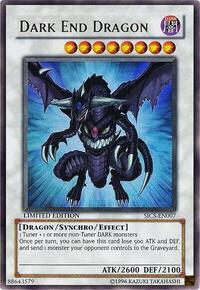 Dark End DragonShonen Jump Championship Series Prize Cards · #SJCS-EN007$5,000View live price on CardTrack →
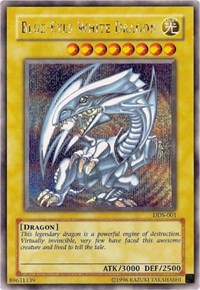 Blue-Eyes White Dragon (Dark Duel Stories)Yu-Gi-Oh! Video Game Promotional Cards · #DDS-001$3,000View live price on CardTrack →
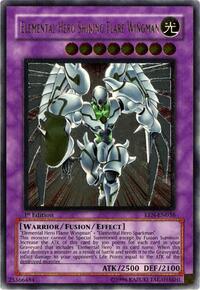 Elemental Hero Shining Flare Wingman (UTR)Elemental Energy · #EEN-EN036$1,250View live price on CardTrack →
Frequently Asked Questions
How do I find out what my Yu-Gi-Oh cards are worth? Identify the exact set code and rarity printed on the card, check the condition honestly, then compare against recent completed sales for that specific print. A card value checker can speed this up when you're working through a large collection instead of looking up every card by hand.
Do I need my cards graded to know their value? No. Grading can confirm condition and sometimes boost value for high-end cards, but raw cards have their own established market based on recent sales. Grading only tends to make financial sense once a card's estimated raw value is already fairly high.
Why do the same Yu-Gi-Oh card show such different prices online? Because "the same card" usually isn't. Yu-Gi-Oh reprints cards across multiple sets and rarities, so a Dark Magician from one set can be worth a fraction of a Dark Magician from another. Always match the exact set code and rarity before comparing prices.
How often do Yu-Gi-Oh card prices change? Pretty often, especially for cards tied to competitive play or recent reprints. A staple can drop significantly within weeks of showing up in a new structure deck, while older vintage cards tend to move more gradually based on collector demand.
Comments
No comments yet — be the first to weigh in.