Is Grading Yu-Gi-Oh Cards Worth It? The Real Maths

Grading Yu-Gi-Oh cards is worth it when the card's estimated market value in a high grade clears the cost of grading plus shipping plus the wait — for a lot of common cards it isn't, and for chase pulls from sets like LOB, MRD, or modern Quarter Century Secrets it usually is. That's the whole answer. The rest of this post is the maths behind it, because "it depends" isn't good enough when you've got a stack of cards and a decision to make.
I've sent cards off in batches to PSA and CGC for years now, and I've also wasted money grading stuff that came back a 7 and was worth less than the grading fee. So let's actually break down the numbers instead of repeating the vague advice you see everywhere else.
What Grading Yu-Gi-Oh Cards Actually Costs
Before you weigh up whether it's worth grading Yu-Gi-Oh cards, you need the real cost, not just the sticker price on the grading company's website.
Here's roughly what you're looking at per card, depending on service tier and turnaround:
- PSA: anywhere from about $25 on their slower bulk tiers up to $150+ for faster service, plus you're often required to buy into a bulk submission to get the cheaper rate
- CGC: similar range, usually a touch cheaper at the entry tier, with premium tiers for faster turnaround
- Beckett (BGS): tends to sit mid-to-high, and their subgrade format (the four little numbers) appeals to certain collectors but doesn't always translate to a resale premium
Then add:
- Shipping to the grading company, ideally tracked and insured
- Return shipping
- Any submission or membership fee some companies charge before they'll even take your cards
- The opportunity cost of your money being tied up for weeks or months
That last one gets ignored constantly. If a card's been sitting in a grading queue for four months, that's four months you couldn't sell it raw and put the cash into something else. Doesn't matter what you'd have done with it — the point is your card isn't liquid while it's away.
Realistic all-in cost per card, once you count shipping both ways: $30 to $200+, depending on service level and how many cards you're bundling together.
The Real Maths: Raw Price vs Graded Price vs Cost
This is the part everyone skips. Grading Yu-Gi-Oh cards only makes financial sense when this holds:
(Graded value) − (Raw value) > (Grading cost)
Not "graded value is higher than raw." Higher by more than what you paid to get it graded. That's the bit people forget when they see a PSA 10 selling for double the raw price and think that's free money.
Say you've got a raw copy of a card worth $40 based on recent sales. You send it in on a $25 bulk tier, plus $10 shipping both ways — call it $35 all-in. If it comes back a PSA 10 and PSA 10s of that card are selling for $70, you've made $70 − $40 − $35 = -$5. You've lost money even though the "graded price" looked way better than raw.
Now flip it. A raw copy of a chase card sitting around $150, PSA 10s selling for $600 based on recent sales, grading cost $40 all-in. That's $600 − $150 − $40 = $410 of upside if it grades a 10. Worth the gamble, in my opinion, if you're comfortable with the risk that it comes back a 9 instead.
That second scenario is what separates yugioh cards worth grading from ones that just aren't. The gap between raw and graded has to be wide enough to survive the cost of grading and the chance the card doesn't come back a 10.
Why the "Grade Bump" Isn't Guaranteed
Nobody can tell you a card will come back a PSA 10. I've sent in cards I'd have bet money on and got 9s back over a soft corner I didn't even notice under normal light. Whitening on the edges, print lines, factory cuts that are slightly off-center — all of it can knock a grade down a point, and one point is often the difference between a card being worth grading and not.
This is why checking condition properly before you submit matters more than people think. Running your card through something like a centering tool before you commit to a submission fee can save you from sending in a card that's visibly off-center and destined for an 8 at best. It won't guarantee anything, but it stops you gambling blind.
If you want the actual standards graders use — what counts as a whitening issue versus acceptable wear, how surface and corners get scored — that's laid out properly in our grading guide. Read it before you submit anything, not after.
Which Yu-Gi-Oh Cards Are Actually Worth Grading
Not every card deserves a submission slot. Here's how I actually sort my own pile before sending anything off.
Age and Print Run Matter More Than Rarity Alone
Old cards from the early 2000s — LOB, MRD, PSV, IOC — were printed on cardstock and packaging that just wasn't as tight as what Konami uses now. Centering issues are everywhere in these sets, which means high grades are genuinely scarce. A gem mint 1996-2002 era Ultra Rare can carry a real premium over a raw copy because so few exist in that condition.
Modern cards, by contrast, come out of packs straighter and cleaner as a rule. That doesn't mean grading them is pointless, but the population of 10s is going to be much bigger, so the price gap between raw and graded tends to be thinner.
High-Value Chase Cards
Anything that's already commanding real money raw is a candidate. Secret Rares, Ghost Rares, Starlight Rares from recent sets, and the classic holy grails — first edition Blue-Eyes White Dragon, Black Luster Soldier, that sort of thing. If you want a sense of what the ceiling looks like, our most expensive Yu-Gi-Oh cards page is a good reality check on where graded prices for iconic cards actually land.
Cards With Thin Print Runs or Errors
Misprints, off-center factory errors that are notable rather than damaging, and short-print promos can carry premiums in graded form because collectors specifically want a slabbed, authenticated copy to prove what they've got. Checking a card's actual rarity classification first helps here too — our rarity guide breaks down what separates a Super Rare from an Ultra Rare from a Secret Rare, which matters because rarity print runs affect how much of a premium a graded copy can carry.
Cards That Are Probably Not Worth Grading
- Commons and most Rares from mass-produced modern sets
- Cards where the raw price is already under $10-15 based on recent sales
- Cards you already suspect have visible whitening, scratches, or off-center printing
- Anything you can't verify is authentic — check with a fake card checker first, because grading companies will just reject or body-bag a card they think is inauthentic, and you've lost the submission fee either way
Bulk Submitting vs Grading One or Two Cards
If you've only got one or two cards, the maths above is basically the whole decision. But most of us end up with a stack of maybe-worth-it cards from years of collecting, and bulk submission changes the calculation.
Grading companies offer cheaper per-card rates when you submit in bulk — sometimes half the price of a single-card rush submission. The catch is you're now waiting on the slowest card in the batch, and your capital's tied up in every card in that box, not just the good ones.
My rule of thumb: only bulk cards where you're already reasonably confident about the raw-to-graded gap on each one individually. Don't throw in filler cards just to hit a minimum order size — that's how people end up with a drawer of $12 slabs that cost $20 to make.
Checking Estimated Value Before You Submit Anything
Before you send a single card off, look up what it's actually selling for, both raw and in graded form, based on recent sales rather than old asking prices you remember from a few years back. Prices can move quickly, especially around anniversary sets, reprints, or a card suddenly getting relevant in the competitive meta.
Our price guide tracks this across sets so you're not relying on gut feeling or a listing from 2019. And if you're not sure which set a card came from — which matters a lot for value, since the same card can have wildly different print runs across reprint sets — the full sets list is worth a look before you assume you know what you're holding.
My Own Rule of Thumb
I don't grade anything unless the estimated graded value is at least double the submission cost above the raw price, and I'm reasonably confident the card is centered and clean under a loupe first. That buffer accounts for the card coming back a point lower than hoped, and it accounts for the fact that graded card demand can shift between the time you submit and the time your slab comes back.
Is grading Yu-Gi-Oh cards worth it as a blanket strategy? No. Is it worth it for the right card, at the right raw price, with a real gap to graded value? Based on the maths above, yes, often. The trick is doing the arithmetic before you tape up the envelope, not after the slab shows up.
Top Yu-Gi-Oh Cards by Value Right Now
These carry some of the highest estimated market values on CardTrack today. Figures are based on recent sales and can move quickly, so treat them as a snapshot:
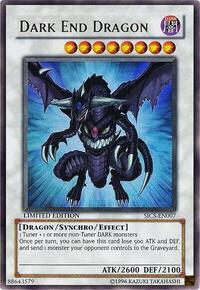 Dark End DragonShonen Jump Championship Series Prize Cards · #SJCS-EN007$5,000View live price on CardTrack →
 Blue-Eyes White Dragon (Dark Duel Stories)Yu-Gi-Oh! Video Game Promotional Cards · #DDS-001$3,000View live price on CardTrack →
Frequently Asked Questions
Is it worth grading Yu-Gi-Oh cards that are already worth a lot raw? Often yes, because the percentage gap between raw and graded value tends to widen as the card's base value goes up. A card worth $500 raw has more room for a meaningful premium in PSA 10 than one worth $15 raw, even after grading costs.
How much does it cost to grade a Yu-Gi-Oh card? Realistically $30 to $200+ per card once you include shipping both ways, depending on the company and turnaround speed you choose. Bulk submissions bring the per-card cost down but tie up more cards at once while you wait.
What Yu-Gi-Oh cards are worth grading right now? Cards from early sets like LOB or MRD in strong condition, high-value Secret and Ghost Rares, and modern Starlight Rares tend to have the widest gaps between raw and graded value based on recent sales. Commons, low-value Rares, and anything with visible surface or centering issues usually aren't worth the submission fee.
Does a PSA 10 always sell for more than a raw copy of the same card? Not always — some cards have such large PSA 10 populations that the graded premium is thin or barely covers the grading fee. Checking the actual population reports and recent sold prices before submitting is a better approach than assuming a 10 automatically means a big markup.
Comments
No comments yet — be the first to weigh in.