Lorcana Rarities Explained (and How to Tell Them Apart)
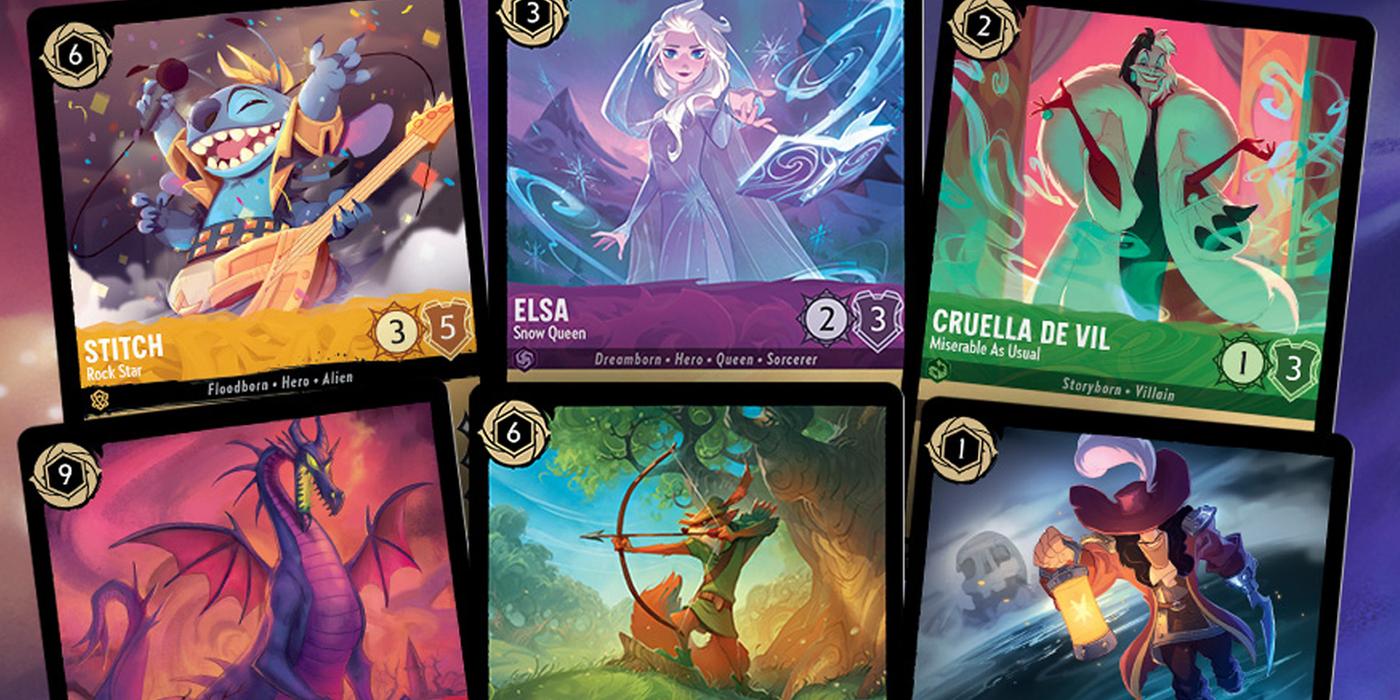
The fastest way to tell rarity of Lorcana cards is to look at the bottom corner of the card for the rarity symbol — a dot, diamond, or star shape that tells you exactly where it sits in the print run. Common cards use a plain diamond, and things get fancier from there. I've sorted through a few thousand cards at this point buying and trading, and once you know what to look for it takes about two seconds per card.
I still remember opening my first box of The First Chapter and having no clue why some cards had a slightly different gold border and some didn't. Nobody hands you a cheat sheet when you start. So here's the one I wish I had, plus the stuff the symbol alone won't tell you.
The Basic Symbols: How to Tell Lorcana Rarity at a Glance
Every non-foil Lorcana card has a small icon printed in the bottom corner near the copyright line. That icon is the whole system in miniature. From most common to rarest:
- Common — a single grey diamond
- Uncommon — a green diamond (still just one shape, different color)
- Rare — a single blue diamond, but check the count too — actual rares
- Super Rare — a pink/magenta diamond
- Legendary — an orange or gold diamond
- Enchanted — no diamond at all — these get a full gold foil treatment and card frame
If you want the full breakdown with pull rates by set, our Lorcana rarity guide walks through every tier and how the print ratios have shifted across sets. It's the page I point people to whenever they ask me this exact thing.
How to Tell if a Lorcana Card Is Rare vs Just Uncommon
This is where people trip up, because "rare" gets used casually by collectors to mean "hard to find," but Lorcana uses it as a specific tier name. A card can be Common and still be worth something because of demand — plenty of early Commons from Rise of the Floodborn hold value because a deck needs four of them. Meanwhile some actual Rares are cheap because nobody plays the card.
So don't confuse:
- Rarity tier (the printed symbol — Common through Enchanted)
- Market value (what people pay, driven by playability and scarcity of prints, not just the symbol)
- Foil status (any card can come in a foil version, which bumps price regardless of tier)
A quick way to tell if a Lorcana card is rare: flip it to the bottom corner, find the blue diamond. If it's blue, it's Rare. If it's pink, that's Super Rare, a step up. People assume pink means "less rare" because it's a warmer, friendlier color somehow — it's the opposite.
Enchanted, Iconic, and the Special Sets That Break the Normal Symbol Rules
Enchanted cards are the chase cards in Lorcana and they don't use the diamond system at all. They've got the full gold-foil card face, a unique border treatment, and usually a totally different piece of art from the base version. Elsa, Ariel, and the classic Sisu Enchanted from Into the Inklands are the kind of cards that show up in "most expensive Lorcana cards" lists constantly. Speaking of which, if you want to see what these actually sell for, our most expensive Lorcana cards page tracks the big hitters across every set.
Then there's Iconic rarity, introduced later, which sits even above Enchanted in some sets — a slightly different gold treatment with its own symbol, usually reserved for one or two marquee characters per set. And special set releases (like the D23 promos or convention exclusives) sometimes skip the standard symbol entirely and just say "Promo" somewhere on the card. Those need a different kind of checking, which I'll get to.
Foil vs Non-Foil: Why Rarity Symbol Isn't the Whole Story
Every Common can be pulled as a foil. Same for Uncommons, Rares, all the way up. Foil doesn't change the rarity tier printed on the card — a foil Common is still a Common by rarity — but it changes scarcity and price because foils are pulled far less often per box.
This trips up new collectors constantly. Someone messages me "is this rare, it's shiny" and no — shiny just means foil. Check the diamond, not the shine, if you want the actual tier. Then separately ask "how many of these hit per case" if you're trying to gauge scarcity for trading purposes.
Set Symbols and Why They Matter for Telling Cards Apart
Alongside the rarity diamond, every card has a set icon too — a small logo unique to that expansion. Ursula's Return, Shimmering Skies, Azurite Sea, they all have distinct little marks. This matters because reprints happen, and a card's tier can occasionally shift between printings or the art can get reused in a different set at a different rarity. If two copies look identical at a glance but one is worth triple, the set symbol is usually why.
Our full sets list is a good reference if you're trying to place a card you pulled and aren't sure which expansion it's actually from — useful when you're buying loose singles off a marketplace and the listing photo is bad.
Checking Rarity When You Suspect a Card Might Be Fake
I'll say this bluntly: fakes exist, and they usually get the rarity symbol slightly wrong, or the foil pattern doesn't match what it should for that tier. If a "Legendary" card has a foil pattern that looks like the cheap Common foil texture, something's off. If you've got a card that seems too good, run it through our fake card checker before you trade for it or list it. It's saved me from a bad trade more than once — a friend nearly took an obviously reprinted "Rare" that was actually a home-printed proxy with the wrong corner symbol entirely.
Does Rarity Affect Estimated Market Value?
Generally, yes, but not in a straight line. Enchanted and Iconic cards command the highest estimated market values almost across the board because print numbers are so low. But a Super Rare chase card from a popular set can outsell a mediocre Legendary. Based on recent sales data I've seen on our own tracking, a strong Rare with tournament relevance can sit above a boring Legendary with no deck home.
If you're trying to figure out what your binder is actually worth right now, don't eyeball it — check the Lorcana price guide or run individual cards through the card value checker since prices can move quickly, especially right after a new set drops and the market resets.
Condition and Grading Change the Math Too
Rarity tells you print scarcity. It says nothing about the physical condition of the exact copy in your hand, and that matters a lot once you're talking about Enchanted-tier cards worth real money. A gorgeous Enchanted with a whitened corner from a bad pull is worth a fraction of a pack-fresh one. If you're serious about knowing what a card grades before you send it off or sell it, our card grader and the companion grading guide explain what graders are actually looking for, and the centering tool is worth running before you pay grading fees on a card that's off-center to begin with — no point paying to find out.
Top Lorcana Cards by Value Right Now
These carry some of the highest estimated market values on CardTrack today. Figures are based on recent sales and can move quickly, so treat them as a snapshot:
Frequently Asked Questions
How can you tell what rarity a Lorcana card is without looking it up online? Check the small icon in the bottom corner near the card number and copyright text. Grey diamond means Common, green is Uncommon, blue is Rare, pink is Super Rare, orange/gold is Legendary. Enchanted cards skip the diamond entirely and use a full gold foil card face instead.
Does a foil Lorcana card count as a higher rarity? No. Foil is a separate attribute from rarity tier. A foil Common is still printed as a Common — it's just scarcer to pull and usually worth more, but the rarity symbol on it stays the same grey diamond as the non-foil version.
Why do some Lorcana cards look rare but aren't worth much? Rarity tier and market demand aren't the same thing. Plenty of actual Rares and Super Rares see almost no competitive play, so demand stays low regardless of the printed rarity. Meanwhile some Commons hold steady value simply because decks need four copies of them.
Is Enchanted the highest rarity in Lorcana? For most sets, yes, Enchanted sits at the top with full gold-foil treatment and unique art. Some later sets introduced an Iconic tier that sits above or alongside Enchanted for one or two marquee characters, so it's worth checking set-specific breakdowns rather than assuming Enchanted is always the ceiling.
Comments
No comments yet — be the first to weigh in.