MTG Set Symbols Explained (With Every Set Symbol)
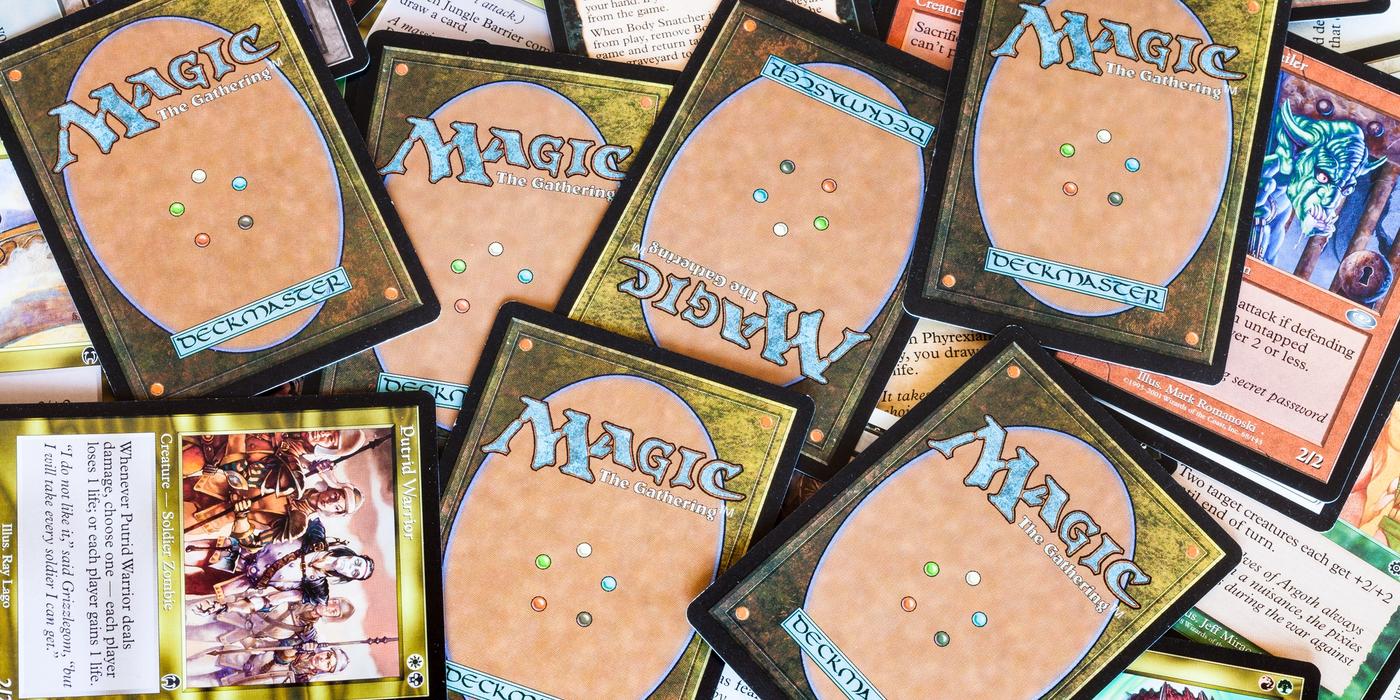
Every Magic card printed since 1994 carries a small icon in the middle of the card, usually right under the art — that's the set symbol, and it's how you tell one expansion from another at a glance. If you're trying to sort through a shoebox of commons or figure out what you actually pulled, learning to read these icons is faster than squinting at card numbers. This guide walks through mtg sets in order with symbols, era by era, so you can identify anything from an old Ice Age common to last year's draft chaff.
I've been cracking packs since Mirage was new on shelves, and I still keep a mental cheat sheet for symbols because Wizards has reused shapes and colors more than a few times. If you want the full chronological rundown with release dates, the complete list of Magic sets is the place to cross-reference names and years. This post is more about what the icons actually look like and what they tell you.
What Exactly Is a Set Symbol Anyway
The set symbol is a small graphic printed on the card frame, right side, usually between the type line and the text box. It tells you which expansion or core set the card came from. Before 1994, there was no symbol at all — Alpha, Beta, Unlimited, Revised, and the early expansions like Arabian Nights and Antiquities just didn't have one. You had to know the card border, the frame style, or memorize the card list to tell them apart. That changed with Legends in 1994, and every set since has had one.
The symbol also does double duty as a rarity indicator, at least since Exodus in 1998. The color of the symbol tells you common, uncommon, rare, or mythic without reading a single word. If you're fuzzy on how that scale works today, I'd point you to the rarity breakdown rather than me re-explaining the whole system here, but the short version is:
- Black or white symbol = common
- Silver symbol = uncommon
- Gold symbol = rare
- Orange/red symbol = mythic rare (introduced in Shards of Alara, 2008)
- Purple was briefly used for "special" rarity in a few Time Spiral timeshifted cards
Premium foil versions sometimes get a small star, swirl, or other stamp next to the symbol too — that's a separate marker for foil or special printings like Judge promos and FNM cards.
MTG Sets In Order With Symbols: The Early Years (1993–1996)
This stretch is messy because the symbol system didn't exist for the first year and a half of the game.
- Alpha, Beta, Unlimited, Revised (1993) — no set symbol. You identify these by border color, card stock, and small print differences.
- Arabian Nights, Antiquities, Legends, The Dark, Fallen Empires (1993–1994) — Legends was actually the first set with a symbol, a small gold crest. Arabian Nights, Antiquities, The Dark, and Fallen Empires never got one retroactively, so they're still identified by checklist and border.
- Ice Age (1995) — a snowflake symbol, which makes sense given the set's whole frozen-tundra theme.
- Homelands (1995) — a stylized sun/moon icon, kind of an odd one that trips people up.
- Alliances (1996) — an eye-shaped icon, sometimes described as a "closed eye."
- Mirage (1996) — a shape like a bird or wave, one of the harder ones to describe in words honestly. Best to just look at a picture once and it sticks.
If you're holding a card from this window with no symbol at all, that's actually useful information — it narrows things down to a handful of sets from '93–'94, and some of those cards carry real money. This is also where the Reserved List becomes relevant, since a chunk of these early sets are on it permanently.
Mid-90s Through Urza's Block (1996–2000)
- Visions (1996) — a stylized eye/orb.
- Weatherlight (1997) — a ship's wheel-ish icon, tied to the Weatherlight saga storyline.
- Tempest (1997) — a spiral/tornado shape.
- Stronghold (1998) — a horned skull design.
- Exodus (1998) — a gate/arch shape. This is also the set where rarity color-coding on symbols really started being consistent.
- Urza's Saga (1998) — a compass-like icon.
- Urza's Legacy (1999) — a stylized flame or torch.
- Urza's Destiny (1999) — a broken/cracked circle.
This is the block where Wizards started leaning into symbols that visually tied to the set's story, which is a pattern that's stuck ever since.
Masques Through Invasion Block (1999–2001)
- Mercadian Masques (1999) — a mask, pretty literal.
- Nemesis (2000) — a crescent/claw shape.
- Prophecy (2000) — an eye with a slit pupil.
- Invasion (2000) — a stylized planet/sphere with a ring, referencing the Phyrexian invasion storyline.
- Planeshift (2001) — a shifting/warped rectangle.
- Apocalypse (2001) — a flame/explosion burst.
Odyssey Through Onslaught Block (2001–2003)
- Odyssey (2001) — a spade-like leaf shape.
- Torment (2002) — a twisted skull/face.
- Judgment (2002) — a set of scales.
- Onslaught (2002) — a horned helmet.
- Legions (2003) — a horned creature head, distinct from Onslaught's.
- Scourge (2003) — a comet/meteor streak.
Mirrodin Through Ravnica (2003–2007)
This stretch is when the block structure and matching visual identity really solidified.
- Mirrodin (2003) — a gear/cog, obviously fitting the metal plane theme.
- Darksteel (2004) — a shield.
- Fifth Dawn (2004) — a rising sun.
- Champions of Kamigawa (2004) — a stylized katana/blade.
- Betrayers of Kamigawa (2005) — a broken blade.
- Saviors of Kamigawa (2005) — a moon shape.
- Ravnica: City of Guilds (2005) — a guild-crest-style circular emblem.
- Guildpact (2006) — an interlocking symbol.
- Dissension (2006) — a fractured circle.
Time Spiral Through Lorwyn/Shadowmoor (2006–2008)
- Time Spiral (2006) — a spiral/hourglass shape.
- Planar Chaos (2007) — a chaotic swirl.
- Future Sight (2007) — an eye looking forward, tied to the "future frame" cards in that set.
- Lorwyn (2007) — a tree/leaf icon.
- Morningtide (2008) — a sun rising over a horizon line.
- Shadowmoor (2008) — a dark moon/crescent.
- Eventide (2008) — a twilight-style crescent, visually darker than Shadowmoor's.
Shards of Alara Through Zendikar (2008–2010)
- Shards of Alara (2008) — a shard/crystal shape. This is also the first set with mythic rare, so you'll see orange symbols start here.
- Conflux (2009) — an interlocking shard pattern.
- Alara Reborn (2009) — a phoenix-like flame shape.
- Magic 2010 (M10, 2009) — the first core set with the modern "Mxx" naming, symbol is a stylized "10."
- Zendikar (2009) — a hedron/obelisk shape.
- Worldwake (2010) — a wave crashing against a hedron.
- Rise of the Eldrazi (2010) — a jagged Eldrazi-style crest.
Innistrad Through Theros (2011–2015)
- Innistrad (2011) — a stylized "I" with gothic flourishes.
- Dark Ascension (2012) — a crescent moon with a wolf-ish silhouette.
- Return to Ravnica (2012) — updated guild-style emblem, similar concept to the original but redrawn.
- Gatecrash (2013) — an interlocking gate shape.
- **Drag
Top Magic Cards by Value Right Now
These carry some of the highest estimated market values on CardTrack today. Figures are based on recent sales and can move quickly, so treat them as a snapshot:
Comments
No comments yet — be the first to weigh in.