How to Tell if an MTG Card Is Fake: 9 Checks
The way to tell if an MTG card is fake comes down to a handful of physical checks: the light test, the bend test, the rosette pattern under magnification, and a font/color comparison against a known real card. No single test is bulletproof on its own, but run three or four of them together and a counterfeit almost always gives itself away. If you want a fast second opinion, I'd also run anything suspicious through a fake card checker before you spend real money on it.
I've been buying and selling cards for a long time, and fakes have gotten noticeably better over the last five or six years. The old "this card is obviously printer paper" counterfeits still exist, but so do proxies that fool people at local game stores. Some are made to actually play with, no ill intent, and some are made specifically to scam collectors on Facebook groups and eBay. Either way, you need to know how to spot fake MTG cards before you hand over cash, especially for anything in the $50+ range.
Here's my full checklist, in the order I actually use it.
The Light Test: How to Tell if an MTG Card Is Fake in 10 Seconds
This is the fastest check and the one I do first on every card someone hands me at a show. Hold the card up to a light source — a phone flashlight works fine — and look at the back.
Real Magic cards have a black core layer sandwiched between the front and back layers of cardstock. When you hold a genuine card up to light, you should see almost nothing bleed through. It stays dark and opaque because of that black layer.
Fake cards are almost always printed on a single sheet of cardstock, sometimes glued together in two layers to fake thickness, but without the black core. Hold one up to a light and you'll usually see a shadow of the card's image ghosting through from the front, or the light will pass through with a weird brownish tint instead of staying black. Some newer fakes have tried to fake the black core with a printed black layer, so this test alone isn't perfect anymore, but it catches maybe 80% of counterfeits on the spot.
The Rip Test (Only for Cards You Don't Care About)
I don't recommend this for anything you plan to sell or that has any value, obviously. But if you've got a bulk common you're not sure about, tear off a tiny corner. Real Magic cards reveal that same black layer inside when torn. Fakes tear like regular cardboard or paper, showing white or brown all the way through.
I only use this on cards I'm already planning to throw out, like duplicate lands from a Secret Lair I bought to break for singles. Never do this to a card you might want to return or resell.
Check the Rosette Pattern Under Magnification
This is the check that separates casual buyers from people who actually know what they're doing. Get a jeweler's loupe (10x is plenty) or use your phone's macro camera mode.
Genuine Magic cards are printed using offset printing, which creates a rosette pattern of tiny dots when you zoom in on the colored areas. It's the same dot pattern you'd see on old comic books or newspaper print, just finer. Fakes are usually printed on inkjet or laser printers, which show a completely different pattern — often a grid of square pixels, or smooth color with no dot structure at all, or visible print head lines if the printer was cheap.
If you zoom into the red on a Lightning Bolt and see clean rosettes, that's a good sign. If you see square pixels or banding, walk away.
Compare the Font, Card Frame, and Color Saturation
Wizards has been extremely consistent with card templates across decades, and counterfeiters mess this up more than you'd think. A few specific things I check:
- The mana symbols. Real mana symbols have crisp, consistent circles. Fakes often have symbols that are slightly the wrong size, blurry, or off-center in their pip.
- Card name font. Compare the font weight and letter spacing against a card from the same set you know is real, or a high-quality scan online. Fakes frequently use a font that's close but not identical, especially on older frame cards from Alpha through Urza's block.
- Color saturation. Cheap fakes tend to run either too vivid (oversaturated, almost neon) or washed out and dull compared to the real printing.
- The set symbol. Zoom in on it. Blurry or slightly wrong-shaped set symbols are one of the most common tells on lower-effort fakes.
If you're not sure what "normal" looks like for a specific set, the full list of Magic sets is a good reference point to pull up comparison images while you check.
Weight and Card Stock Feel
Real Magic cards have a specific weight and snap to them. This one takes practice, but once you've handled a thousand real cards, a fake just feels wrong in your hand — usually lighter, sometimes floppier, sometimes stiffer like actual printer cardstock.
A trick a lot of grading and authentication people use: stack the questionable card with nine cards you know are genuine from the same era. Real cards from the same print run should be nearly identical in thickness. If the suspect card is noticeably thicker or thinner than the stack, that's a red flag.
The Bend Test
Gently — very gently — flex the corner of the card. Real Magic cards have a specific flex to them; they bend a little and spring back without much resistance. Fake cards, especially the glued double-layer type, tend to either feel too stiff and brittle, or they show visible daylight/separation at the corner if the two layers are starting to peel apart under stress.
I want to be clear: don't bend a card hard, and don't do this on anything with real value even if you're confident it's genuine. This is a last-resort test for a card you already suspect is fake and are willing to risk.
Check the Back of the Card Closely
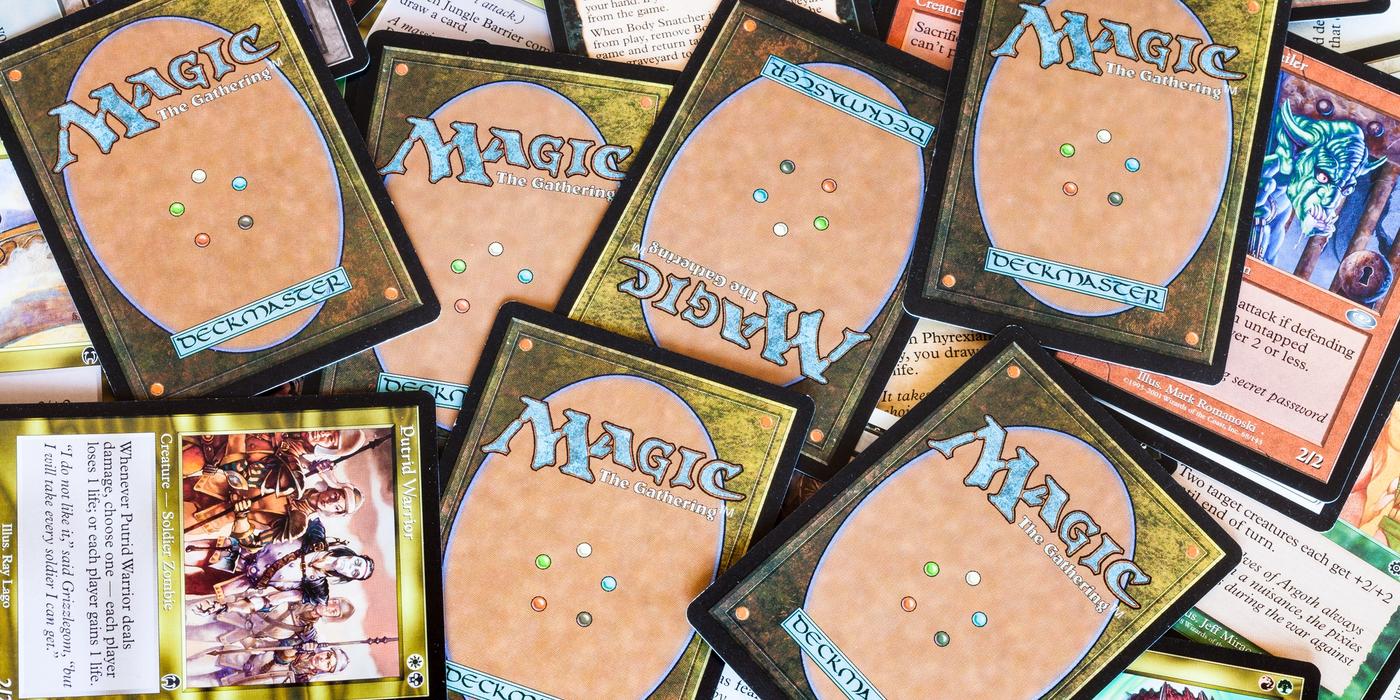
The card back is honestly underrated as a check. The Magic card back design — that specific blue color, the five mana symbols in the circle, the "Magic: the Gathering" wordmark — has been extremely consistent since Alpha.
Fakes often get the blue slightly wrong (too dark, too purple, too bright), or the symmetry of the circle design is off by a few pixels in a way that's obvious once you know to look. Also check that the card back isn't glossy in a way that doesn't match — real Magic card backs have a specific matte-ish sheen, not a cheap laminate shine.
Look at Centering and Print Quality Together
This one's less about catching outright fakes and more about catching altered or trimmed cards being passed off as gem mint originals. Real printed sheets from Wizards have known, somewhat predictable centering issues depending on the era — old border cards especially run off-center more often than people realize.
If a card claims to be a pristine, perfectly centered specimen from a notoriously badly-centered set (looking at you, Revised), that's worth a second look. I run borderline cards through a centering tool just to get an objective read instead of eyeballing it, since our eyes are bad at judging small offsets.
Check the Card Against Recent Sale Photos and Known Grading Population
If you're looking at a high-value card — anything from the Power Nine or a Reserved List card — do your homework before you buy. Search recent completed sales of that exact card and printing, and compare every visible detail: the exact shade of the border, the specific wear pattern, corner shape.
Cards on the Reserved List get faked more than almost anything else in the game because Wizards will never reprint them, which keeps demand high and keeps counterfeiters motivated. A Black Lotus or Mox in "too good" condition for the price being asked deserves extra scrutiny, not less.
Checking a card's estimated market value against what you're being asked to pay is also just good practice — a price that's dramatically below what the price guide shows for that condition is either a great find or a warning sign, and it's usually the second one.
When to Get a Second Opinion
If you've run through several of these checks and you're still not sure, don't guess. A few options:
- Run it through a fake card checker for a fast read based on photos.
- Get a rough card grade assessment, since graders look at authenticity as part of the process anyway.
- Ask in a dedicated authentication community — there are people who've looked at thousands of fakes and can spot tells in seconds that took me years to learn.
Prices can move quickly on cards once authenticity is confirmed one way or the other, so it's worth sorting this out before you list something for sale or pay for something that seems too cheap.
Top Magic Cards by Value Right Now
These carry some of the highest estimated market values on CardTrack today. Figures are based on recent sales and can move quickly, so treat them as a snapshot:
Frequently Asked Questions
How can you tell if an MTG card is fake without a loupe? The light test is the best no-tools option — hold the card up to a bright light and check whether it stays opaque and dark or lets light bleed through unevenly. Weight, snap, and comparing the font and set symbol against a known real card also work without any special equipment. None of these are perfect alone, so combine two or three.
Do fake Magic cards use holograms? Only newer cards with a foil stamp or the security stamp introduced in some recent sets use anything like that, and older cards never had holograms at all. A "hologram" on an old-border card is actually a red flag, not proof of authenticity, since it means someone added something that shouldn't be there.
Are proxies the same thing as fake Magic cards? Not exactly. A proxy is usually a stand-in made for playtesting or casual games, often clearly marked or obviously not trying to fool anyone. Fake Magic cards are made to be sold as genuine, and that's the version you actually need to watch for when buying singles.
Can a fake MTG card pass a card grading service? Legitimate grading companies check authenticity before assigning a grade, and a confirmed counterfeit gets flagged rather than graded normally. That said, no system catches everything instantly, which is why doing your own checks before you buy or submit a card still matters.
Comments
No comments yet — be the first to weigh in.