Best Sandslash Cards to Grade
The Sandslash cards worth grading, ranked by expected profit per submission — every grade outcome weighted by how often the card actually receives it — after current grading fees. The PSA 10 best case is shown on every row but does not decide the order. Top pick: Dark Sandslash (Team Rocket Returns) at an expected −$2.
Ranked by expected profit 4
| # | Card | Raw | PSA 9 | PSA 10 | Cost | Best case | Gem rate | Expected | Sample |
|---|---|---|---|---|---|---|---|---|---|
| 1 | 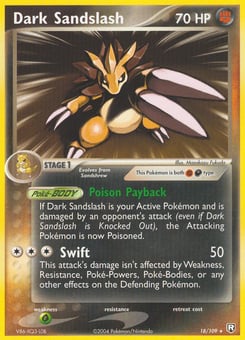 Dark SandslashTeam Rocket Returns #18 · Classic (2004–2010) Expected loss −$2 per submission: 40.6% of 101 graded copies came back PSA 10 ($176), and only a PSA 10 covers the $94 you have in it — a 9 loses money. Confidence high on that sample. | $12 | $35 | $176 | $82 | +$83 | 40.6% | −$2 | 101 high |
| 2 | 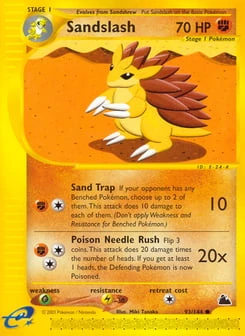 SandslashSkyridge #93 · Vintage (1999–2003) Expected loss −$29 per submission: 45.6% of 103 graded copies came back PSA 10 ($100), and only a PSA 10 covers the $94 you have in it — a 9 loses money. Confidence high on that sample. | $13 | $40 | $100 | $81 | +$7 | 45.6% | −$29 | 103 high |
| 3 | Expected loss −$30 per submission: 15.2% of 92 graded copies came back PSA 10 ($267), and only a PSA 10 covers the $97 you have in it — a 9 loses money. Confidence medium on that sample. | $14 | $40 | $267 | $83 | +$171 | 15.2% | −$30 | 92 medium |
| 4 | 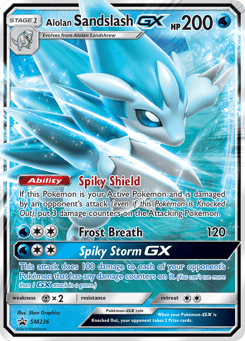 Alolan Sandslash-GXSM Black Star Promos #SM236 · Modern (2011–2019) Expected loss −$54 per submission: 19.1% of 68 graded copies came back PSA 10 ($95), and only a PSA 10 covers the $94 you have in it — a 9 loses money. Confidence medium on that sample. | $13 | $50 | $95 | $81 | +$1 | 19.1% | −$54 | 68 medium |
Expected = every grade outcome weighted by its share of the card's graded population, minus the raw price and the grading cost (PSA tier fee for the graded value plus ~$20 round-trip shipping, fees as of 2026-09-26). Best case is the PSA 10 leg alone. Gem rates come from a self-selected population — collectors grade their cleanest copies — so read them as an upper bound. Raw is a blended market price, not a sale of your copy. Full method and filters on the grading index.
PSA population 24
Every Sandslash card with a PSA population reading, ranked five ways. A historical PSA 10 rate is the share of graded copies that came back a 10 — how hard a 10 has been to earn, not the chance your copy earns one — and it is only quoted on cards with at least 20 graded copies; the PSA 10 tables use the same floor. PSA counts as of 11 Nov 2026. How population is measured.
Most graded 24
The most-submitted cards, by total PSA graded.
| # | Card | Graded | PSA 10s |
|---|---|---|---|
| 1 | Sandslash Fossil #41 | 394 | 57 |
| 2 | Sandslash Pokémon TCG Classic - Venusaur #9 | 107 | 54 |
| 3 | Sandslash Skyridge #93 | 103 | 47 |
| 4 | Dark Sandslash Team Rocket Returns #18 | 101 | 41 |
| 5 | Brock's Sandslash Gym Heroes #23 | 92 | 14 |
| 6 | Alolan Sandslash-GX SM Black Star Promos #SM236 | 68 | 13 |
| 7 | Sandslash Legendary Collection #62 | 61 | 21 |
| 8 | Alolan Sandslash SM Black Star Promos #SM18 | 58 | 7 |
| 9 | Brock's Sandslash Gym Challenge #36 | 50 | 10 |
| 10 | Sandslash Sandstorm #21 | 48 | 12 |
Show the next 14
| # | Card | Graded | PSA 10s |
|---|---|---|---|
| 11 | Sandslash δ Delta Species #27 | 19 | 5 |
| 12 | Alolan Sandslash Ultra Prism #29 | 7 | 1 |
| 13 | Sandslash 151 #28 | 7 | 4 |
| 14 | Sandslash HeartGold & SoulSilver #29 | 5 | 2 |
| 15 | Sandslash Mysterious Treasures #61 | 4 | 0 |
| 16 | Sandslash Supreme Victors #42 | 3 | 0 |
| 17 | Alolan Sandslash Cosmic Eclipse #138 | 2 | 1 |
| 18 | Alolan Sandslash Guardians Rising #20 | 2 | 1 |
| 19 | Sandslash Unbroken Bonds #84 | 2 | 1 |
| 20 | Sandslash Twilight Masquerade #98 | 2 | 0 |
| 21 | Sandslash Boundaries Crossed #79 | 1 | 0 |
| 22 | Sandslash BREAKthrough #76 | 1 | 1 |
| 23 | Sandslash Fusion Strike #132 | 1 | 0 |
| 24 | Sandslash Mega Evolution #69 | 1 | 0 |
Fewest PSA 10s 10
The smallest PSA 10 populations among cards with at least 20 graded.
| # | Card | PSA 10s | Graded |
|---|---|---|---|
| 1 | Alolan Sandslash SM Black Star Promos #SM18 | 7 | 58 |
| 2 | Brock's Sandslash Gym Challenge #36 | 10 | 50 |
| 3 | Sandslash Sandstorm #21 | 12 | 48 |
| 4 | Alolan Sandslash-GX SM Black Star Promos #SM236 | 13 | 68 |
| 5 | Brock's Sandslash Gym Heroes #23 | 14 | 92 |
| 6 | Sandslash Legendary Collection #62 | 21 | 61 |
| 7 | Dark Sandslash Team Rocket Returns #18 | 41 | 101 |
| 8 | Sandslash Skyridge #93 | 47 | 103 |
| 9 | Sandslash Pokémon TCG Classic - Venusaur #9 | 54 | 107 |
| 10 | Sandslash Fossil #41 | 57 | 394 |
Most PSA 10s 10
The largest PSA 10 populations among cards with at least 20 graded.
| # | Card | PSA 10s | Graded |
|---|---|---|---|
| 1 | Sandslash Fossil #41 | 57 | 394 |
| 2 | Sandslash Pokémon TCG Classic - Venusaur #9 | 54 | 107 |
| 3 | Sandslash Skyridge #93 | 47 | 103 |
| 4 | Dark Sandslash Team Rocket Returns #18 | 41 | 101 |
| 5 | Sandslash Legendary Collection #62 | 21 | 61 |
| 6 | Brock's Sandslash Gym Heroes #23 | 14 | 92 |
| 7 | Alolan Sandslash-GX SM Black Star Promos #SM236 | 13 | 68 |
| 8 | Sandslash Sandstorm #21 | 12 | 48 |
| 9 | Brock's Sandslash Gym Challenge #36 | 10 | 50 |
| 10 | Alolan Sandslash SM Black Star Promos #SM18 | 7 | 58 |
Hardest to gem 10
The lowest historical PSA 10 rates among cards with at least 20 graded.
| # | Card | Historical PSA 10 rate | Graded |
|---|---|---|---|
| 1 | Alolan Sandslash SM Black Star Promos #SM18 | 12% | 58 |
| 2 | Sandslash Fossil #41 | 14% | 394 |
| 3 | Brock's Sandslash Gym Heroes #23 | 15% | 92 |
| 4 | Alolan Sandslash-GX SM Black Star Promos #SM236 | 19% | 68 |
| 5 | Brock's Sandslash Gym Challenge #36 | 20% | 50 |
| 6 | Sandslash Sandstorm #21 | 25% | 48 |
| 7 | Sandslash Legendary Collection #62 | 34% | 61 |
| 8 | Dark Sandslash Team Rocket Returns #18 | 41% | 101 |
| 9 | Sandslash Skyridge #93 | 46% | 103 |
| 10 | Sandslash Pokémon TCG Classic - Venusaur #9 | 50% | 107 |
Fastest growing 1
The most copies newly PSA graded over 90 days, between our readings of 10 Aug 2026 and 9 Nov 2026 — weekly readings, never interpolated between.
| # | Card | New graded | PSA 10s change |
|---|---|---|---|
| 1 | Sandslash Fossil #41 | +19 | 0 |
How to read the Sandslash ranking
Every Sandslash card listed here clears one bar: its PSA 10 price beats its raw price by more than the cost of grading it. 4 Sandslash printings pass. 4 of them (100%) have a gem-rate sample of at least ten graded copies in the population reports, and 0 of those keep a positive expected value once every grade outcome is weighted by how often the card actually receives it.
The order is expected profit, not the PSA 10 best case, which rewards the widest raw-to-gem gap whether the card gems one time in two or one in fifty. Here the top row, the Dark Sandslash from Team Rocket Returns, gems 40.6% of the time across 101 graded copies: −$2 is what a long run of submissions would average, $83 is what one lucky copy returns.
The median gem rate across the sampled Sandslash cards is 40.6%. Roughly one submitted copy in 2 came back PSA 10, and no row here covers raw price plus fee at PSA 9, so the gem rate decides whether a submission pays. Of the 4 ranked cards, 4 need a 10 to break even and 4 lose money on expectation. 2 rest on a hundred or more graded copies.
Before you submit a Sandslash card
Grading pays on condition. The four things every grader scores — centering, corners, edges and surface — can be checked at home before paying a fee, and a copy that is visibly off-centre or has a whitened corner will not gem whatever the population says. Those gem rates come from a self-selected population of clean copies, so a random copy does worse.
The cost column assumes a PSA submission at the tier covering the card's PSA 10 value, fees as of 2026-09-26, and raw is CardTrack's blended near-mint price, not a sale of your copy: pay more, or hold a lighter copy, and the break-even moves against you. Test a card with your own numbers in the ROI calculator, see the printings that fail the bar on the Sandslash card list, or see how gem-mint premiums run across the whole catalogue on the PSA premium index.